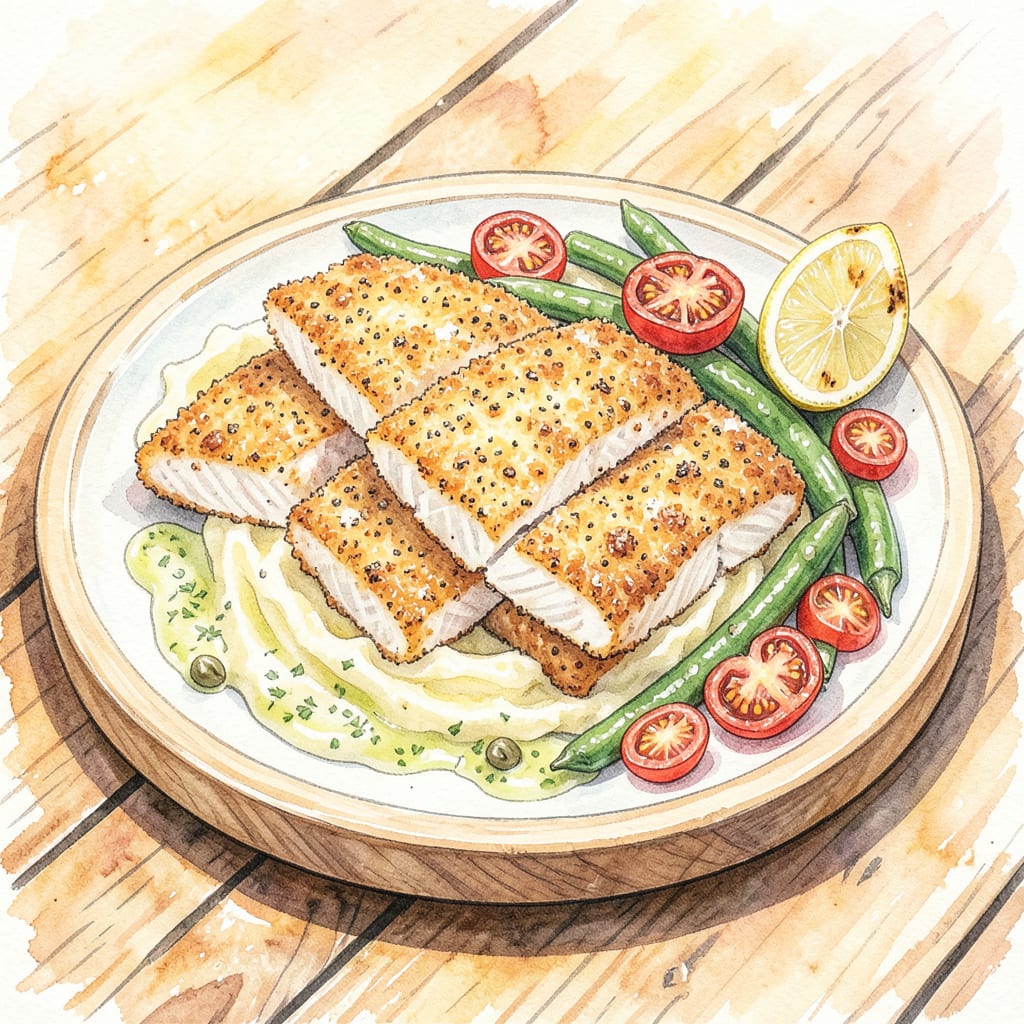
Achieving perfectly crispy breaded fish at home requires just three essential techniques—proper drying, even coating, and precise cooking temperature. This method delivers a golden, shatteringly crisp crust that stays intact from first bite to last, without any soggy disappointments.
The secret lies in the double-dredge process: first in seasoned flour, then in egg wash, and finally in fine breadcrumbs mixed with a touch of cornstarch. Whether pan-fried in 350°F oil or baked on a wire rack for even air circulation, this approach guarantees restaurant-quality results with minimal effort. Serve immediately for maximum crunch.
Ingredients for Breaded Fish!
These carefully selected ingredients ensure that shatteringly crisp crust and moist interior every time—no restaurant required.
| Ingredient | Amount | Notes |
|---|---|---|
| White Fish Fillets 🐟 | 1 ½ lb | Cod, haddock, or tilapia recommended |
| All-Purpose Flour 🌾 | 1 cup | For initial dredging layer |
| Kosher Salt 🧂 | 1 ½ tsp | Diamond Crystal preferred for consistency |
| Freshly Ground Black Pepper 🌶️ | ½ tsp | Coarse grind recommended |
| Garlic Powder 🧄 | 1 tsp | Freshly opened for maximum potency |
| Large Eggs 🥚 | 2 whole | Beaten for adhesive egg wash |
| Panko Breadcrumbs 🍞 | 1 ½ cups | Japanese-style for superior crunch |
| Cornstarch 🌽 | 2 tbsp | Critical for crispness retention |
| Vegetable Oil 🫒 | 2 cups | High smoke point for frying |
| Lemon Wedges 🍋 | 4 slices | For serving and brightening |
| Tartar Sauce 🥫 | ½ cup | Store-bought or homemade |
| Fresh Parsley 🌿 | ¼ cup | Chopped for garnish |
[recipe_ingredient_scaler]
The fish selection determines final texture. Cod or haddock provide the ideal flaky yet sturdy structure for breading adhesion, while tilapia offers a milder flavor profile. Opt for fresh, never frozen fillets when possible—look for vibrant color and minimal odor. Panko breadcrumbs are non-negotiable; their jagged edges create superior crunch compared to standard breadcrumbs. For the flour, all-purpose works best, but ensure it’s fresh (old flour absorbs moisture poorly).
For dietary adaptations, gluten-free panko substitutes seamlessly, though texture may vary slightly. The cornstarch can be replaced with arrowroot powder at equal ratios. If avoiding eggs, a flax egg (1 tbsp ground flaxseed + 3 tbsp water per egg) works, though the binding strength decreases. The vegetable oil must maintain a 350°F temperature—use a thermometer for precision. Peanut oil offers a higher smoke point alternative if preferred.
Prepped fish should be breaded immediately before cooking to prevent sogginess. Store uncooked fillets on a wire rack in the refrigerator for up to 12 hours if necessary. Cooked fish maintains optimal crispness for 30 minutes post-frying when kept on a wire rack. Leftovers reheat best in a 375°F oven for 8-10 minutes—microwaving destroys the crust integrity.
Step-by-Step Instructions for Breaded Fish
Master the technique for achieving perfectly crispy fish with a golden exterior and tender interior every time.
Step 1: Prepare the Breading Station
Set up three shallow dishes for your breading process. In the first dish, combine the 1 cup all-purpose flour, 1.5 tsp kosher salt, 0.5 tsp freshly ground black pepper, and 1 tsp garlic powder. This seasoned flour creates your initial coating layer that helps the egg adhere.
In the second dish, beat the 2 whole large eggs until completely homogeneous. The egg wash acts as the adhesive that binds the breadcrumbs to the fish. For the third dish, mix the 1.5 cups panko breadcrumbs with the 2 tbsp cornstarch—this combination delivers maximum crunch and helps maintain crispness even after frying.
Step 2: Bread the Fish Fillets
Pat the 1.5 lb white fish fillets completely dry with paper towels. Any moisture will prevent proper adhesion of the breading. Working with one fillet at a time, dredge it in the seasoned flour mixture, shaking off any excess.
Dip the floured fillet into the beaten eggs, allowing excess to drip off. Immediately transfer it to the panko-cornstarch mixture, pressing gently to ensure complete coverage. The cornstarch in the panko creates microscopic pockets that expand during frying, enhancing the crunch factor. Place breaded fillets on a wire rack while you heat the oil.
Step 3: Fry to Golden Perfection
In a large, heavy-bottomed skillet, heat the 2 cups vegetable oil over medium-high heat until it reaches 350°F. Use a deep-fry thermometer for accuracy—this temperature ensures proper browning without absorbing excess oil. The oil should shimmer but not smoke.
Carefully place two fillets in the hot oil, being mindful of splatter. Fry for 3-4 minutes per side until the breading is deep golden brown and the fish flakes easily when tested with a fork. The internal temperature should reach 145°F. Transfer fried fillets to a paper towel-lined plate to drain excess oil while you cook the remaining fillets.
Step 4: Serve Immediately with Classic Accompaniments
Arrange the crispy fillets on a serving platter with the 4 slices lemon wedges. The acidity from the lemon cuts through the richness of the fried fish. Serve with 0.5 cup tartar sauce on the side for dipping—its creamy tang complements the crispy texture perfectly.
Garnish with the 0.25 cup fresh parsley for a pop of color and freshness. The parsley’s bright, slightly peppery notes balance the dish’s richness. For best results, serve immediately while the breading is at its crispiest—the texture degrades as it sits, especially in humid environments.
Serving Suggestions for This Recipe
Classic Fish and Chips
There’s nothing more satisfying than pairing this crispy fish with thick-cut fries for a classic British pub experience. I love using Russet potatoes cut into ½-inch sticks, double-fried at 325°F then 375°F for that perfect golden exterior and fluffy interior. Serve with malt vinegar for that authentic tangy kick. 🍟
Fresh Summer Salad
For a lighter option, try a shaved fennel and citrus salad with blood orange segments, thinly sliced radishes, and a lemon-olive oil dressing. The bright acidity cuts through the richness of the fried fish beautifully. I often add mint leaves for an unexpected fresh twist.
Creamy Coleslaw Pairing
A crisp apple-cabbage slaw with a creamy buttermilk dressing adds the perfect textural contrast. I shred 1 small green cabbage and 2 tart apples, then toss with ¼ cup mayo and 2 tbsp apple cider vinegar. The crunch and tang make every bite exciting.
Beer and Wine Matches
For beer lovers, a crisp pilsner like Stella Artois or a citrusy wheat beer complements the fish perfectly. If you prefer wine, go for a dry Riesling or Sauvignon Blanc—their acidity balances the richness. I always keep a few Corona bottles with lime wedges on hand for impromptu fish fry nights. 🍺
Family-Style Platter
Create a shareable feast by arranging the fish on a wooden serving board with pickled red onions, dill pickle spears, and warm crusty bread. The pickles add brightness while the bread soaks up any extra tartar sauce. This is how we serve it at my family gatherings—everyone digs in together.
Kid-Friendly Presentation
Make it fun for little ones by serving the fish as “fish sticks” with colorful dipping sauces—try ketchup, ranch dressing, and sweet chili sauce. I cut the fillets into strips before breading and serve with baked potato wedges for a meal they’ll actually finish. The crunchy texture is always a hit! ✨
Nutrition Facts

Trained in classic French technique but raised on slow-cooked ribs and spicy rubs, she blends culinary skill with smoke and soul.
- Recipe for Boneless Pork Chops in Cast Iron Skillet: Sear and Baste to Juicy Perfection - October 3, 2026
- Recipe for Boneless Cross Rib Roast: Slow-Roasted Beef with Herb Crust - October 3, 2026
- Hamburgers in Sauce Recipe Crock Pot: Slow-Cooked Savory Delight - October 3, 2026