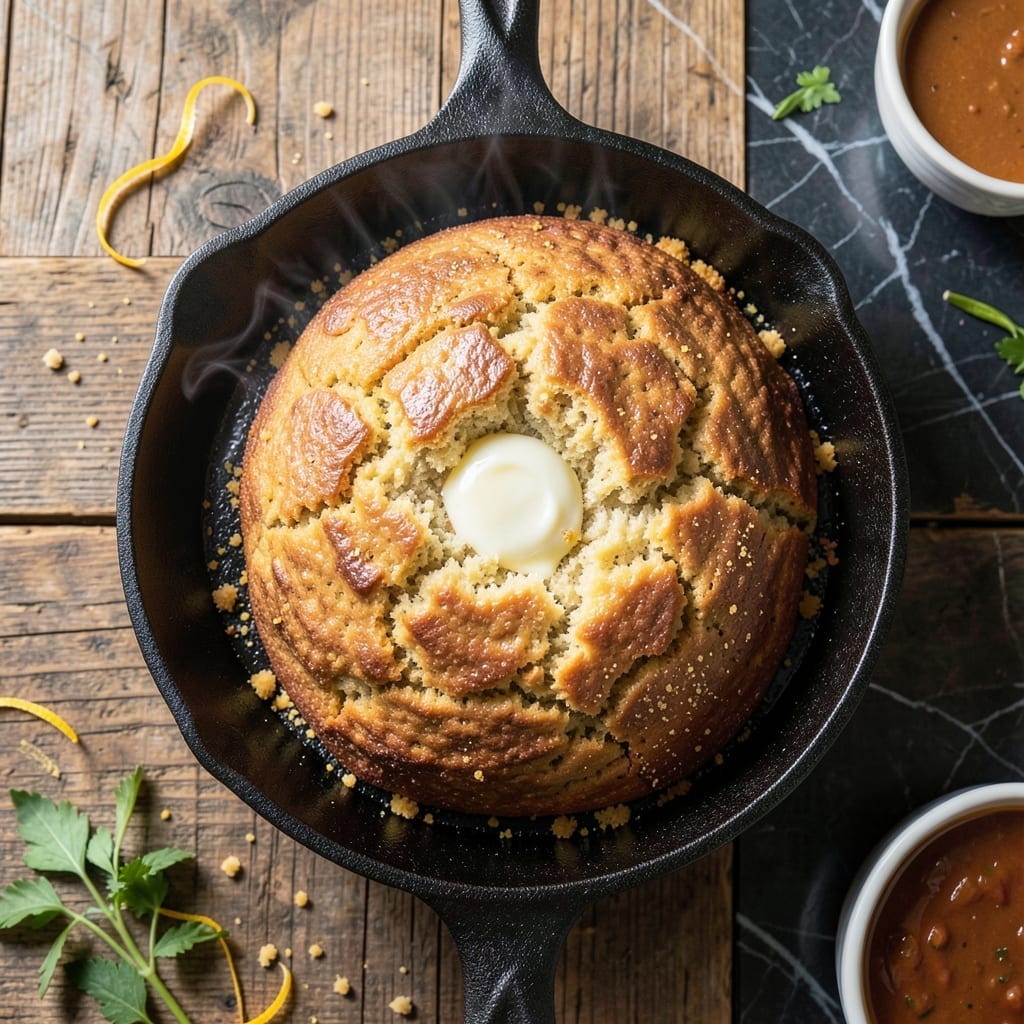
This recipe delivers the perfect balance of buttery crumb and golden crust that defines great cornbread.
I developed this method to ensure tender texture inside while achieving that coveted crisp exterior. Simple ingredients and precise technique make all the difference.
Ingredients for Brenda Gantt Cornbread
Simple pantry staples create that signature buttery crumb and golden crust we all love.
| Ingredient | Amount | Notes |
|---|---|---|
| Yellow Cornmeal 🌽 | 2 cups | Fine or medium grind |
| All-Purpose Flour 🌾 | 1 cup | Unbleached preferred |
| Granulated Sugar 🍚 | ¼ cup | Adjust to taste preference |
| Baking Powder 🧂 | 1 tbsp | Ensures proper rise |
| Baking Soda 🧂 | 1 tsp | Balances acidity |
| Salt 🧂 | 1 tsp | Diamond Crystal preferred |
| Large Eggs 🥚 | 2 whole | Room temperature for even mixing |
| Buttermilk 🥛 | 1 ½ cups | Full-fat for richness |
| Unsalted Butter 🧈 | ½ cup | Melted and cooled slightly |
| Honey 🍯 | 2 tbsp | Optional for added sweetness |
| Vegetable Oil 🫒 | 2 tbsp | For greasing the pan |
[recipe_ingredient_scaler]
The cornmeal is critical here—fine or medium grind from Bob’s Red Mill gives the best texture. Buttermilk is non-negotiable for that tender crumb; full-fat from a trusted brand like Organic Valley delivers the richness this dish demands. Unsalted butter allows you to control the salt content precisely, and European-style (like Plugrá) has a higher fat content for superior flavor.
No buttermilk? Whole milk with a tablespoon of lemon juice or vinegar works in a pinch. Out of cornmeal? Fine polenta can substitute, though the texture will differ slightly. For a sweeter profile, increase the sugar to one-third cup or add a tablespoon of maple syrup. The honey can be omitted entirely, or agave nectar works as a 1:1 swap for vegan needs.
Store cornmeal in an airtight container in the freezer to prevent rancidity—lasts 6-12 months. Buttermilk keeps 1 week in the fridge, or freeze portions for 3 months. This cornbread tastes even better the next day, reheated briefly in a dry skillet.
Why You’ll Love This Recipe
- One Bowl Wonder: I mix everything right in the same bowl—no fancy gadgets, just cornmeal, flour, and a quick stir.
- Crispy Edged Comfort: That golden crust with the slightly sweet, tender crumb? Pure Southern magic.
- Pairs With Anything: I serve it with chili, soup, or just a smear of butter for breakfast. Honestly, it never goes to waste.
- Pennywise Favorite: A bag of cornmeal and a few pantry staples feed my whole family for pennies. I’ll be real: it’s my budget’s best friend.
Step-by-Step Instructions for Buttery Cornbread With Golden Crust
Master the technique for perfect texture and color with this proven method.
Step 1: Prepare the Baking Environment
Preheat your oven to 425°F and position a rack in the center. I use a 10-inch cast iron skillet for this—it creates the best crust. Add the 2 tablespoons Vegetable Oil to the skillet and place it in the oven to heat while you prepare the batter.
The oil should be shimmering hot when you add the batter—this is crucial for that signature golden crust. If you don’t have cast iron, a 9×9-inch metal baking pan works, but preheat it in the oven as well to get similar results.
Step 2: Combine Dry Ingredients
In a large bowl, whisk together the 2 cups Yellow Cornmeal, 1 cup All-Purpose Flour, 0.25 cup Granulated Sugar, 1 tablespoon Baking Powder, 1 teaspoon Baking Soda, and 1 teaspoon Salt. Make sure there are no lumps in the cornmeal—break them up with your fingers if needed.
This step ensures even distribution of leavening agents, which is critical for a consistent rise. The combination of baking powder and baking soda creates the perfect lift while allowing the buttermilk’s acidity to work its magic on the texture.
Step 3: Mix Wet Ingredients and Combine
In a separate bowl, whisk the 2 whole Large Eggs until they’re pale and slightly frothy. Add the 1.5 cups Buttermilk, 0.5 cup Unsalted Butter (melted and cooled slightly), and 2 tablespoons Honey. Stir until fully combined.
Pour the wet ingredients into the dry ingredients and fold together with a silicone spatula until just combined. The batter will be thick and slightly lumpy—overmixing develops gluten, which makes the cornbread tough. A few streaks of flour are perfectly fine.
Step 4: Bake Until Golden and Springy
Carefully remove the hot skillet from the oven and pour the batter in. You’ll hear a satisfying sizzle—that’s the oil doing its work. Use a spatula to spread the batter evenly if needed.
Bake for 20-25 minutes until the top is deep golden brown and the center springs back when lightly pressed. The edges should pull away slightly from the sides of the pan. A toothpick inserted in the center should come out clean or with a few moist crumbs.
Step 5: Cool Slightly Before Serving
Let the cornbread cool in the skillet for 5-10 minutes before slicing. This brief rest allows the structure to set, making it easier to cut clean pieces. The internal temperature will continue to rise slightly during this time.
Run a knife around the edges to loosen, then cut into wedges. Serve warm for the best texture—the crust should be crisp at the edges with a tender, buttery crumb throughout. The honey adds a subtle sweetness that complements the rich, corny flavor perfectly.
Pro Tips For Making Brenda Gantt Cornbread
- Preheat That Pan: Get your cast iron or baking pan screaming hot in the oven with about 2 tablespoons of oil before adding the batter—I learned this the hard way after pulling out pale, sad cornbread more times than I’d like to admit.
- Sift Dry Ingredients: Run the cornmeal, flour, baking powder, and baking soda through a sifter or whisk them like you mean it. Sounds finicky, but it breaks up clumps and makes a real difference in texture.
- Don’t Overmix: Stir the wet and dry ingredients just until they come together, even if it looks a little lumpy. After burning three batches from tough, dense loaves, I finally figured out overworking the batter kills the fluff.
- Use Buttermilk: Swap regular milk for buttermilk—it reacts with the baking soda for extra lift and adds a tang that balances the sugar. My grandmother swore by this, and she was right.
Pro Cooking Tips for This Dish
Preheat Properly
Always preheat your 10-inch cast iron skillet with 2 tablespoons Vegetable Oil at 425°F for at least 10 minutes. This creates that signature sizzle when the batter hits the pan, which is non-negotiable for a perfect golden crust.
Mix Gently
When combining wet and dry ingredients, fold just until the flour disappears. Overmixing develops gluten, which turns your cornbread dense. I use a silicone spatula and stop when I see the last streaks of flour. 💡
Batter Temperature
Ensure your 0.5 cup Unsalted Butter is cooled slightly after melting. If it’s too hot, it’ll cook the 2 whole Large Eggs in the mixture. Room temperature buttermilk blends more smoothly into the batter.
Oven Position
Bake on the center rack for even heat distribution. If your oven runs hot, check at 18 minutes. The cornbread is done when the center springs back and edges pull from the pan. 🔥
Rest Before Slicing
Let it rest in the skillet for 5-10 minutes after baking. This brief pause lets the structure set, preventing crumbly slices. The internal temperature continues rising, ensuring it’s fully cooked through.
Skillet Care
After serving, let the skillet cool completely before cleaning. I scrub mine with hot water and a stiff brush—no soap needed. Re-season occasionally with a thin layer of oil baked at 350°F for 1 hour.
Nutrition Facts
Frequently Asked Questions
What can I use instead of buttermilk?
Mix 1.5 cups whole milk with 1 tablespoon lemon juice or vinegar. Let it sit for 5 minutes to curdle before using.
Why did my cornbread turn out dense?
Overmixing the batter develops gluten. Fold just until combined—small lumps are fine. Also ensure your baking powder is fresh.
Can I use a different pan?
Yes, a 9×9-inch metal pan works. Preheat it in the oven with oil, like the cast iron skillet, for best results.
How do I store leftovers?
Keep in an airtight container at room temperature for 2 days or refrigerate for 5 days. Reheat in a dry skillet.

Trained in classic French technique but raised on slow-cooked ribs and spicy rubs, she blends culinary skill with smoke and soul.
- Recipe for Boneless Pork Chops in Cast Iron Skillet: Sear and Baste to Juicy Perfection - October 3, 2026
- Recipe for Boneless Cross Rib Roast: Slow-Roasted Beef with Herb Crust - October 3, 2026
- Hamburgers in Sauce Recipe Crock Pot: Slow-Cooked Savory Delight - October 3, 2026