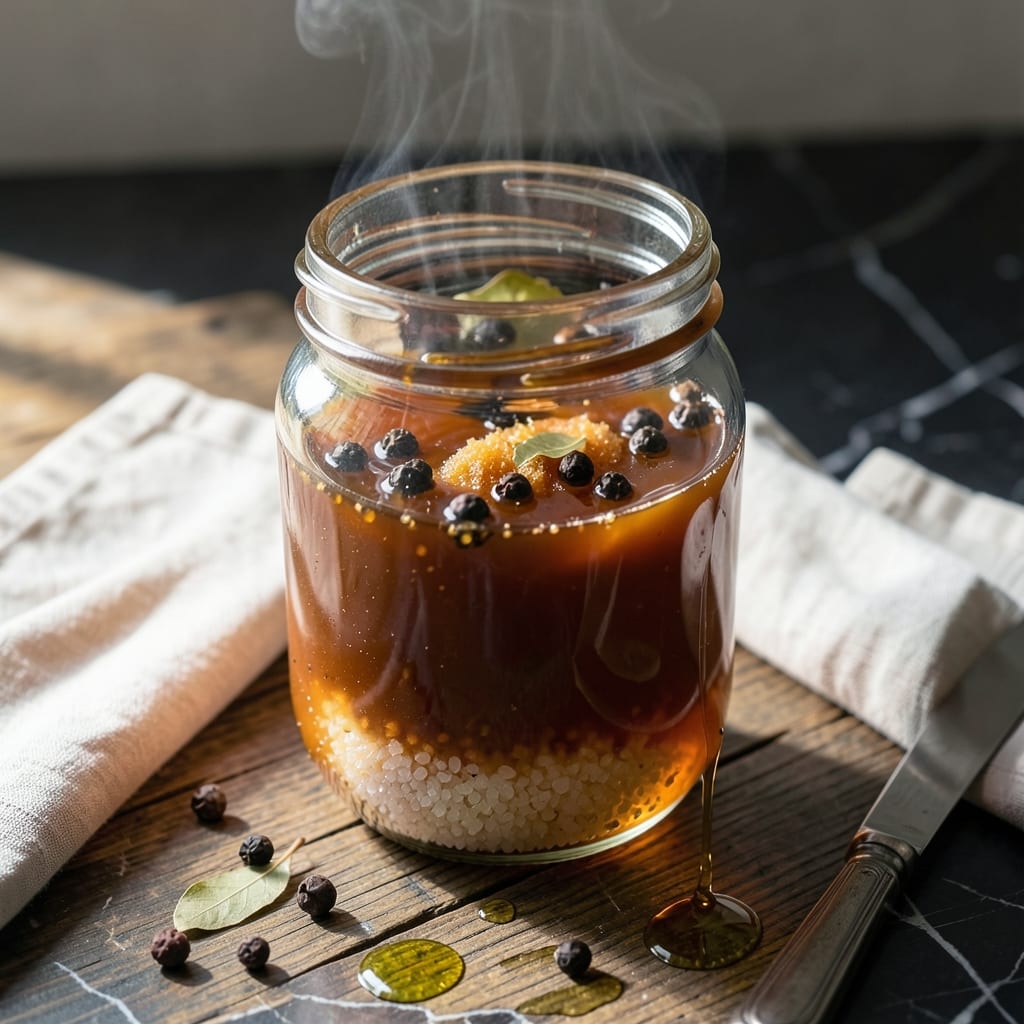
This brine transforms pork shoulder from tough to tender with minimal effort. A precise balance of salt and sugar ensures the meat retains moisture while absorbing deep flavor.
The solution works overnight, allowing the seasonings to penetrate fully. You’ll notice the difference immediately—the pork stays juicy even after long cooking periods.
What you get is meat that pulls apart effortlessly, with every bite packed with balanced seasoning. This method guarantees perfect results every time.
Use it for pulled pork, roasts, or any dish where you want restaurant-quality texture. The process is straightforward and foolproof.
Ingredients for Brine for Pork Shoulder
Nine ingredients create a brine that guarantees juicy, flavorful pork every single time.
| Ingredient | Amount | Notes |
|---|---|---|
| Water 💧 | 4 cups | Cold, preferably filtered |
| Kosher Salt 🧂 | ½ cup | Diamond Crystal preferred for consistency |
| Brown Sugar 🍚 | ½ cup | Light or dark works equally well |
| Apple Cider Vinegar 🍏 | ½ cup | Balances sweetness and saltiness |
| Black Peppercorns 🌶️ | 1 tbsp | Lightly crushed for fuller flavor |
| Bay Leaves 🍃 | 4 whole | Dried, for aromatic depth |
| Garlic Cloves 🧄 | 6 cloves | Smashed to release oils |
| Juniper Berries 🫒 | 1 tsp | Optional but adds complexity |
| Mustard Seeds 🌿 | 1 tsp | Yellow or brown variety |
[recipe_ingredient_scaler]
The salt is doing most of the work here. Diamond Crystal kosher salt is my go-to for brining—it dissolves cleanly and the measurements are reliable. Brown sugar adds caramel notes that complement pork beautifully. Trader Joe’s or Whole Foods have great organic options if you’re avoiding additives. Don’t skip the apple cider vinegar—it’s the secret to balancing the salt without making the brine taste harsh.
No kosher salt? Table salt at half the amount (but measure by weight for accuracy). Out of brown sugar? White sugar plus a splash of molasses mimics the depth. Fresh garlic is non-negotiable here—it infuses the brine with a brightness dried just can’t match. The juniper berries are optional but worth hunting down at a spice shop if you love that piney, gin-like aroma.
Brine stays good in the fridge for 2 days. After that, the flavors start to dull. I make it the night before I plan to cook—gives the pork shoulder plenty of time to soak up all that goodness. Discard after use (don’t reuse for safety).
Why You’ll Love This Recipe
- 5-Minute Mix: I just dump everything in a pot, stir, and it’s ready—no fancy steps, no fuss.
- Sweet-Tangy Magic: The brown sugar and apple cider vinegar give the pork this crazy balance of sweet and bright that’s downright addictive.
- Weekend or Wednesday: Honestly, I use this brine for holiday roasts and random Tuesday dinners—it’s that reliable.
- Pennywise Perfection: A handful of pantry staples transforms a cheap cut into something that tastes like a splurge.
Step-by-Step Instructions for Brine for Pork Shoulder
This method ensures maximum flavor penetration and moisture retention for your creation.
Step 1: Combine Water and Salt
In a large pot, pour in the 4 cups Water. Add the 0.5 cup Kosher Salt and stir until fully dissolved. I use Diamond Crystal kosher salt for its consistent texture and clean flavor profile.
This salt-to-water ratio creates the perfect osmotic environment to season the pork deeply while maintaining its natural juiciness. You’ll notice the water becomes slightly cloudy as the salt dissolves—this is normal and indicates proper saturation.
Step 2: Add Sweet and Acidic Elements
Stir in the 0.5 cup Brown Sugar until completely incorporated. The sugar not only adds subtle sweetness but also helps develop a beautiful caramelized crust on the pork’s exterior during cooking.
Next, add the 0.5 cup Apple Cider Vinegar. This acidic component balances the salt and sugar while tenderizing the meat. The vinegar’s sharp aroma will mellow as it combines with the other ingredients, creating a harmonious brine solution.
Step 3: Toast and Add Dry Aromatics
In a small dry skillet, lightly toast the 1 tbsp Black Peppercorns, 4 whole Bay Leaves, 1 tsp Juniper Berries, and 1 tsp Mustard Seeds for 1-2 minutes until fragrant. This quick toasting releases their essential oils, intensifying their flavors in the brine.
Add the toasted spices to the brine mixture along with the 6 cloves Garlic Cloves, which should be smashed to release their pungent oils. The garlic will infuse the brine with its characteristic depth, while the spices create a complex aromatic profile.
Step 4: Chill and Infuse
Let the brine cool to room temperature, then refrigerate until completely chilled. This is crucial—adding hot brine to meat can start cooking it prematurely, leading to a dry, tough texture.
Once cold, submerge your pork shoulder in the brine and refrigerate for at least 12 hours, though I prefer 24 hours for maximum flavor penetration. The meat should be fully immersed; if needed, weigh it down with a plate to keep it submerged.
Step 5: Remove and Prepare for Cooking
After brining, remove the pork from the liquid and pat it dry with paper towels. This step is essential for achieving a good sear or bark during cooking.
Discard the used brine—it’s done its job. Your pork is now perfectly seasoned from the inside out, ready for whatever cooking method you choose. The result will be noticeably juicier with a more developed flavor profile than unbrined meat.
Pro Tips For Making Brine For Pork Shoulder
- Dissolve Salt First: I learned this the hard way—stir the kosher salt and brown sugar into warm water first until fully dissolved, otherwise you’ll get uneven seasoning and a gritty brine.
- Chill Before Using: After mixing, refrigerate the brine for at least an hour before adding the pork shoulder, or you risk cooking the meat partially instead of just seasoning it.
- Use Fine Kosher Salt: Sounds picky, but coarse salt won’t dissolve as evenly, and you’ll end up with pockets of over-salty brine clinging to the pork.
- Add Vinegar Last: Mix the apple cider vinegar in after the brine has cooled—adding it to hot liquid can make the flavor harsh and overpower the other ingredients.
Creative Variations of These Flavors
Asian-Inspired Brine
Swap the apple cider vinegar for ½ cup rice vinegar and add ¼ cup soy sauce for an umami-rich twist. Include 3 slices fresh ginger and 2 star anise pods with the aromatics. This works beautifully for pulled pork tacos with Asian slaw. 🗺️
Coffee-Infused Brine
Replace 1 cup water with cold-brewed coffee for depth. Add 2 tbsp molasses and 1 cinnamon stick to complement the coffee. The result is a dark, complex flavor profile perfect for smoked pork shoulder.
Citrus-Herb Brine
Add the zest of 2 oranges and 1 lemon to the base recipe. Include 5 sprigs fresh thyme and 3 sprigs rosemary instead of juniper and mustard seeds. This brightens the pork for spring and summer dishes.
Spicy Southwestern Brine
Increase the brown sugar to ¾ cup and add 2 tbsp chili powder, 1 tbsp cumin seeds, and 1 chopped chipotle in adobo. This creates a bold, smoky foundation ideal for Tex-Mex pulled pork.
Beer Brine Variation
Substitute 2 cups water with a malty amber ale. Reduce the brown sugar to ¼ cup to balance the beer’s sweetness. The carbonation helps tenderize while adding subtle hop notes. 💛
Herb Garden Brine
Use 10 sprigs mixed fresh herbs (sage, oregano, marjoram) in place of dried spices. Add 1 tbsp coriander seeds for brightness. This delicate version shines with simply roasted pork shoulder.
Nutrition Facts
Frequently Asked Questions
How long should I brine pork shoulder?
For best results, brine for 12-24 hours. This gives the salt and seasonings time to penetrate deeply. Don’t exceed 48 hours or the meat can become too salty.
Can I reuse the brine?
No, always discard used brine after removing the pork. Reusing it risks bacterial contamination. The brine has absorbed raw meat juices and isn’t safe for a second use.
Do I need to rinse after brining?
A quick rinse removes excess salt from the surface. Pat dry thoroughly with paper towels afterward for the best sear or bark during cooking.
What if my pork floats in the brine?
Use a plate or small bowl as a weight to keep it submerged. The meat must be fully covered for even seasoning throughout.

Trained in classic French technique but raised on slow-cooked ribs and spicy rubs, she blends culinary skill with smoke and soul.
- Recipe for Boneless Pork Chops in Cast Iron Skillet: Sear and Baste to Juicy Perfection - October 3, 2026
- Recipe for Boneless Cross Rib Roast: Slow-Roasted Beef with Herb Crust - October 3, 2026
- Hamburgers in Sauce Recipe Crock Pot: Slow-Cooked Savory Delight - October 3, 2026