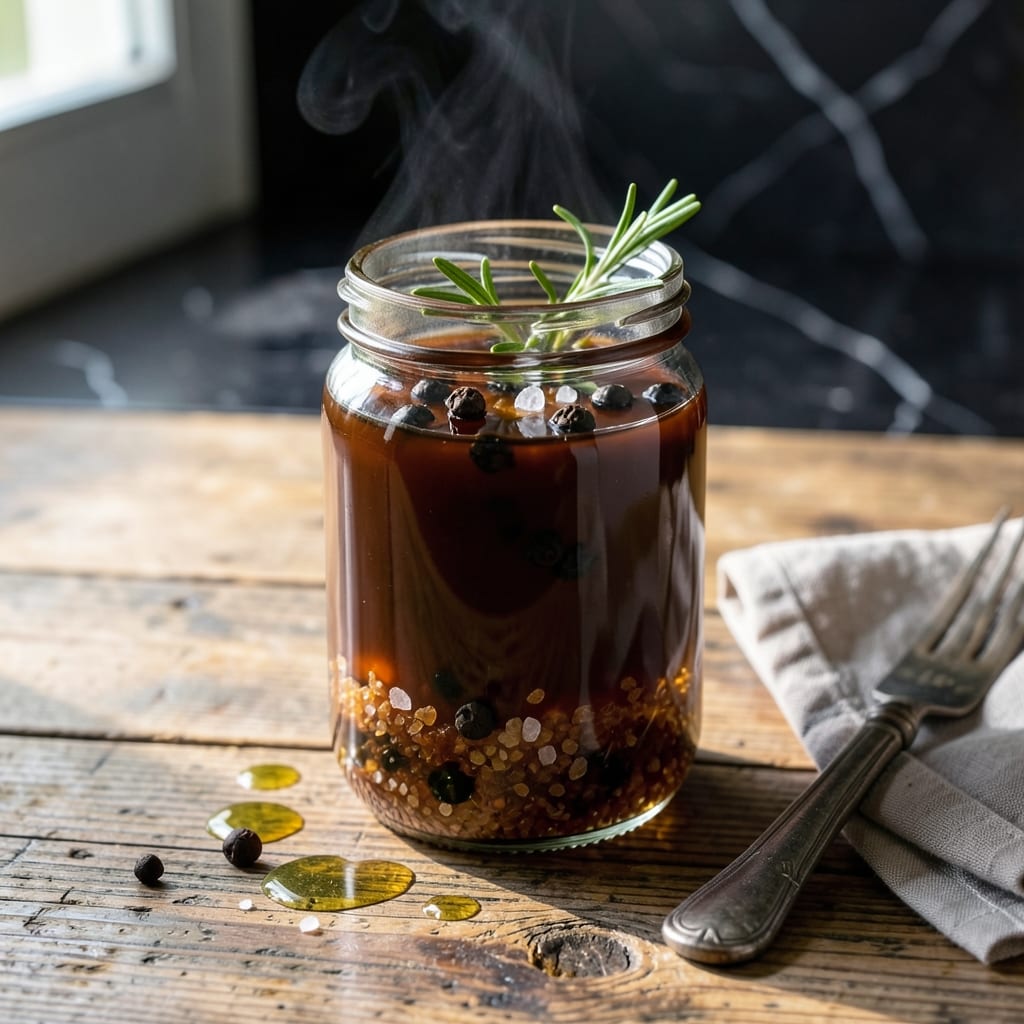
This brine transforms venison from tough and dry to moist and flavorful every time. The secret lies in the right balance of salt and water, creating a solution that penetrates the meat while preserving its natural character.
I developed this method after years of trial and error, perfecting the ratio that works for wild game. The process is simple: submerge the meat, let it soak, and let the brine do its work. No special equipment required.
What you get is venison that stays juicy through cooking, with enhanced natural flavors that shine in any preparation. The brine also helps tenderize, making even lean cuts more forgiving to cook.
Use this for steaks, roasts, or ground venison. The difference is noticeable from the first bite.
Ingredients for Brine Recipe for Venison
Nine simple ingredients create a brine that transforms venison with every soak and bite.
| Ingredient | Amount | Notes |
|---|---|---|
| Water 💧 | 4 cups | Cold, filtered preferred |
| Kosher Salt 🧂 | ¾ cup | Diamond Crystal brand recommended |
| Brown Sugar 🍚 | ½ cup | Light or dark variety |
| Soy Sauce 🫕 | ¼ cup | Low-sodium for better control |
| Apple Cider Vinegar 🍏 | ¼ cup | Balances the saltiness |
| Black Peppercorns 🌶️ | 1 tbsp | Lightly crushed for infusion |
| Garlic Cloves 🧄 | 6 cloves | Smashed to release flavor |
| Bay Leaves 🍃 | 4 whole | Dried, for aromatic depth |
| Juniper Berries 🫒 | 1 tbsp | Optional but traditional |
[recipe_ingredient_scaler]
The salt is critical here. Diamond Crystal kosher salt dissolves cleanly and gives consistent results—avoid iodized table salt. Water should be cold to keep the meat safe during brining. I always use filtered water since tap water can add unwanted flavors. For the soy sauce, Kikkoman low-sodium lets you control the salt level precisely. The brown sugar adds subtle sweetness that balances the salt perfectly.
No brown sugar? White sugar or maple syrup work in a pinch. Out of apple cider vinegar? White vinegar or lemon juice can substitute at the same ratio. Juniper berries are traditional but not essential—skip them if you can’t find them. The garlic and peppercorns add depth, but pre-ground black pepper works if that’s what you’ve got (just use half the amount).
This brine keeps in the fridge for up to 1 week before use. For storage after brining, cook the venison within 24-48 hours for best results. Never reuse brine once meat has been in it—safety first.
Why You’ll Love This Recipe
- 5-Minute Mix: I just stir water, salt, sugar, soy, and vinegar in a pot—no chopping, no fuss.
- Sweet-Savory Balance: The brown sugar and soy sauce give the venison that perfect caramelized crust with a hint of tang from the vinegar.
- Freezer Friendly: I brine a big batch, freeze the meat, and pull it out for quick dinners all season.
- Budget Stretcher: Honestly, a pound of venison brined this way tastes like a steakhouse special without the price tag.
Step-by-Step Instructions for Venison Brine
This method ensures your venison stays moist and flavorful throughout the cooking process.
Step 1: Combine Water and Salt Base
In a large pot, pour in the 4 cups Water and add the 0.75 cup Kosher Salt. Stir until the salt is completely dissolved—this forms the foundation of your brine. Cold, filtered water is ideal as it prevents any off-flavors from affecting the venison.
I always use Diamond Crystal kosher salt because its coarse texture dissolves evenly, ensuring consistent brining. The water should be room temperature or slightly warm to help the salt dissolve faster, but never hot, as that could start cooking the meat prematurely.
Step 2: Add Sweet and Umami Elements
Next, incorporate the 0.5 cup Brown Sugar, 0.25 cup Soy Sauce, and 0.25 cup Apple Cider Vinegar into the saltwater mixture. Stir until the brown sugar is fully dissolved. The sugar balances the saltiness while the soy sauce adds depth and umami.
The apple cider vinegar not only tenderizes the meat but also brightens the overall flavor profile. Low-sodium soy sauce is preferred here so you have better control over the salt content in your brine.
Step 3: Infuse with Aromatics
Add the 1 tbsp Black Peppercorns, 6 cloves Garlic Cloves, 4 whole Bay Leaves, and 1 tbsp Juniper Berries to the brine. Lightly crush the black peppercorns to release their oils, and smash the garlic cloves to maximize their flavor infusion.
Juniper berries, though optional, are traditional in venison brines as they complement the gamey flavor of the meat. The bay leaves add a subtle earthiness. Let the mixture sit for 5 minutes to allow the aromatics to begin infusing the liquid.
Step 4: Cool the Brine Completely
Before using the brine, it must be completely cooled to room temperature or colder. I recommend refrigerating it for at least 1 hour to ensure it’s cold enough. Brining in warm liquid can start cooking the meat and lead to an uneven texture.
This cooling step is critical for food safety and effectiveness. Once chilled, the brine is ready to use. Submerge your venison in the brine and refrigerate for 12-24 hours—this timing ensures maximum moisture retention and flavor penetration without over-brining.
Pro Tips For Making Brine Recipe For Venison
- Chill the Brine: Always refrigerate your brine and the venison while brining—room temperature turns it into a bacterial playground. I learned this the hard way after ruining a beautiful cut.
- Dissolve Salt Completely: Stir the kosher salt and brown sugar into warm water first until fully dissolved, then add the rest. Sounds obvious, but undissolved salt means uneven seasoning and gritty texture.
- Don’t Over-Brine: Venison only needs 12-24 hours in the brine—any longer and the soy sauce and vinegar will start breaking down the meat into mush. Trust me, I’ve turned venison into jerky by accident.
- Use Filtered Water: If your tap water tastes funky, use filtered—venison absorbs flavors fast, and chlorine or minerals can leave an off taste. A cheap Brita filter makes a real difference here.
Storing and Reheating This brine recipe for venison
Refrigerator Storage
Store unused brine in a sealed glass jar or airtight container in the fridge for up to 1 week before use. The flavors meld and strengthen over time, making it more effective. 💡
Brined Venison Storage
After brining, cook venison within 24-48 hours for best texture and safety. Store it in a sealed container in the fridge with a little brine to maintain moisture.
Freezing Brine
Pour cooled brine into freezer-safe containers, leaving 1 inch headspace for expansion. It freezes well for up to 3 months. Thaw overnight in the fridge before using.
Never Reuse Brine
Once meat has soaked in it, discard the brine immediately. Reusing it risks bacterial contamination. This is a non-negotiable safety rule in my kitchen.
Prep Ahead Tips
Make brine 1 day ahead to save time. This lets flavors fully develop. I often prep it the night before a hunting trip so it’s ready when I return. ❄️
Label Everything
Always label containers with the date and contents. With multiple brines in my fridge, this prevents mix-ups. Use masking tape and a Sharpie for easy identification.
Nutrition Facts
Frequently Asked Questions
How long should venison soak in the brine?
For best results, submerge venison in the brine for 12-24 hours in the fridge. This allows full flavor penetration and moisture retention without making the meat too salty.
Can I use table salt instead of kosher salt?
Avoid table salt—it’s denser and can make your brine too salty. Stick with Diamond Crystal kosher salt for consistent results. If you must substitute, reduce the amount by 25%.
What if I don’t have juniper berries?
No problem! Juniper berries are optional. For similar depth, try adding 1 tsp coriander seeds or extra black peppercorns. The brine will still work beautifully.
Can I brine frozen venison?
Always thaw venison completely before brining. Brining frozen meat prevents even absorption and can lead to uneven texture. Thaw overnight in the fridge first.

Trained in classic French technique but raised on slow-cooked ribs and spicy rubs, she blends culinary skill with smoke and soul.
- Octopus Recipe Pan Fried: Crispy Edges With Tender Bites - October 3, 2026
- Recipe For Fried Pork Chops In An Iron Skillet: Crispy Crust With Juicy Centers - October 3, 2026
- Recipe for Fully Cooked Spiral Ham: Sweet Glaze and Effortless Elegance - October 3, 2026