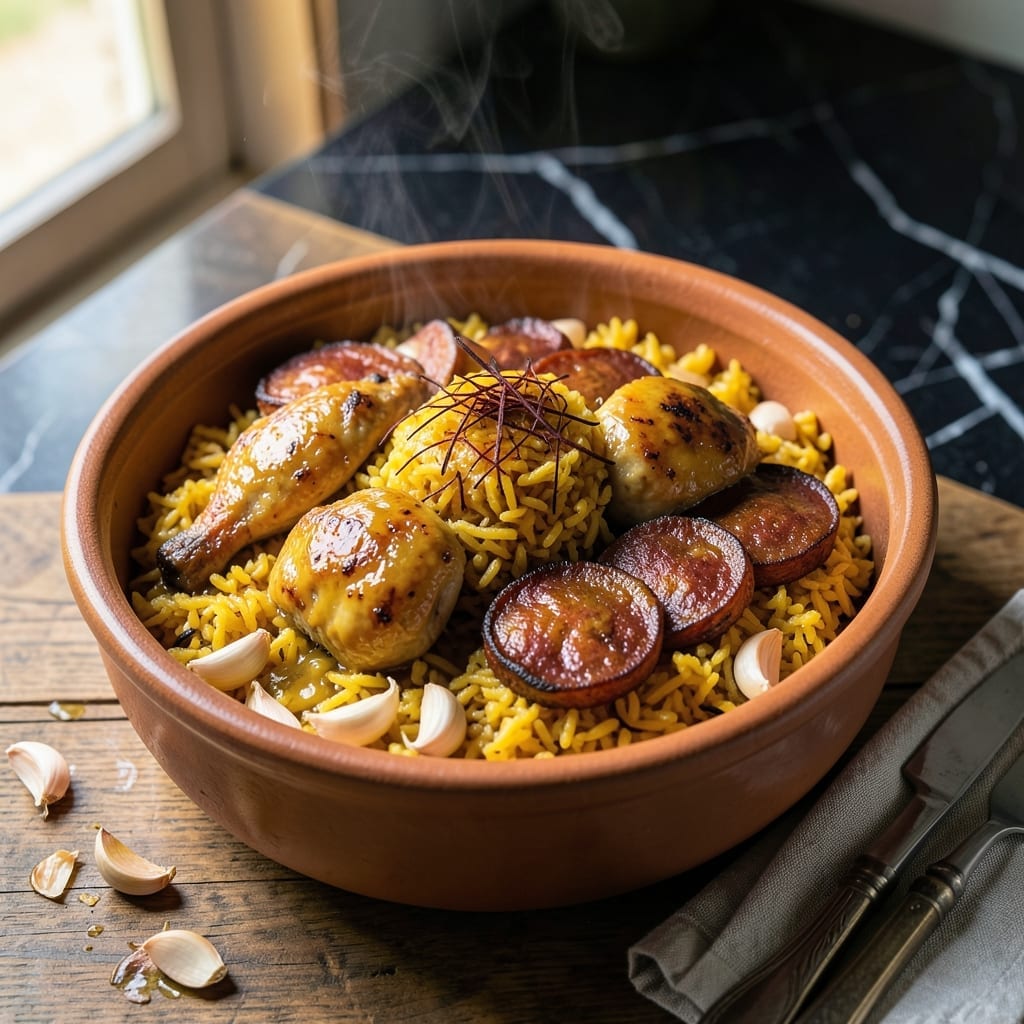
This Filipino paella variation brings a tropical twist to a classic Spanish dish. The coconut milk base creates a creamy, fragrant foundation that perfectly complements the saffron-infused rice.
Traditional bringhe layers chicken, chorizo, and vegetables with glutinous rice, all cooked together in one pan. The coconut milk adds a subtle sweetness that balances the savory elements beautifully.
What emerges is a vibrant, one-pan meal with tender meat, perfectly cooked rice, and a rich sauce that soaks into every grain. The saffron gives it that signature golden color and aroma.
This dish is perfect for special occasions or family gatherings. Here’s how to make this Filipino favorite at home.
Ingredients for Bringhe Recipe Panlasang Pinoy
Pantry raid plus a quick market stop. Nothing exotic, just bold Filipino-Spanish flavors.
| Ingredient | Amount | Notes |
|---|---|---|
| Glutinous Rice 🍚 | 2 cups | Rinsed until water runs clear |
| Chicken Thighs 🍗 | 1 ½ lb | Boneless, skinless, cut into pieces |
| Chorizo 🌭 | ½ lb | Filipino-style, sliced into rounds |
| Coconut Milk 🥥 | 2 cups | Full-fat for creaminess |
| Saffron Threads 🌼 | ¼ tsp | Soaked in warm water |
| Garlic Cloves 🧄 | 6 cloves | Minced for base flavor |
| Yellow Onion 🧅 | 1 whole | Diced for aromatic base |
| Carrots 🥕 | 1 cup | Peeled, diced into small cubes |
| Green Peas 🌱 | ½ cup | Fresh or frozen, thawed |
| Red Bell Pepper 🌶️ | 1 whole | Diced for color and crunch |
| Fish Sauce 🐟 | 2 tbsp | Patis or Thai fish sauce |
| Chicken Broth 🍲 | 1 ½ cups | Low-sodium preferred |
| Turmeric Powder 🌿 | ½ tsp | For golden color boost |
| Bay Leaves 🍃 | 2 pieces | Dried for subtle depth |
| Olive Oil 🫒 | 2 tbsp | For sautéing aromatics |
[recipe_ingredient_scaler]
The rice is non-negotiable—glutinous rice (sometimes called sweet rice) is what gives bringhe its signature stickiness. Asian markets always have it, but Trader Joe’s stocks it too. For the chorizo, Filipino-style is sweeter and garlicky (look for Vigan longganisa at Filipino grocers). The coconut milk has to be full-fat—Thai Kitchen or Goya are reliable. If your saffron’s been sitting in the cupboard for years, splurge on a fresh pinch from Penzeys (worth it).
No chorizo? Chinese lap cheong works in a pinch, or skip it and double the chicken. Coconut milk hater? Evaporated milk plus a splash of cream gets you close (just less tropical). Fresh peas not happening? Frozen works perfectly (no need to thaw). The fish sauce can be swapped for soy sauce at half the amount, but patis adds that funky depth nothing else does. For the rice, sushi rice is the best backup—avoid jasmine, it’s too dry.
This reheats like a dream—tastes even better the next day as the flavors meld. Keeps 4-5 days in the fridge, freezes beautifully for 3 months. I make a double batch and stash half in the freezer for lazy nights. Just thaw overnight before reheating.
Why You’ll Love This Recipe
- One Pot Wonder: I love that everything cooks together—glutinuous rice soaks up the coconut milk and saffron while the chicken and chorizo do their thing.
- Flavor Bomb: The combo of chorizo’s smokiness with the floral saffron and creamy coconut milk is next-level good.
- Feeds a Crowd: Honestly, this is my go-to for potlucks—it stretches easily and tastes even better the next day.
- Budget Stretcher: Chicken thighs and chorizo make it hearty without breaking the bank, and a little saffron goes a long way.
Step-by-Step Instructions for Filipino Bringhe With Coconut Milk
Here’s the method. Straightforward, tested, works every time.
Step 1: Bloom Aromatics and Brown Proteins
Heat the 2 tbsp Olive Oil in a large, heavy pot over medium heat. Add the diced Yellow Onion and cook for 3-4 minutes until translucent and fragrant. This builds the flavor foundation for your creation.
Stir in the minced 6 cloves Garlic Cloves and cook for 30 seconds until just golden—don’t let it burn. Push the aromatics to one side and add the sliced 0.5 lb Chorizo. Cook for 2 minutes until it starts rendering its rich, red oil.
Add the 1.5 lb Chicken Thighs and cook for 5-6 minutes, turning occasionally, until the pieces develop a light golden crust. The chicken doesn’t need to cook through at this stage—just get some color.
Step 2: Toast the Rice and Build Flavor Layers
Add the rinsed 2 cups Glutinous Rice to the pot and stir to coat every grain in the rendered fats and aromatics. Toast the rice for 2-3 minutes until it turns slightly opaque and smells nutty.
Pour in the 2 tbsp Fish Sauce, 0.5 tsp Turmeric Powder, and drained 0.25 tsp Saffron Threads. Stir well to distribute the color and seasoning evenly. The turmeric gives the dish its signature golden hue, while the saffron adds subtle floral notes.
Add the diced 1 cup Carrots, 1 whole Red Bell Pepper, and 0.5 cup Green Peas. Stir for 1 minute to let the vegetables absorb some flavor before adding the liquids.
Step 3: Add Liquids and Simmer to Perfection
Pour in the 2 cups Coconut Milk and 1.5 cups Chicken Broth. Stir well to combine, then add the 2 pieces Bay Leaves. Bring the mixture to a boil over medium-high heat.
Once boiling, reduce the heat to low, cover the pot, and let it simmer for 20 minutes. Resist the urge to stir during this time—this allows the rice to cook evenly and develop a slightly crispy bottom layer, known as the “socarrat.”
After 20 minutes, check the rice. If it’s still undercooked, add a splash of water or broth and cook for another 5 minutes. The rice should be tender and the liquid mostly absorbed, with a creamy consistency.
Step 4: Rest and Serve
Once the rice is cooked, turn off the heat and let the pot sit covered for 5-10 minutes. This resting period allows the flavors to meld together and the rice to finish absorbing any remaining liquid.
Fluff the rice gently with a fork, then transfer to a serving platter. Arrange the chicken and chorizo pieces on top for a beautiful presentation. The rice should be vibrant yellow with bits of colorful vegetables throughout, and the aroma should be rich and inviting.
Serve hot, with extra fish sauce on the side for those who want to adjust the seasoning to their taste. The combination of tender chicken, savory chorizo, and coconut-infused rice makes every bite a celebration of Filipino flavors.
Pro Tips For Making Bringhe Recipe Panlasang Pinoy
- Soak the Rice: Give the glutinous rice a good 30-minute soak in warm water before cooking—I learned this the hard way after ending up with undercooked grains in my first few attempts.
- Brown the Chorizo: Cook the chorizo first until it releases its oils, then set it aside. This builds a flavor base that makes a real difference in the final dish.
- Skip the Rush: Resist the urge to crank the heat to high once the coconut milk goes in. A gentle simmer prevents curdling and lets the saffron infuse properly.
- Use Bone-In Thighs: Bone-in chicken thighs stay juicier and add depth to the broth. After switching from boneless, I noticed the bringhe had way more richness.
Essential Equipment for This Dish
Heavy Cooking Pot
For this dish, I swear by my 5-quart enameled cast iron Dutch oven—it distributes heat evenly and retains it perfectly for the long simmer. Le Creuset or Lodge are my go-to brands. A heavy pot prevents hot spots that could burn the coconut milk.
Wooden Spoon
Use a wooden spoon for stirring to avoid scratching your pot. It also won’t conduct heat like metal, so it’s safer for longer cooking sessions. I keep a dedicated wooden spoon just for rice dishes like this.
Chef’s Knife
A sharp 8-inch chef’s knife makes quick work of dicing all the vegetables. I use Wüsthof for precision. Dull knives slip and make uneven cuts, which affects cooking times. 💡
Measuring Cups
Accurate measurements matter here, so I always use my stainless steel measuring cups. For the glutinous rice, pack it lightly into the cup and level it off. A slight overflow can make your dish too starchy.
Fine Mesh Strainer
Rinsing the glutinous rice until the water runs clear is crucial—I use a fine mesh strainer to avoid losing grains down the drain. This removes excess starch that could make your dish gummy.
Instant-Read Thermometer
To check chicken doneness without cutting, I use an instant-read thermometer. 165°F in the thickest part means it’s safe. This prevents overcooking while ensuring food safety. 🌡️
Nutrition Facts
Frequently Asked Questions
Can I use regular rice instead of glutinous rice?
Not recommended. Glutinous rice gives the dish its signature sticky texture. Regular rice will result in a drier, less cohesive dish.
What if I don’t have saffron?
You can substitute 0.5 tsp turmeric for color, though the flavor will differ slightly. Saffron adds a unique aroma that turmeric can’t replicate.
How do I prevent the coconut milk from curdling?
Avoid boiling the coconut milk too vigorously. Simmer gently over low heat and stir occasionally. Using full-fat coconut milk also helps stabilize it.
Can I make this ahead of time?
Yes! It reheats beautifully. Store in an airtight container for up to 4-5 days in the fridge. Flavors deepen overnight.

Trained in classic French technique but raised on slow-cooked ribs and spicy rubs, she blends culinary skill with smoke and soul.
- Recipe for Boneless Pork Chops in Cast Iron Skillet: Sear and Baste to Juicy Perfection - October 3, 2026
- Recipe for Boneless Cross Rib Roast: Slow-Roasted Beef with Herb Crust - October 3, 2026
- Hamburgers in Sauce Recipe Crock Pot: Slow-Cooked Savory Delight - October 3, 2026