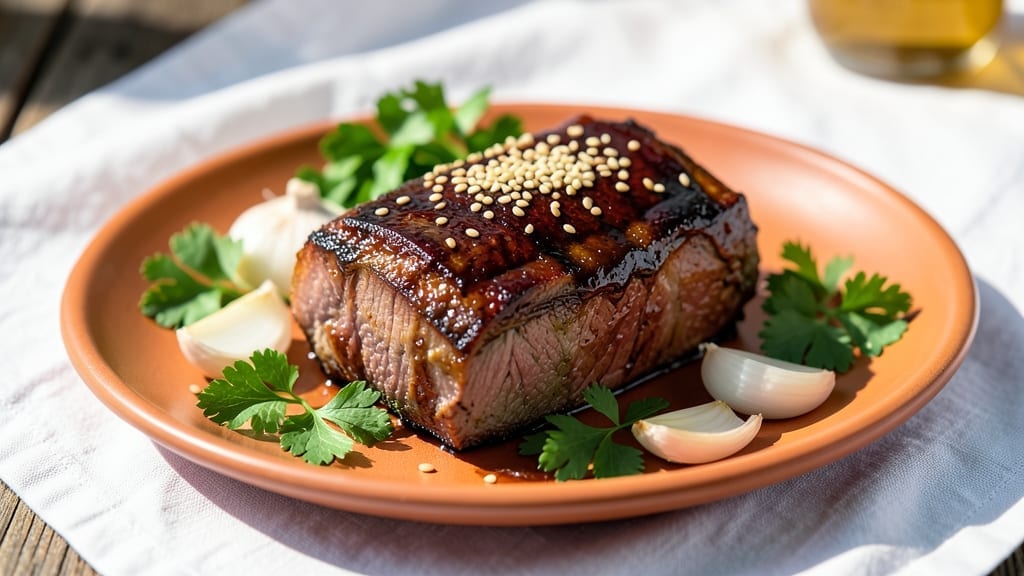
Mastering a smoker brisket recipe transforms tough cuts into melt-in-your-mouth perfection through patience and precision. The key lies in maintaining 225–250°F for 12–16 hours, letting collagen dissolve into juicy, fork-tender meat. I’ve perfected this method after countless trials—each batch teaches something new about wood choice, fat management, and timing.
This recipe begins with selecting a 10–12 lb packer cut, trimming excess fat while preserving the flavorful cap. A dry rub of coarse salt, black pepper, and smoked paprika sets the foundation, while spritzing every 90 minutes with apple cider vinegar keeps the bark crisp.
The smoker’s indirect heat ensures even cooking without burning.
By the time the internal temperature hits 195–203°F, your brisket will pull apart like butter, yielding to every slice. Wrapping it in butcher paper at 165°F locks in moisture, while a final reverse sear in a 400°F oven creates a caramelized crust.
Resting for 30–60 minutes ensures juices redistribute for the ultimate texture.
The result? A brisket so tender it defies expectations, served with homemade au jus, pickled onions, and crusty buns. Whether you’re feeding a crowd or treating yourself, this method delivers restaurant-quality tenderness every time. Let’s get started.
Ingredients for brisket recipe smoker
A precise selection of ingredients transforms a tough cut into restaurant-quality brisket through low-and-slow mastery.
| Ingredient | Amount | Notes |
|---|---|---|
| Beef Brisket (Packer Cut) 🥩 | 12 lb | Fat cap intact, trimmed to 0.25-inch |
| Coarse Kosher Salt 🧂 | ½ cup | Diamond Crystal preferred, freshly ground |
| Freshly Ground Black Pepper 🌶️ | 2 tbsp | Cracked peppercorns for optimal flavor |
| Smoked Paprika 🌶️ | 2 tbsp | Honduran or Spanish for authentic smoke |
| Granulated Garlic 🧄 | 1 tbsp | For even distribution in rub |
| Granulated Onion Powder 🧅 | 1 tbsp | Freshly ground preferred |
| Apple Cider Vinegar 🍎 | 1 cup | Unfiltered for spritzing |
| Butcher Paper 📄 | 1 sheet | For wrapping at 165°F |
| Wood Chips (Hickory or Oak) 🌳 | 4 cups | Soaked for 1 hour minimum |
| Beef Tallow or Duck Fat 🧈 | ¼ cup | For spritzing mixture |
| Yellow Onions 🧅 | 2 whole | For au jus base |
| Garlic Cloves 🧄 | 6 cloves | For au jus |
| Beef Broth 💧 | 2 cups | Low-sodium preferred |
| Cornstarch 🌽 | 1 tbsp | For au jus thickening |
[recipe_ingredient_scaler]
The beef brisket packer cut is non-negotiable—look for a 12 lb piece with a fat cap intact for flavor and moisture. Local butchers often carry better quality than grocery stores, and the fat should be marbled but not excessive. Trim the fat to ¼-inch thickness along the edges to prevent flare-ups while preserving the flavorful cap. For wood chips, Traeger or Cookshack brands provide consistent smoke flavor, and hickory or oak are standard choices. The apple cider vinegar should be unfiltered—brands like Mott’s or Texas Pete work well, but avoid pasteurized varieties. Pre-soak the wood chips for at least 1 hour to prevent burning and ensure steady smoke production.
Substitutions require precision: smoked paprika can be swapped for ½ tbsp chipotle powder for heat, but the smoke profile changes. Diamond Crystal kosher salt is preferred due to its coarse texture, but Morton works in a pinch—just use ½ tsp less as it’s finer. For au jus, low-sodium beef broth is critical; brands like Kitchen Basics or Pacific Foods offer high-quality options. If you lack beef tallow, duck fat or even rendered bacon fat works, but avoid olive oil—it burns at smoker temperatures. The cornstarch for thickening can be replaced with arrowroot powder at a 1:1 ratio, though it yields a slightly clearer au jus.
Store uncooked brisket in the fridge for up to 5 days or freeze for 6–12 months—wrap tightly in plastic wrap before butcher paper to prevent freezer burn. The au jus keeps for 5 days refrigerated or 3 months frozen, though it thickens upon reheating. For leftovers, slice against the grain and reheat in a 350°F oven with a splash of beef broth to restore moisture. The wood chips can be reused once dried out, but fresh batches yield the best smoke flavor. Always rest the brisket for 60 minutes post-cook to ensure even slicing and maximum tenderness.
Why You’ll Love This Recipe
- No-Fuss Prep: Honestly, the secret here is that dry-brine step—just slather that rub of coarse kosher salt, smoked paprika, and granulated garlic on the brisket, then let it chill for 24 hours. No chopping, no fuss. The salt does all the heavy lifting while you plan your weekend.
- Crispy-Soft Perfection: That apple cider vinegar and beef tallow spritz? Game-changer. It keeps the bark crackling while the inside stays silky—like a perfect BBQ sandwich where every bite is both crunch and melt. No dry, no tough; just pure satisfaction.
- Leftovers That Last: Smoked brisket doesn’t just feed one meal—it feeds three. Slice it up for tacos tomorrow, sandwiches the next day, or freeze half for a lazy Sunday. And the au jus? Thickens into a sauce that’s dangerously good on mashed potatoes or pasta.
- Budget’s Friend: A 12 lb brisket might seem pricey, but it’s cheaper per pound than steak, and this recipe stretches it into days of meals. Plus, the wood chips and butcher paper are minimal costs for maximum flavor—no expensive shortcuts here.
Step-by-step instructions for brisket recipe smoker
Mastering this low-and-slow technique transforms tough brisket into melt-in-your-mouth perfection.
Prepare the Brisket and Seasoning Rub
Begin by trimming the fat cap of the 12 lb beef brisket (packer cut) to a uniform ¼-inch thickness using a sharp boning knife. This thickness ensures proper smoke penetration while maintaining moisture. Pat the entire surface dry with paper towels—removing all moisture is critical for bark formation.
In a medium bowl, combine the ½ cup coarse kosher salt, 2 tbsp freshly ground black pepper, 2 tbsp smoked paprika, 1 tbsp granulated garlic, and 1 tbsp granulated onion powder. Mix thoroughly to create an even seasoning blend. Generously coat the brisket on all sides with this rub, pressing firmly so the spices adhere. Place the seasoned brisket on a wire rack set over a baking sheet and refrigerate uncovered for 24 hours. This dry-brining process enhances tenderness and develops deep flavor.
Real talk: Don’t skip the 24-hour rest. This step is what separates good brisket from extraordinary brisket. The salt penetrates deeply, while the exposed surface develops that coveted bark during the initial smoke phase.
Set Up the Smoker and Spritz Mixture
Soak the 4 cups wood chips (hickory or oak) in water for at least 1 hour before using. Preheat your smoker to 225°F using these soaked chips. Position a water pan in the smoker to maintain humidity and prevent the bark from drying out.
In a small bowl, prepare the spritz mixture by combining the 1 cup apple cider vinegar and ¼ cup beef tallow or duck fat. Whisk vigorously until fully emulsified. This acidic-fat mixture will be used periodically throughout the cook to keep the bark moist and prevent it from becoming too hard.
Once the smoker reaches 225°F and produces clean blue smoke (not thick white), place the brisket fat-side up on the smoker grates. The fat cap should face upward to render and baste the meat as it cooks. Close the lid and resist the urge to open it—each time you peek, you lose valuable heat and moisture.
Smoke Low and Slow with Strategic Spritzing
Smoke the brisket undisturbed for 6-8 hours, maintaining a consistent 225°F temperature. Every 90 minutes, remove the brisket and spritz all surfaces generously with the apple cider vinegar and beef tallow mixture. This step is crucial—it prevents the bark from becoming too dry while allowing smoke penetration. Return the brisket to the smoker immediately after spritzing.
Monitor the internal temperature using a meat thermometer inserted into the thickest part of the flat (not touching bone). When it reaches 165°F, you’ll encounter “the stall”—a period where the internal temperature plateaus as moisture evaporates. This is normal and expected. The brisket will need 4-6 additional hours to reach the ideal 203°F internal temperature.
Here’s the thing—don’t be tempted to increase heat to rush the process. Patience is everything. The collagen in the meat breaks down gradually at this low temperature, transforming the brisket into tender, fork-tender perfection.
Wrap and Finish for Maximum Tenderness
When the internal temperature hits 165°F, remove the brisket from the smoker and wrap it tightly in the sheet of butcher paper. This wrapping technique, known as the “Texas crutch,” helps push the brisket through the stall while preserving the bark. Return the wrapped brisket to the smoker and continue cooking until the internal temperature reaches 203°F (approximately 4-6 more hours).
During this final phase, the brisket’s collagen fully converts to gelatin, creating that signature silky texture. The butcher paper allows some moisture to escape, maintaining a balance between tender meat and crispy bark. Don’t skip this step—it’s what guarantees that fall-apart tenderness you’re after.
Prepare the Au Jus and Rest the Brisket
While the brisket finishes cooking, prepare the au jus by dicing the 2 yellow onions and mincing the 6 garlic cloves. In a saucepan, combine these with the 2 cups beef broth and bring to a simmer over medium heat. Let it reduce by half, about 15-20 minutes, until it thickens slightly.
In a small bowl, whisk together the 1 tbsp cornstarch with 1 tablespoon of cold water to create a slurry. Slowly stir this into the simmering onion-garlic broth, continuing to cook until the mixture thickens to a glossy consistency. Strain the au jus through a fine-mesh sieve to remove any solids, then set aside to keep warm.
Once the brisket reaches 203°F, remove it from the smoker and transfer it to a cutting board. Tent loosely with aluminum foil and let it rest for 1-2 hours. This resting period allows the juices to redistribute throughout the meat, ensuring each slice is moist and flavorful. The brisket will continue to rise in temperature during this time due to carryover cooking.
Slice and Serve with Au Jus
After resting, unwrap the brisket and locate the grain direction by looking for the natural lines in the meat. Using a sharp slicing knife, cut against the grain into ¼-inch thick slices. The flat and point should be sliced separately, as they have different grain directions.
Serve the brisket immediately with the prepared au jus spooned over the top. Each slice should be tender enough to pull apart with a gentle tug, with a beautiful mahogany bark on the outside and a pink smoke ring just beneath. The au jus adds an extra layer of depth, tying all the flavors together in every bite.
This method delivers restaurant-quality brisket with a perfect balance of bark, smoke ring, and tender meat. The key lies in patience, precise temperature control, and understanding when to intervene—like the strategic spritzing and wrapping at the stall. Trust the process, and you’ll achieve results that rival any competition-style cook.
Pro Tips For Making Brisket Recipe Smoker
- Trim That Fat Cap: DESCRIPTION:
- Spritz Like a Pro: DESCRIPTION:
- Stall? Don’t Panic: DESCRIPTION:
- Rest or Ruin: DESCRIPTION:
Perfect pairings for brisket recipe smoker
Classic Texas BBQ Sides
No brisket is complete without pickled red onions that cut through the smoky richness.
Thinly slice 2 large red onions and soak them in a mixture of 1 cup apple cider vinegar, ½ cup water, 2 tbsp brown sugar, and 1 tbsp kosher salt for at least 2 hours. The tangy crunch elevates every bite—trust me, it’s a game-changer. 🍅
Bread Pairings
Serve your brisket on Texas toast or potato rolls for the ultimate sandwich experience. Toast slices of Texas toast until golden and buttery, or bake homemade potato rolls (like Pillsbury refrigerated dough) until puffed and crisp.
The soft, warm bread soaks up the au jus beautifully. I always keep a plate of these ready before the brisket hits the table.
Vegetable Accompaniments
A simple grilled corn on the cob adds sweetness and texture contrast. Brush 4 ears of corn with 2 tbsp melted butter and 1 tsp smoked paprika, then grill over indirect heat for 10 minutes.
The smoky paprika ties directly into the brisket’s flavor profile. For a cooler option, serve with baby potatoes tossed in olive oil and roasted until caramelized.
Sauce and Condiment Must-Haves
While the brisket’s natural flavors shine, a drizzle of white BBQ sauce or sweet pickled jalapeños adds depth. I recommend Sweet Baby Ray’s Classic White BBQ Sauce for its mild sweetness, or homemade jalapeños pickled in vinegar, sugar, and garlic. Both pair perfectly without overpowering the smoky meat. 🌶️
Beverage Pairings
A cold Texas-style lager like Lone Star or Shiner Bock cleanses the palate between bites. The crisp maltiness balances the brisket’s bold smoke. For something refreshing, try an iced sweet tea with a splash of lemon juice—the sweetness complements the savory meat.
Avoid heavy red wines; they clash with the smoky notes.
Nutrition facts
Frequently asked questions
Why does my brisket need to rest after cooking?
Resting for 1-2 hours lets juices redistribute evenly throughout the meat, ensuring each slice stays moist and flavorful. Without resting, the juices pool inside, making your brisket dry when sliced. This step is non-negotiable for that perfect texture!
How do I know when to wrap my brisket in butcher paper?
Wrap it when the internal temperature hits 165°F—this is when “the stall” begins. The butcher paper helps push it through the stall while keeping the bark intact. This technique, called the “Texas crutch,” is what turns tough meat into tender perfection.
Can I substitute other fats for beef tallow in the spritz?
Yes! Duck fat works just as well, but avoid oils like olive oil—they burn at smoker temps. The fat in the spritz keeps the bark moist while allowing smoke penetration. Stick to rendered fats for the best results.
What if my smoker temperature fluctuates during cooking?
Small fluctuations are normal, but keep the average around 225°F. If it drops too low, the bark may dry out. Use a water pan to stabilize humidity and avoid opening the smoker too often—each peek loses heat and moisture.
How should I slice brisket for the best texture?
Slice ¼-inch thick against the grain—this shortens muscle fibers for maximum tenderness. The flat and point should be sliced separately, as their grain directions differ. Sharp knives make all the difference!

Trained in classic French technique but raised on slow-cooked ribs and spicy rubs, she blends culinary skill with smoke and soul.
- Smoked Brisket Recipe: Low and Slow to Fall-Apart Tenderness - November 2, 2026
- Smoked Turkey Breast Recipe: Juicy Pink Center With Crispy Skin Every Time - November 2, 2026
- Leftover Smoked Pulled Pork Chili Recipe: Rustic Flavor Revival in One Pot - November 2, 2026