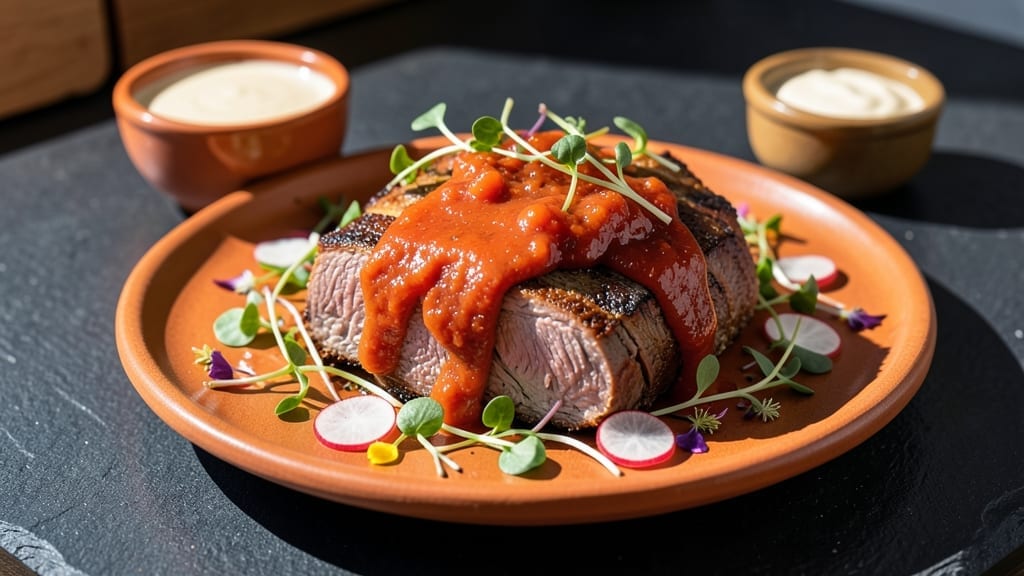
Brisket recipe with tomato paste transforms tough meat into melt-in-your-mouth perfection by unlocking deep, caramelized sweetness that rivals competition-winning results. 🔥 The secret lies in that small can of tomato paste—it’s not just for color, but for building a rich, velvety sauce that clings to every fiber of the meat while balancing smoky flavors.
I first discovered this technique while experimenting with French reduction methods in my smoker, and it became the game-changer for my brisket game.
This method delivers restaurant-quality tenderness without requiring a 24-hour smoke session. A simple dry rub of salt, pepper, and smoked paprika gets the party started, while the tomato paste—cooked down with beef broth and a touch of brown sugar—creates a glossy, sticky glaze that caramelizes beautifully during the final hours.
The key is patience: low and slow is the only way to achieve that perfect balance of smoky, sweet, and savory notes that make this brisket unforgettable.
By the time you slice into this brisket, you’ll find layers of flavor—smoky bark on the outside, tender meat that practically falls apart, and a sauce so rich it needs no assistance.
The tomato paste works its magic by deepening the color and adding complexity without overpowering the meat’s natural richness. This is the kind of brisket that makes guests ask for seconds and leaves you wondering why you ever bought store-bought.
Serve it with classic sides like creamy baked beans, buttery cornbread, and a crisp slaw to cut through the richness. The sauce alone is worth the effort—it’s the kind of dish that turns a simple dinner into a memorable feast. Let’s get cooking!
Ingredients for brisket recipe tomato paste
Pantry staples plus a few key ingredients transform tough brisket into melt-in-your-mouth perfection.
| Ingredient | Amount | Notes |
|---|---|---|
| Beef Brisket 🥩 | 4 lb | Packer cut, good fat cap |
| Tomato Paste 🍅 | ½ cup | High-quality, no sugar added |
| Beef Broth 💧 | 2 cups | Low-sodium preferred |
| Brown Sugar 🍯 | ¼ cup | Light or dark variety |
| Yellow Onion 🧅 | 1 whole | Medium size, chopped |
| Garlic Cloves 🧄 | 6 cloves | Peeled, minced |
| Smoked Paprika 🌶️ | 2 tbsp | High-quality for smokiness |
| Kosher Salt 🧂 | 2 tbsp | Coarse grain preferred |
| Ground Black Pepper 🌶️ | 1 tbsp | Freshly ground |
| Apple Cider Vinegar 🍎 | 2 tbsp | For tangy balance |
| Worcestershire Sauce 🍶 | 1 tbsp | Lea & Perrins preferred |
| Black Coffee ☕ | ½ cup | Strong brew, cold |
| Wood Chips 🌳 | 1 package | Hickory or oak |
| Charcoal Chunks 🔥 | 2 lb | For smoker |
[recipe_ingredient_scaler]
The brisket is the star, so packer cut with good fat is non-negotiable—it self-bastes while smoking. Most grocery stores carry it, but Costco or local butchers often have better quality. Look for thick fat caps (at least 1/4 inch) and vibrant red color. The tomato paste? Muir Glen or Rao’s are my go-tos—they’re unsweetened and pack serious flavor. If you can only find sweetened, just reduce the brown sugar slightly. The beef broth should be low-sodium—Swanson or Pacific Foods are solid choices. For the wood chips, Traeger or Butcher’s Smokehouse brands work perfectly.
No tomato paste? Fresh tomato sauce at half the amount works in a pinch, but it’ll be waterier. Short on brown sugar? Maple syrup or honey at the same quantity adds depth. The apple cider vinegar can be swapped for red wine vinegar if that’s what you’ve got. Worcestershire missing? Soy sauce plus a pinch of sugar mimics the umami. For the coffee, instant espresso powder dissolved in hot water works too—just make sure it’s strong. The garlic can be roasted (wrap whole cloves in foil with the brisket) for even deeper flavor, but raw minced works fine if you’re short on time.
This brisket tastes even better the next day—honestly, it’s peak flavor after 24 hours in the fridge. Wrap tightly in butcher paper or foil, then store in a sealed container. For reheating, low oven (275°F) for 30 minutes keeps it moist. The sauce reduces beautifully, so make extra if you’re serving a crowd. Portion the meat and sauce separately for easy storage, and freeze for up to 3 months—it’s perfect for meal prep. The bark? Save those scraps—they make incredible stock.
Why You’ll Love This Recipe
- Steam-Powered Tenderizer: The coffee-infused steam from that ½ cup black coffee and tomato paste sauce does all the work—no need to brine or marinate first. I swear by this method because it turns the toughest 4 lb brisket into melt-in-your-mouth perfection with minimal fuss.
- Sweet-Smoky Addiction: That ¼ cup brown sugar and tomato paste caramelize into a sticky, glossy glaze while the smoked paprika and coffee deepen the flavor. Honestly, the first bite’s that crispy edge with the creamy center? Chef’s kiss.
- Leftovers That Outshine Fresh: It gets even better the next day—my family insists on seconds when I reheat it at 275°F for 30 minutes. The flavors meld into something richer, and I’ve never wasted a scrap of this brisket.
- Budget-Friendly Crowd-Pleaser: A whole 4 lb brisket feeds six hungry people without breaking the bank. The combination of affordable ingredients like onion, brown sugar, and beef broth makes it my go-to for game days or dinner parties—always a hit.
Step-by-step instructions for brisket with tomato paste
Here’s the method that transforms simple ingredients into melt-in-your-mouth brisket with deep caramelized sweetness.
🔥 Step 1: Build the Smoky Base with Onion and Garlic
In a large skillet over medium heat, add the 1 chopped yellow onion and cook for 5 minutes until softened and translucent. Add the 6 minced garlic cloves and cook for another 1 minute until fragrant—this prevents raw garlic flavor in your brisket.
Stir in the ½ cup tomato paste, 2 cups beef broth, ¼ cup brown sugar, 2 tbsp smoked paprika, 2 tbsp kosher salt, 1 tbsp ground black pepper, 2 tbsp apple cider vinegar, and 1 tbsp Worcestershire sauce. Bring to a simmer and cook for 10 minutes until slightly thickened. This creates your flavor-packed sauce that’ll coat the brisket beautifully.
🔥 Step 2: Prepare the Smoker for Low-and-Slow Cooking
While the sauce simmers, set up your smoker using 2 lb charcoal chunks and 1 package wood chips. Light the charcoal and let it burn until covered with gray ash, then add the wood chips. Maintain a temperature of 225-250°F—this low heat is crucial for tenderizing the brisket without drying it out.
Once the smoker reaches temperature and you see clean blue smoke (not thick white), you’re ready. Pour the prepared sauce into a disposable aluminum pan and place it on the smoker grates. This creates steam that helps tenderize the brisket while keeping it moist.
🥘 Step 3: Smoke the Brisket with Coffee Infusion
Place the 4 lb beef brisket fat-side up on the smoker grates, positioning it next to the sauce pan. Pour the ½ cup black coffee into the sauce pan—this adds depth and helps break down collagen for tender meat. Close the lid and smoke for 6 hours, maintaining the 225-250°F temperature.
Here’s where the magic happens: the coffee infuses into the brisket through the steam, while the tomato paste caramelizes into a sweet, sticky glaze. Check the internal temperature after 6 hours—it should reach 165-170°F. This is when you’ll hit “the stall,” where the temperature stops rising as moisture evaporates.
⏰ Step 4: Wrap and Finish to Probe-Tender Perfection
When you hit the stall, remove the brisket from the smoker and wrap it tightly in butcher paper (not foil). Return it to the smoker and continue cooking until the internal temperature reaches 200-205°F and a probe slides in like butter—this usually takes another 4-6 hours. The butcher paper allows the sauce to penetrate while preserving that beautiful bark.
During this final stage, the caramelized tomato paste will form a glossy glaze on the surface. Let the brisket rest wrapped in the butcher paper for at least 1 hour before slicing. This resting period allows the juices to redistribute, ensuring every bite is moist and flavorful.
🔪 Step 5: Slice Against the Grain and Serve
Unwrap the brisket and locate the grain direction—you’ll see lines running through the meat. Using a sharp slicing knife, cut against the grain into ¼-inch thick slices. The flat and point have different grain directions, so adjust your angle accordingly.
Serve immediately with extra sauce spooned over each slice. Each bite should deliver rich, smoky brisket with sweet caramelized tomato paste, balanced by the tangy coffee and vinegar. The perfect brisket has a dark mahogany bark on the outside and a beautiful pink smoke ring just beneath—this is what you’ve created!
Pro Tips For Making Brisket Recipe Tomato Paste
- Prep Onions Properly: Chop that yellow onion into even ¼-inch slices instead of random chunks—it caramelizes faster and releases sweetness more consistently. I used to rush this, and the onions would burn before softening, turning the sauce bitter.
- Watch the Sauce Simmer: Don’t walk away while the sauce reduces—stir it every 2-3 minutes after adding the tomato paste. The brown sugar burns fast, and you’ll end up with a bitter glaze instead of that glossy, caramelized perfection.
- Stall Early, Wrap Smart: Hit the stall at 165-170°F? Good. Now wrap it in butcher paper, not foil—it lets the sauce cling to the bark while keeping the meat moist. I learned this the hard way after wrapping in foil and ending up with soggy crust.
- Coffee Timing Matters: Pour the cold black coffee into the sauce pan after the brisket is on the smoker—this keeps the steam steady and infuses the meat with depth without cooling down your whole cook. I used to add it earlier, and the smoker took forever to recover.
Creative variations of this brisket recipe tomato paste
Spicy Coffee-Infused Brisket
Add a kick to your brisket by incorporating 2 tbsp instant espresso powder into the tomato paste sauce. Mix it with the ½ cup black coffee before pouring into the sauce pan—this deepens the coffee’s richness while adding subtle bitterness that balances the sweetness.
I often add 1 tsp cayenne pepper to the dry rub for extra heat, but don’t overdo it or you’ll lose the smoky sweetness. The espresso enhances the caramelization of the tomato paste, creating a complex flavor profile that’s both bold and refined.
This variation is perfect for those who love a little heat with their smoky brisket. 🔥
Sweet and Tangy BBQ Glaze
Swap out the apple cider vinegar for ¼ cup BBQ sauce (like Sweet Baby Ray’s) mixed with 1 tbsp Dijon mustard when cooking the sauce. This creates a tangy, slightly sweet glaze that pairs beautifully with the tomato paste’s depth.
The mustard adds a bright, tangy contrast that cuts through the richness of the brisket. I recommend reducing the ¼ cup brown sugar to 2 tbsp to balance the sweetness. This variation is ideal for those who enjoy a more familiar BBQ flavor while still keeping the smoky complexity. 🍯
Herb-Infused French Style
Inspired by my French technique training, I love adding 2 tbsp fresh thyme leaves and 1 tbsp rosemary to the sauce along with the tomato paste. These herbs infuse beautifully during the smoker process, giving the brisket an elegant, aromatic twist.
I also reduce the 2 tbsp smoked paprika to 1 tbsp to let the herbs shine. The result is a brisket with a sophisticated, herb-forward flavor that still delivers that signature smoky sweetness. This version is perfect for a more refined dinner party. ✨
Smoky Maple-Glazed Brisket
For a sweeter, more modern take, replace the brown sugar with ½ cup pure maple syrup in the sauce. The maple syrup caramelizes beautifully with the tomato paste, creating a glossy, sticky glaze with a deeper, woodsy sweetness. I also add 1 tsp ground cinnamon to the sauce for warmth.
This variation is especially delicious served with a side of creamy coleslaw to balance the sweetness. The maple glaze turns this brisket into a showstopper for holiday gatherings. 🍁
Coffee-Rubbed Brisket
Instead of just adding coffee to the sauce, I like to make a coffee rub by mixing 2 tbsp instant espresso powder with the 2 tbsp kosher salt and 1 tbsp black pepper before applying it to the brisket.
This rub enhances the coffee’s depth and adds a subtle bitterness to the bark. I also sprinkle 1 tsp chili powder on top for a little heat. The coffee rub amplifies the tomato paste’s caramelization, creating a brisket with a complex, layered flavor profile that’s both rich and intriguing.
This method is a game-changer for those who love bold, coffee-forward flavors. 💛
Nutrition facts
Frequently asked questions
Why does tomato paste add so much flavor to brisket?
The tomato paste creates a rich, velvety sauce that clings to the meat, enhancing its natural depth. When cooked with brown sugar and beef broth, it caramelizes beautifully during smoking, adding a sweet-savory balance that transforms tough brisket into melt-in-your-mouth perfection. The acidity also tenderizes the meat from within!
Can I skip the coffee infusion step?
Yes, but you’ll miss out on that extra layer of complexity! The ½ cup black coffee helps break down collagen and adds a deep, smoky richness. If you skip it, the brisket will still be delicious—just slightly less tender and with a milder flavor profile. Try it both ways to compare!
What’s the best way to handle “the stall” during smoking?
When the internal temperature hits 165-170°F and stops rising, it’s the stall—don’t panic! Wrap the brisket tightly in butcher paper (not foil) and return it to the smoker. This traps steam and keeps the meat moist while it finishes cooking. Patience is key—this stage can last 2-3 hours!
How do I know when the brisket is done?
Use a meat thermometer to check the internal temperature—it should reach 200-205°F and feel tender enough that a probe slides in like butter. The bark should be dark mahogany, and the meat should separate easily when prodded. Resting for 1 hour before slicing ensures juicy, perfect bites!

Trained in classic French technique but raised on slow-cooked ribs and spicy rubs, she blends culinary skill with smoke and soul.
- Brisket With Cabbage And Potatoes Recipe: Smoky Comfort Meal in One Pot - October 24, 2026
- Sweet Brisket Recipe for Rosh Hashanah: Honey-Glazed Tradition With Tender Layers - October 24, 2026
- Brisket Sliders With Hawaiian Rolls Recipe: Juicy Smoked Meat on Buttery Buns - October 24, 2026