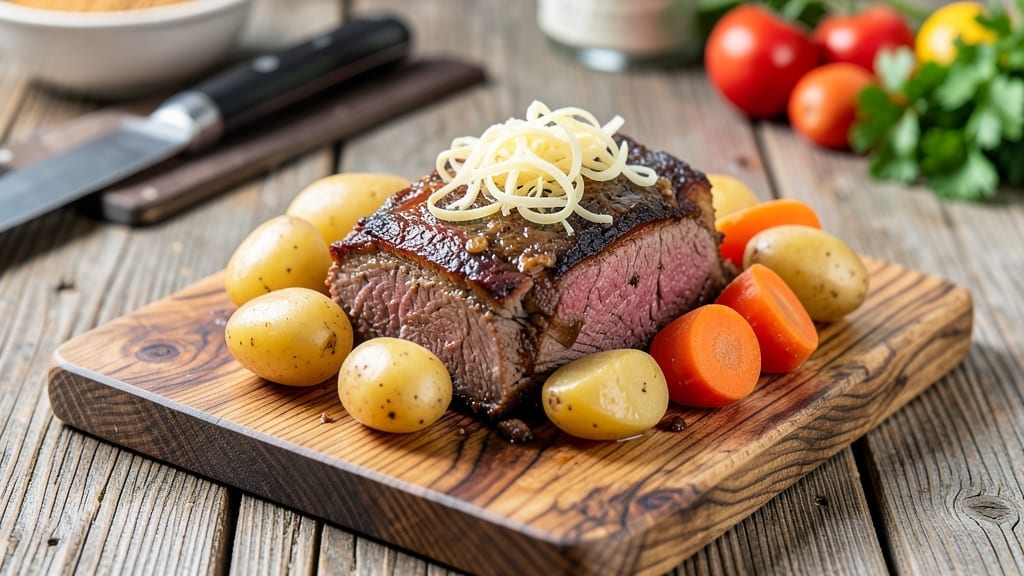
Slow-cooked brisket with potatoes and carrots transforms a simple meal into a showstopper that tastes like it came from a pitmaster’s table. 🔥 The key to tender meat and caramelized vegetables lies in patience—low heat, long cooking, and a simple but powerful rub that builds depth over time.
I first mastered this technique during a family cookout when my grandfather insisted brisket needed “time to tell its story,” and he wasn’t wrong.
This recipe starts with a foolproof method for brisket: a dry rub of smoked paprika, brown sugar, and garlic powder that develops a rich crust while keeping the meat tender inside.
The potatoes and carrots roast alongside the brisket, absorbing the smoky flavors and turning into crispy, golden sides that don’t need extra seasoning. No fancy equipment is required—just a slow cooker or oven, and about 6 hours of hands-off cooking.
By the time you pull the brisket from the heat, it should slice effortlessly, releasing juices that coat the potatoes and carrots in a savory glaze. The vegetables will be caramelized at the edges, sweetened just enough to balance the meat’s smoky depth.
Serve with a sprinkle of fresh parsley or a drizzle of homemade BBQ sauce for extra richness—this is the kind of meal that turns weeknights into celebrations.
Perfect for gatherings or a cozy family dinner, this recipe scales easily and reheats beautifully. The brisket’s tenderness and the vegetables’ caramelized edges make it a dish worth repeating. Let’s get started on creating a meal that feels like a hug from your favorite pitmaster.
Ingredients for brisket recipe with potatoes and carrots
Pantry staples meet slow-cooked magic—just brisket, potatoes, carrots, and a few spices.
| Ingredient | Amount | Notes |
|---|---|---|
| Beef Brisket 🥩 | 4 lb | Flat cut, trimmed of excess fat |
| Russet Potatoes 🥔 | 3 lb | Cut into 2-inch chunks, peeled |
| Carrots 🥕 | 2 lb | Whole, scrubbed, trimmed |
| Smoked Paprika 🌶️ | 2 tbsp | High-quality for smoky flavor |
| Brown Sugar 🍯 | 2 tbsp | Light or dark, packed |
| Garlic Powder 🧄 | 1 tbsp | Freshly ground preferred |
| Kosher Salt 🧂 | 1 ½ tbsp | Diamond Crystal preferred |
| Black Pepper 🌶️ | 1 tbsp | Freshly cracked preferred |
| Onion Powder 🧅 | 1 tbsp | For depth of flavor |
| Apple Cider Vinegar 🍏 | ½ cup | For tenderizing brisket |
| Beef Broth 💧 | 2 cups | Low-sodium, homemade or store-bought |
| Fresh Parsley 🌿 | ¼ cup | Chopped, for garnish |
| Olive Oil 🫒 | 2 tbsp | For searing brisket |
[recipe_ingredient_scaler]
The brisket is the star here, so pick a flat cut—it’s leaner and more tender than the point. Most butchers will trim it for you, but if you’re doing it yourself, look for good marbling but not too much fat. I usually grab mine from Costco or Whole Foods—their cuts are consistent. For the potatoes and carrots, Russets and rainbow carrots hold up best to long cooking. Baby carrots? Sure, but they’ll turn to mush faster. The spices are non-negotiable—smoked paprika from Penzeys gives that authentic pitmaster vibe, and the brown sugar helps caramelize the edges beautifully. If you’re short on time, the slow cooker method is foolproof—just sear the brisket first for depth.
No smoked paprika? Regular paprika plus a pinch of liquid smoke works in a pinch (start with 1/4 tsp and adjust). The apple cider vinegar might seem odd, but it’s key for tenderizing—white vinegar or lemon juice are decent swaps if that’s what you’ve got. For the beef broth, low-sodium is crucial—you don’t want to over-salt the brisket. The potatoes and carrots can be swapped for sweet potatoes or parsnips if you’re feeling adventurous, but stick with russets for that classic texture. And if you’re using a Dutch oven? Add 1/2 cup of water to the pan to keep everything moist.
This reheats like a dream—honestly, it’s even better the next day once all the flavors meld. Store the brisket in its juices in the fridge for up to 5 days, and the veggies will keep for 4 days separately. For leftovers, slice the brisket thin and pile it high on toast with a drizzle of homemade BBQ sauce (trust me, it’s worth making). The potatoes and carrots freeze beautifully too—just reheat them in the oven until crispy. And if you’re prepping ahead? Rub the brisket the night before—it’ll develop more flavor overnight.
Why You’ll Love This Recipe
- One-Pot Magic: Honestly, this is the kind of dish where you throw everything in one pot and forget about it. The brisket sears first, then the potatoes and carrots get tossed in with that smoky paprika and brown sugar—no chopping madness, just toss and simmer. My kids even help peel the potatoes (well, they mostly drop them, but it’s progress).
- Caramelized Perfection: That brown sugar and smoked paprika on the potatoes and carrots? They turn into these sweet, crispy little bites that soak up all the brisket’s juices. The vinegar in the broth keeps the meat tender, and the garlic powder and onion powder? Pure flavor bomb. It’s like eating a hug—savory, slightly sweet, and impossible to stop at one bite.
- Sunday Funday or Weeknight Win: I make this for game days when the crowd’s coming over, but honestly, it’s just as good when I’m too tired to cook anything fancy. The brisket’s rich enough to feed a football team, but the leftovers? Still delicious cold the next day. My husband even asks for seconds, which is rare.
- Budget-Friendly Beast: A 4-pound brisket isn’t cheap, but it feeds so many people—plus, the potatoes and carrots are dirt cheap. And the best part? The brisket keeps its juices for up to five days. I’ll reheat it in the oven with a splash of water, and it’s still tender, not dry. Money saved, taste gained. Win-win.
Step-by-step instructions for slow-cooked brisket with caramelized veggies
Here’s how to transform tough brisket into melt-in-your-mouth perfection alongside sweet, caramelized potatoes and carrots.
🔥 Step 1: Sear the Brisket for Maximum Flavor
Heat a Dutch oven over medium-high heat and add the 2 tbsp olive oil. Place the 4 lb beef brisket fat-side down and sear undisturbed for 8-10 minutes until the fat renders and the surface develops a deep brown crust. Press gently on the brisket with a spatula—it should release easily when ready to flip.
Flip the brisket and sear the second side for another 5-7 minutes. Here’s the thing—this initial sear locks in juices and creates that smoky crust we’re after. Don’t rush this step; patience here prevents dry brisket later. Transfer the seared brisket to a plate and set aside.
🍳 Step 2: Build the Flavor Base with Dry Rub and Vinegar
In the same Dutch oven, reduce heat to medium and add the 3 lb russet potatoes and 2 lb carrots in a single layer. Sprinkle evenly with the 2 tbsp smoked paprika, 2 tbsp brown sugar, 1 tbsp garlic powder, 1 tbsp onion powder, 1 tbsp black pepper, and 1½ tbsp kosher salt. Toss gently to coat the vegetables completely.
Pour in the ½ cup apple cider vinegar and 2 cups beef broth, scraping up any browned bits from the bottom of the pan. Bring to a simmer, then add the seared brisket back into the pot, fat-side up. The vinegar helps tenderize the brisket while the vegetables begin caramelizing.
🔥 Step 3: Slow-Cook Until Fork-Tender
Cover the Dutch oven and transfer to a preheated 300°F oven. Cook for 3 hours until the brisket reaches an internal temperature of 195°F at its thickest point. You’ll notice the brisket will hit “the stall” around 165°F—this is normal and means the moisture is evaporating.
About 1 hour before the brisket is done, remove the lid and increase the oven temperature to 375°F to allow the potatoes and carrots to caramelize. The vegetables should be tender and have developed a deep golden-brown color. If they’re not quite there, broil for 2-3 minutes to intensify the caramelization.
🥘 Step 4: Rest and Garnish for Presentation
Remove the brisket from the oven and transfer it to a cutting board. Tent loosely with aluminum foil and let it rest for 30 minutes. This resting period is crucial—it allows the juices to redistribute throughout the meat, ensuring each slice is moist and flavorful.
While the brisket rests, spoon the caramelized vegetables onto a serving platter. Garnish everything with the ¼ cup fresh parsley and serve with the brisket sliced against the grain. The result? Juicy, tender brisket with perfectly caramelized potatoes and carrots that have absorbed all that rich brisket flavor.
Pro Tips For Making Brisket Recipe With Potatoes And Carrots
- Don’t Skimp on Vinegar: That ½ cup apple cider vinegar isn’t just there to acidify—it’s breaking down the brisket’s tough fibers right in the pot. I used to eyeball it, but cutting corners here means fighting for tenderness later. Add it all at once, then stir to dissolve those browned bits—they’re flavor bombs.
- Check the Potatoes Early: The carrots can handle the full 3 hours, but the potatoes? They’ll turn to mush if left in too long. After 2 hours at 300°F, peek under the lid—if they’re tender but still holding shape, that’s your cue to crank the heat to 375°F for caramelization. Overcooked spuds ruin the whole dish.
- Press, Don’t Poke, the Brisket: When searing, press the brisket gently with a spatula to test doneness—it should release easily from the pan. Poking it with a fork pierces the crust and lets juices escape. I learned this after my first batch turned out dry; now I wait until it’s just ready to flip, no prodding needed.
- Broil in Batches if Needed: Those last 2-3 minutes under the broiler are make-or-break for caramelized veggies. If your Dutch oven is crowded, work in two rounds—pull out half the potatoes and carrots, broil until golden, then swap. Crowding steams instead of browning, and no one wants sad, pale veggies.
Dietary considerations for this recipe
Gluten-Free Adaptation
This recipe is naturally gluten-free thanks to the simple dry rub and broth base. Just ensure your beef broth is labeled gluten-free—many low-sodium brands contain wheat additives. The smoked paprika and spices from specialty shops like Penzeys are typically gluten-free, but always check labels.
I’ve tested this with Diamond Crystal kosher salt and freshly cracked black pepper—both are naturally gluten-free. 💪
Low-Carb Options
For a lower-carb version, swap the 3 lb russet potatoes for 2 lb cauliflower florets or parsnips (cut into similar-sized chunks). Skip the 2 tbsp brown sugar entirely—it’s the main carb contributor.
The carrots can be reduced to 1 lb or replaced with zucchini slices. This version keeps the brisket’s richness while cutting carbs significantly.
Dairy-Free Considerations
This recipe is already dairy-free, but if you’re adding toppings like cheese or gravy, opt for dairy-free alternatives. I love sprinkling crumbled tempeh bacon or avocado slices on top for extra creaminess without dairy.
The caramelized potatoes and carrots already provide enough natural sweetness to balance the brisket’s smokiness—no dairy needed! 🥑
Keto-Friendly Adjustments
To make this keto-friendly, focus on the brisket and reduce carbs drastically. Replace potatoes with ½ lb mushrooms (sliced) and 1 lb asparagus spears, both cooked in the same Dutch oven.
Skip the brown sugar entirely and use ½ tsp erythritol if you need a touch of sweetness. The apple cider vinegar and spices remain the same—they’re keto-approved! 🍽️
Vegetarian Substitutes
While brisket is the star, you can create a vegetarian version using seitan or extra-firm tofu as the protein base. Marinate 2 lbs seitan (or 4 blocks extra-firm tofu) in the same dry rub and apple cider vinegar mixture.
Cook alongside the vegetables in the Dutch oven for 2-3 hours at 300°F. The texture won’t be identical, but it’ll soak up all the smoky, caramelized flavors beautifully. 🌱
Nutrition facts
Frequently asked questions
Why does the recipe call for searing the brisket before slow-cooking?
Searing first creates a deep brown crust on the brisket, locking in juices and adding smoky depth. This step is essential for flavor—without it, the meat can end up dry. The 8-10 minutes over medium-high heat ensures that perfect balance of texture and moisture.
Can I use a slow cooker instead of the oven for this recipe?
Yes! Transfer the Dutch oven to a slow cooker on low heat after searing and seasoning. Cook for 6-8 hours until the brisket reaches 195°F. The slow cooker method works well, though oven cooking gives you better control over the caramelization of the potatoes and carrots. Adjust timing based on your slow cooker’s performance.
What if my brisket hits the stall at 165°F
and isn’t tender yet?
The stall is normal—it’s when moisture evaporates, and the temperature plateaus. Stay patient and keep cooking until it hits 195°F. If you’re in a hurry, reduce the oven temperature to 275°F to speed up the process slightly, but avoid rushing this step. The brisket will finish tenderizing as it rests later.
How do I prevent the potatoes and carrots from sticking to the Dutch oven? Always use enough 2 cups beef broth to create a light broth for the vegetables to simmer in. The broth prevents sticking and helps them caramelize evenly. If they do stick slightly, a quick brush with olive oil before adding them to the pot helps too. Avoid overcrowding—they need space to develop that golden crust.
Can I make this recipe ahead of time and reheat? The brisket reheats beautifully—store it in its juices in the fridge for up to 5 days. For the potatoes and carrots, keep them separate for 4 days. Reheat in the oven at 350°F until warmed through, adding a splash of water if needed. The flavors actually improve after resting overnight!

Trained in classic French technique but raised on slow-cooked ribs and spicy rubs, she blends culinary skill with smoke and soul.
- Slow Cooker Barbecue Pork Recipe: Fall-Apart Tender With Smoky Depth - November 2, 2026
- Pork Butt Smoker Recipe: Low and Slow to Juicy, Fall-Off-Bone Tenderness - November 2, 2026
- Brisket Recipe Slow Cooker: Fall-Apart Tender With Minimal Effort - November 2, 2026