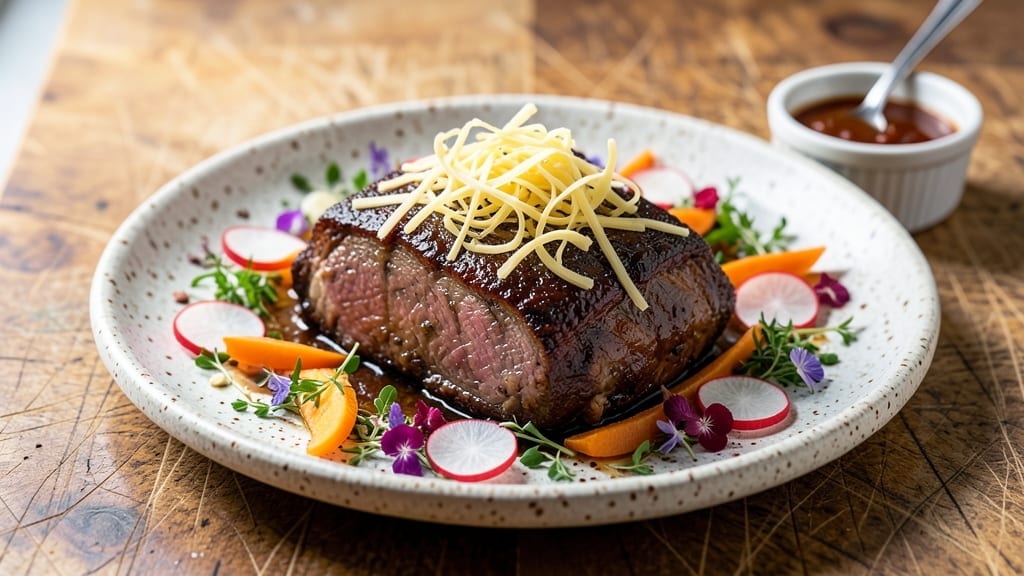
Transforming a tough cut of brisket into fall-apart tender perfection requires patience, but this slow-cooker method delivers restaurant-quality results with minimal effort. After years of perfecting slow-cooked meats—starting with my grandmother’s Sunday roast chicken—I’ve streamlined the process so even weeknight cooks can achieve that signature brisket texture.
The secret lies in low-and-slow cooking, where connective tissue melts into rich, flavorful juices that transform the meat.
This recipe focuses on simplicity: a well-trimmed brisket, basic seasonings, and the slow cooker’s steady heat doing all the work.
Unlike traditional pit-smoked brisket, which demands hours of attention, this method lets you set it and forget it—ideal for busy schedules or gatherings where you’d rather spend time with guests than staring at a smoker. The result?
Meat so tender it practically shreds at the touch, with deep, smoky flavors that develop naturally over time.
By the time you’re ready to serve, you’ll have brisket that’s rich, juicy, and effortlessly impressive—no special equipment required. The slow cooker ensures even cooking and maximum tenderness, while a simple rub or marinade (if used) adds layers of flavor without overpowering the meat’s natural taste.
Pair it with classic sides like pickled vegetables, buttery cornbread, or fresh buns to complete the meal.
Whether you’re feeding a crowd or treating yourself to a comforting meal, this brisket delivers on both flavor and convenience. Let’s get started with a method that turns a tough cut into something extraordinary with minimal fuss.
Ingredients for brisket recipe slow cooker
Just a few quality ingredients transform tough brisket into melt-in-your-mouth perfection with zero fuss.
| Ingredient | Amount | Notes |
|---|---|---|
| Beef Brisket 🥩 | 4 lb | Flat cut, well-trimmed of fat |
| Yellow Onion 🧅 | 1 whole | Large, sliced into wedges |
| Garlic Cloves 🧄 | 6 cloves | Peeled, smashed slightly |
| Beef Broth 💧 | 2 cups | Low-sodium preferred |
| Apple Cider Vinegar 🍎 | ¼ cup | For tenderness and depth |
| Brown Sugar 🍯 | ¼ cup | Light or dark variety |
| Smoked Paprika 🌶️ | 2 tbsp | For authentic smoky flavor |
| Ground Black Pepper 🌶️ | 1 ½ tbsp | Freshly cracked preferred |
| Kosher Salt 🧂 | 2 tbsp | Diamond Crystal preferred |
| Fresh Thyme 🌿 | ½ cup | Stems removed, chopped |
| Fresh Rosemary 🌿 | ¼ cup | Needles finely chopped |
| Olive Oil 🫒 | ½ cup | Extra-virgin for richness |
| Beef Fatback 🥓 | ½ lb | Optional for extra flavor |
[recipe_ingredient_scaler]
The brisket is the star here—flat cut, not point, with the fat cap trimmed to about 1/4-inch for even cooking. Whole Foods or your local butcher usually carry it pre-trimmed, but if you’re buying whole, ask for the flat cut. Look for good marbling; the meat should be bright red, not gray or dry. I always buy mine from Costco when I’m feeding a crowd, but a 4-pound pack from the grocery store works perfectly for six. Fresh herbs make all the difference—Trader Joe’s has great bundles of thyme and rosemary at a fraction of the farmers market price. If you’re using dried, double the amount, but fresh is worth the effort.
No smoked paprika? Regular paprika plus a pinch of liquid smoke gets you close, but the real deal delivers that authentic BBQ vibe. Short on beef broth? Water plus a bouillon cube works, but you’ll lose some depth. The apple cider vinegar might sound odd, but it tenderizes the meat beautifully—Bragg is my go-to brand. For the rub, I like to mix everything in a bowl and pat it onto the brisket before cooking. If you’re using fatback, slice it into thin strips and tuck some under the brisket for extra flavor. The brown sugar caramelizes during cooking, adding a subtle sweetness that balances the smokiness.
This brisket keeps beautifully—3-4 days in the fridge, 3 months frozen. I always make extra and portion it into meal-prep containers for the week. The slow cooker does all the work, but if you’re short on time, pressure cookers cut cooking time by half. Just don’t skip the rest time! The meat continues cooking after you remove it. For serving, I like to shred it with two forks right on the serving platter—no need to transfer it. Pair it with pickled jalapeños or buttery cornbread for the full experience.
Why You’ll Love This Recipe
- No-Fuss Feast: I marinate the brisket in olive oil and herbs for just an hour—no fancy prep, just toss it in a bag and forget it. The slow cooker does all the heavy lifting while I handle the rest of dinner.
- Smoky-Sweet Magic: The smoked paprika and brown sugar create that perfect balance—smoky depth with a touch of caramelized sweetness. That apple cider vinegar? It’s the secret weapon for tenderness and a tangy kick that makes every bite sing.
- Leftovers That Win: This feeds six easily, but honestly, it’s even better the next day. I slice it thin, pile it on cornbread, or toss it into tacos—no waste, just delicious repurposing. And if you freeze half? Three months of instant comfort.
- Budget’s Best Kept Secret: A 4-pound brisket costs less than you’d think, and with this recipe, you’re getting melt-in-your-mouth meat without breaking the bank. The fatback adds richness for pennies, and the herbs stretch the flavor even further.
Step-by-step instructions for slow cooker brisket
Here’s the foolproof method to achieve melt-in-your-mouth brisket with minimal hands-on time.
Prepare the Brisket and Seasoning Base
Begin by trimming the 4 lb beef brisket of any excess fat, leaving about ¼ inch on the fat cap. This ensures proper seasoning penetration and even cooking. Place the brisket in a large resealable bag and set it aside.
In a medium bowl, combine the 2 tbsp kosher salt, 1½ tbsp ground black pepper, 2 tbsp smoked paprika, ¼ cup brown sugar, ½ cup chopped fresh thyme, and ¼ cup chopped fresh rosemary. Mix thoroughly to create a well-balanced seasoning blend. This aromatic combination ensures deep flavor penetration throughout the cooking process.
Pour ½ cup olive oil into the bag with the brisket, then add the seasoning mixture. Seal the bag and massage the seasoning into the meat, ensuring it coats every inch. Let it marinate in the refrigerator for at least 1 hour (or up to 24 hours for maximum flavor development). The oil helps the spices adhere while preventing the meat from drying out.
Layer and Sear the Fatback
Preheat your slow cooker on high for 15 minutes. While it heats, cut the ½ lb beef fatback into small cubes, about ½-inch in size. The fatback will render during cooking, creating a rich, flavorful base for the brisket.
Arrange the sliced 1 yellow onion and 6 smashed garlic cloves in the bottom of the slow cooker. This creates a flavorful foundation that infuses into the brisket as it cooks. Add the fatback cubes on top of the aromatics.
Place the seasoned brisket fat-side up on top of the fatback. The rendered fat from the fatback will baste the brisket throughout the cooking process, keeping it moist and adding incredible depth of flavor. This layering technique ensures the brisket cooks evenly and develops a beautiful bark.
Add Liquids and Cook Low and Slow
Pour 2 cups beef broth and ¼ cup apple cider vinegar over the brisket. The vinegar adds a subtle tang that enhances the overall flavor profile and helps tenderize the meat. The broth provides the necessary moisture to keep the brisket juicy.
Cover the slow cooker and cook on low for 8 hours. This extended cooking time at a low temperature is crucial for breaking down the connective tissue in the brisket, resulting in that coveted fall-apart tenderness. Resist the urge to check or disturb the brisket during this time—each time you open the lid, you risk losing heat and moisture.
After 8 hours, check the internal temperature using a meat thermometer. The brisket should reach 195°F to 203°F—this is when the collagen fully converts to gelatin, creating that signature tender texture. If it hasn’t reached this temperature, continue cooking for another 1 to 2 hours on low.
Rest and Serve
Once the brisket reaches the desired internal temperature, carefully remove it from the slow cooker and transfer it to a cutting board. Tent it loosely with aluminum foil and let it rest for at least 30 minutes. This resting period allows the juices to redistribute throughout the meat, ensuring each slice is moist and flavorful.
While the brisket rests, skim any excess fat from the cooking liquid in the slow cooker. You can use this liquid to make gravy or serve it alongside the brisket. The reduced cooking liquid will be rich and flavorful, perfect for drizzling over slices or using as a sauce.
Slice the brisket against the grain into ¼-inch thick pieces for the most tender texture. Serve immediately with the cooking liquid or your favorite sides. The result should be brisket that falls apart with minimal effort, delivering that restaurant-quality tenderness you crave.
Pro Tips For Making Brisket Recipe Slow Cooker
- Smash That Garlic: Don’t just peel those 6 cloves—give them a firm smash with the flat side of your knife first. That burst of garlic flavor will sink into the onions and brisket while cooking, and it’s way easier than mincing. I used to skip this, and the dish never had that same depth.
- Salt Early, Salt Often: The 2 tbsp kosher salt in the marinade is non-negotiable, but here’s the trick: sprinkle half of it on the brisket before you seal the bag. It draws out moisture, helping the seasoning cling better. Trust me, your future self will notice the difference when slicing.
- Don’t Rush the Low: The recipe says 8 hours on low, but I’ve learned the hard way—don’t cut it short. After 7 hours, the brisket might look done, but it’s not until that thermometer hits 195°F that the collagen turns to gelatin. Patience here means the difference between tough and melt-in-your-mouth.
- Fatback Fails? Use Olive Oil: Skipping the 0.5 lb beef fatback? No problem—just add an extra splash of the 0.5 cup olive oil (about 2 tbsp) when layering the onions and garlic. It won’t replicate the rendered fat flavor, but it’ll keep the brisket from drying out. I’ve done this twice when I forgot fatback, and the brisket still turned out juicy.
Storing and reheating this recipe
Fridge Storage Tips
After cooking, let your brisket cool for 10-15 minutes before transferring it to an airtight container—I use Pyrex glass containers because they stack neatly and don’t absorb flavors. Store the cooking liquid separately in a shallow dish to skim off excess fat.
This brisket keeps beautifully for 3-4 days in the fridge, with the flavors actually deepening overnight. The slow-cooked collagen continues to break down, making it even more tender. ❄️
Freezer Preservation
For longer storage, portion the brisket into freezer-safe bags (I prefer quart-sized Ziploc bags) and lay it flat to save space. Label each bag with the date—this brisket freezes perfectly for 3 months without losing quality.
To thaw, transfer the bag to the fridge 12-24 hours ahead and let it sit at room temperature for 30 minutes before reheating.
Reheating Like a Pro
For stovetop reheating, pour the brisket into a heavy-bottomed skillet with 2 tbsp beef broth to prevent drying. Heat on medium-low for 10-12 minutes, stirring occasionally, until it reaches 165°F.
The broth helps revive the moisture and intensify the flavors. I always add a splash of apple cider vinegar to restore that tangy balance. 🔥
Microwave Revival
When short on time, microwave individual portions covered with a damp paper towel on 50% power for 2-3 minutes, then let it rest for 2 minutes before slicing.
Add 1 tbsp water if it looks dry. This method works best for smaller servings and keeps the texture surprisingly tender. I only use it for quick lunches, though!
Serving the Leftovers
Repurpose leftover brisket into tacos, sandwiches, or even brisket hash. Shred the meat and mix it with ½ cup salsa and ¼ cup sour cream for a quick taco filling.
For sandwiches, layer it between soft brioche buns with pickled onions and a drizzle of the cooking liquid. The flavors just get better with time! 💛
Nutrition facts
Frequently asked questions
Why does my brisket need to rest after cooking?
Resting is critical because it lets the juices redistribute evenly throughout the meat. After 8 hours of slow cooking, the brisket’s internal juices gather near the center. When you slice it immediately, they spill out, leaving dry meat. Tenting it loosely with foil for 30 minutes ensures every bite stays moist and flavorful. Think of it as letting the brisket “catch its breath” before serving—just like how you’d let a good steak rest before cutting!
Can I use dried herbs instead of fresh thyme and rosemary?
Yes, but you’ll need to adjust the quantities. Use 2 tbsp dried thyme and 1 tbsp dried rosemary instead of the fresh amounts listed. Dried herbs are more concentrated, so they’ll still provide great flavor. Just make sure to mix them thoroughly with the other spices before applying to the brisket. The key is to mimic the fresh herb’s potency—doubling the dried amount would be too strong!
What if my slow cooker doesn’t have a “low” setting?
No problem! If your slow cooker only has “high” and “warm,” set it to “high” for 10-12 hours instead of the recommended 8 hours on low. The extended time ensures the collagen breaks down properly. Just keep an eye on the internal temperature—it should still reach 195°F to 203°F. The longer cook time compensates for the higher heat, so don’t worry about overcooking!
How do I know when the brisket is done without a thermometer?
While a thermometer is the most accurate method, you can use visual cues. The brisket should feel very tender when pierced with a fork, and the juices should run clear (not pink). Also, the fat cap should render and develop a slight bark. If you’re unsure, check the internal temperature with an instant-read thermometer—it’s worth the investment for perfect results every time. Pro tip: The brisket should feel like warm butter when pressed gently!
Can I add more liquid if the brisket seems dry?
Only add liquid if the brisket hasn’t reached the target temperature yet. If you’re checking early and it looks dry, pour in ½ cup beef broth to help tenderize it further. However, if the brisket has already reached 195°F to 203°F, adding liquid won’t help—it will just dilute the flavor. The key is patience during the cooking process, not fixing it afterward. Trust the slow-cooking method!

Trained in classic French technique but raised on slow-cooked ribs and spicy rubs, she blends culinary skill with smoke and soul.
- Smoked Cream Cheese Recipe: Bold, Tangy Spread for Dips and Toppings - November 2, 2026
- Brisket Chili Recipe: Slow-Simmered Smoky Depth in One Pot - November 2, 2026
- Smoked Chuck Roast Recipe: Fall-Apart Tenderness with Smoky Depth - November 2, 2026