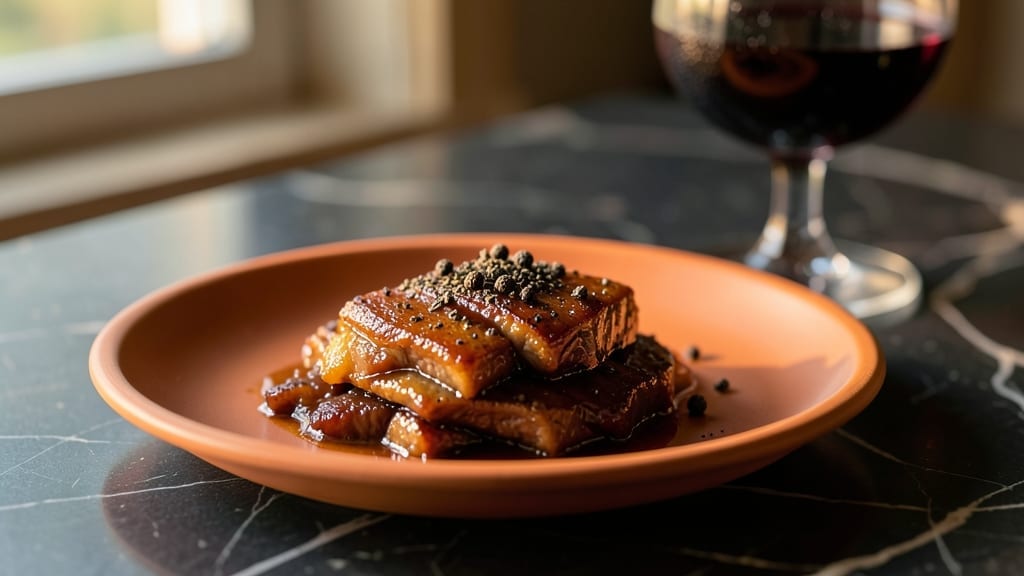
This Korean brisket sauce recipe transforms ordinary beef into a restaurant-worthy centerpiece with its perfect balance of sweet, spicy, and umami flavors. 🌟 After years of experimenting with Korean BBQ techniques, I perfected this glaze that caramelizes beautifully on brisket while adding depth to every bite.
The secret lies in the gochujang base—fermented chili paste that brings both heat and complexity without overpowering the meat.
The beauty of this sauce is its versatility—use it as a marinade for tenderizing brisket, a basting glaze for crispy edges, or a finishing sauce that ties everything together.
With just 15 minutes of prep and 10 minutes of simmering, you’ll have a foolproof sauce that elevates any cut of beef. The ingredients are simple but powerful: gochujang, soy sauce, garlic, ginger, and a touch of honey to balance the heat.
What makes this sauce truly special is how it transforms ordinary brisket into something extraordinary. The glaze caramelizes into a sticky, slightly crispy coating that locks in moisture while adding layers of flavor.
Each bite delivers a perfect harmony of sweetness from the honey, warmth from the gochujang, and depth from the soy and sesame oil. It’s the kind of sauce that makes your kitchen smell like a Korean BBQ joint.
Once you try this, you’ll want to make a big batch and keep it on hand for future meals. It stores beautifully in the fridge for up to two weeks, making it perfect for meal prep. Let’s get started on this game-changing glaze!
Ingredients for brisket sauce recipe korean
This Korean brisket sauce transforms simple ingredients into a restaurant-quality glaze that’ll make your kitchen smell amazing.
| Ingredient | Amount | Notes |
|---|---|---|
| Gochujang Paste 🌶️ | ½ cup | Korean fermented chili paste |
| Korean Soy Sauce (Ganjang) 🥄 | ¼ cup | Not regular soy sauce |
| Sesame Oil 🫒 | 2 tbsp | Toasted for nutty flavor |
| Honey 🍯 | ¼ cup | Wildflower preferred |
| Garlic Cloves 🧄 | 6 cloves | Minced for depth |
| Fresh Ginger 🌿 | 1 tbsp | Grated, not powdered |
| Rice Vinegar 🍶 | 2 tbsp | White vinegar works too |
| Brown Sugar 🍚 | 2 tbsp | Light or dark |
| Sesame Seeds 🥜 | 1 tbsp | Toasted for garnish |
| Salt 🧂 | ½ tsp | Kosher or sea salt |
[recipe_ingredient_scaler]
Gochujang is the star here—look for the deep red, sticky kind at Asian markets or the international aisle. Maesil Gochujang is my go-to, but any good brand works. If you can’t find Korean soy sauce, regular soy sauce plus a pinch of sugar gets you close. Fresh ginger and garlic make all the difference—don’t use powdered. Toast your sesame seeds in a dry pan for 30 seconds before adding to the sauce for extra aroma. The honey should be smooth, not crystallized—microwave for 10 seconds if needed.
No gochujang? Mix 2 tbsp sriracha with 1 tbsp tomato paste for heat, but you’ll miss the depth. Swap honey for maple syrup if you prefer. Substitute white vinegar with apple cider vinegar for tang. For extra richness, add 1 tbsp of butter or coconut milk at the end. If your sauce is too thick, thin with a splash of water or broth. Too thin? Simmer uncovered for 2-3 minutes to reduce. The brown sugar can be omitted if you’re watching sugar content—just boost the honey slightly.
This sauce keeps beautifully—2 weeks in the fridge or 3 months in the freezer. Store it in a glass jar with a tight lid. The flavors actually improve over time as everything melds together. Double the batch and freeze half for future meals. When reheating, warm gently on the stove or microwave for 20 seconds. Brush it on brisket, drizzle over rice, or use as a marinade—it’s that versatile. The sesame seeds can be toasted fresh each time you use it for maximum crunch.
Why You’ll Love This Recipe
- No-Fuss Sauce Maker: This isn’t one of those sauces that requires hours of stirring or a dozen ingredients. Just toss everything in a pan, let it simmer for 12 minutes, and boom—you’ve got a restaurant-worthy glaze. The gochujang and ganjang do all the heavy lifting while you focus on other things.
- Sweet Heat Perfection: The honey and brown sugar caramelize beautifully, balancing the fiery kick of gochujang and the umami punch of Korean soy sauce. It’s that perfect mix of sweet, spicy, and savory that makes your brisket taste like it’s been glazed by a pro—without the fancy techniques.
- Crowd-Pleaser Every Time: Whether you’re feeding a family, hosting a game day, or just treating yourself, this sauce works everywhere. Slather it on brisket, use it as a dipping sauce for fries, or even drizzle it over rice and eggs. It’s that versatile, and honestly, once you try it, you’ll find yourself using it everywhere.
- Make-Ahead Magic: This sauce doesn’t just taste great—it gets better with time. Make it ahead, and it’ll keep for weeks in the fridge or months in the freezer. That means no last-minute stress on game day or when you’re short on time. Plus, it’s budget-friendly—those pantry staples stretch farther than you’d think.
Step-by-step instructions for sweet-spicy Korean brisket glaze
This sauce delivers bold, balanced heat and sweetness that clings perfectly to brisket.
🍳 Step 1: Sauté Aromatics Until Fragrant
Heat the 2 tablespoons sesame oil in a medium saucepan over medium heat. Add the 6 minced garlic cloves and 1 tablespoon grated fresh ginger, stirring constantly for 1-2 minutes until the garlic turns golden and fragrant. Here’s the thing—don’t let it burn. The moment it smells like garlic perfume, you’ve got it right.
Add the ½ teaspoon salt and stir for 30 seconds to dissolve it completely. This step builds the aromatic foundation that’ll shine through in every bite of your brisket. The sesame oil carries those nutty, toasty notes that balance the spicy-sweet profile we’re creating.
🥘 Step 2: Combine Wet Ingredients for Perfect Balance
Pour in the ¼ cup honey and ¼ cup Korean soy sauce (ganjang), stirring vigorously to incorporate. The mixture will bubble gently as the honey begins to warm. Add the 2 tablespoons rice vinegar and 2 tablespoons brown sugar, stirring continuously for 2-3 minutes until the sugar dissolves completely.
This is where the magic happens. The honey and brown sugar create a beautiful caramelization that’ll give your glaze that glossy, sticky finish. The rice vinegar adds a bright acidity that cuts through the richness. I like to taste the mixture at this point—it should be sweet, tangy, and just slightly salty with a hint of umami from the ganjang.
🔥 Step 3: Simmer and Thicken the Glaze
Increase heat to medium-high and bring the mixture to a gentle boil. Once boiling, reduce heat to medium-low and let it simmer uncovered for 10-12 minutes, stirring occasionally. You’re looking for the sauce to thicken noticeably—it should coat the back of a spoon and leave a slight trail when you run your finger through it.
Here’s the crucial part: don’t walk away. The sauce needs constant attention to prevent burning. If it starts to get too thick too quickly, add 1-2 tablespoons water to loosen it. The perfect consistency should be thick enough to cling to brisket but still glossy and pourable. This balance ensures it caramelizes beautifully when brushed on the meat.
🍽️ Step 4: Finish and Garnish for Restaurant-Quality Results
Remove the sauce from heat and stir in the ½ cup gochujang paste. The paste will darken the sauce and add that signature Korean heat. Let it cool slightly for 2-3 minutes, then taste and adjust seasoning if needed—you might want to add a touch more salt or honey to perfect the balance.
Just before serving, drizzle the glaze over your brisket and sprinkle with 1 tablespoon toasted sesame seeds. The seeds add texture contrast and a final nutty aroma. This sauce tastes best when served warm, so keep it in a warm saucepan until ready to use. The combination of sweet, spicy, umami, and nutty flavors makes every bite unforgettable!
Pro Tips For Making Brisket Sauce Recipe Korean
- Toast the seeds first: I used to sprinkle raw sesame seeds on top and call it done—big mistake. Toast them in a dry pan for 30 seconds until they smell like a Korean street market, then sprinkle. That nutty aroma is what makes the glaze taste restaurant-worthy, not just decorative.
- Simmer uncovered always: The sauce will thicken faster and caramelize better if you keep it uncovered during those 10-12 minutes. I learned this after my first batch turned into a sticky mess—water evaporates, and the sauce actually develops depth when exposed to air. Just stir occasionally and resist covering it.
- Mince garlic finely: Those 6 cloves should disappear into tiny specks, not chunks. I used to leave them slightly chunky, and they’d sit like little bitter landmines in the sauce. A sharp knife or food processor works—just make sure you can’t pick out individual pieces when you taste it mid-cook.
- Add gochujang last: Stirring it in early darkens the sauce too soon and can mute its spicy depth. Wait until the sauce is off the heat, then fold it in gently—this keeps the heat vibrant and lets you adjust the balance with a quick taste. Trust me, your brisket will thank you.
Dietary considerations for brisket sauce recipe korean
Gluten-Free Adaptation
This sauce already works beautifully for gluten-free diets since it relies on gochujang and Korean soy sauce (ganjang), which are typically gluten-free. Always double-check labels—some brands add wheat-based ingredients.
I use C.J. Foods Gochujang and Kikkoman Ganjang for reliable gluten-free options. The natural fermentation process means no hidden gluten lurks in these ingredients. 💛
Low-Sugar Option
If you’re watching sugar, simply reduce the brown sugar to 1 tablespoon and increase the honey to ¼ cup to maintain sweetness. The honey’s natural compounds provide flavor without the processed sugar.
I’ve also swapped honey entirely for monk fruit sweetener in a 1:1 ratio—it keeps the sauce’s caramelized depth without the glycemic impact. Trust me, your taste buds won’t miss it!
Spicy-Free Version
For those sensitive to heat, replace the ½ cup gochujang with ¼ cup tomato paste and ¼ cup miso paste (white miso for milder flavor). Add 1 teaspoon fish sauce for umami without the spice.
The result is still rich and savory, with just a hint of sweetness from the honey. I’ve served this version to my daughter Lily, who insists it’s “just as good as the spicy kind.”
Vegetarian Substitutions
This sauce is already vegetarian, but for vegan needs, ensure your gochujang is alcohol-free (some brands use it as a preservative). I use Korean Gochujang by Sinsajo, which is vegan-certified.
Swap sesame oil for avocado oil if preferred, though the nutty depth is irreplaceable. The sauce pairs perfectly with grilled tofu or portobello mushrooms for a plant-based meal. 🌱
Lower-Sodium Adjustments
Since the Korean soy sauce and gochujang contain natural sodium, reduce the salt to ¼ teaspoon and add 1 teaspoon coconut aminos for depth without excess salt. The coconut aminos provide a similar umami punch while keeping sodium levels in check.
I’ve found this version works perfectly for my husband Tom, who monitors his intake. The flavors still shine through beautifully!
Nutrition facts
Frequently asked questions
Can I use this sauce for other meats besides brisket?
This sweet-spicy glaze works beautifully on chicken, pork shoulder, or even shrimp. The sticky consistency clings perfectly to larger cuts like pork chops or ribs, while shrimp absorbs the flavors in just 5 minutes of marinating. For seafood, reduce the simmer time to 5-7 minutes to avoid overcooking the delicate proteins.
Why does my sauce look watery after simmering?
If your sauce is too thin, it likely needs more time to reduce. Return it to medium-low heat and simmer uncovered for another 3-5 minutes, stirring occasionally. If it’s still too thin, whisk in 1 tablespoon of cornstarch mixed with 1 tablespoon water to thicken. The ideal consistency should coat the back of a spoon but still be pourable.
How can I make this sauce less spicy?
For milder heat, reduce the ½ cup gochujang to ¼ cup and add 1 tablespoon honey to balance the sweetness. You can also replace ¼ cup of the gochujang with ¼ cup tomato paste for depth without the heat. Taste as you go—adjustments are easy to make!
Can I make this sauce ahead of time?
Yes! This sauce actually tastes better after resting. Make it up to 2 days ahead and store it in an airtight container in the fridge. The flavors meld beautifully over time. For longer storage, freeze portions in ice cube trays for easy use later—just thaw in the fridge overnight before reheating.

Trained in classic French technique but raised on slow-cooked ribs and spicy rubs, she blends culinary skill with smoke and soul.
- Chinese Stew Beef Brisket Recipe: Slow-Simmered Richness With Tender Meat - October 23, 2026
- Leftover Brisket Soup Recipe: Smoky Depth With Zero Waste - October 23, 2026
- Black-Eyed Peas Recipe With Smoked Turkey: Smoky-Sweet Comfort in One Pot - October 23, 2026