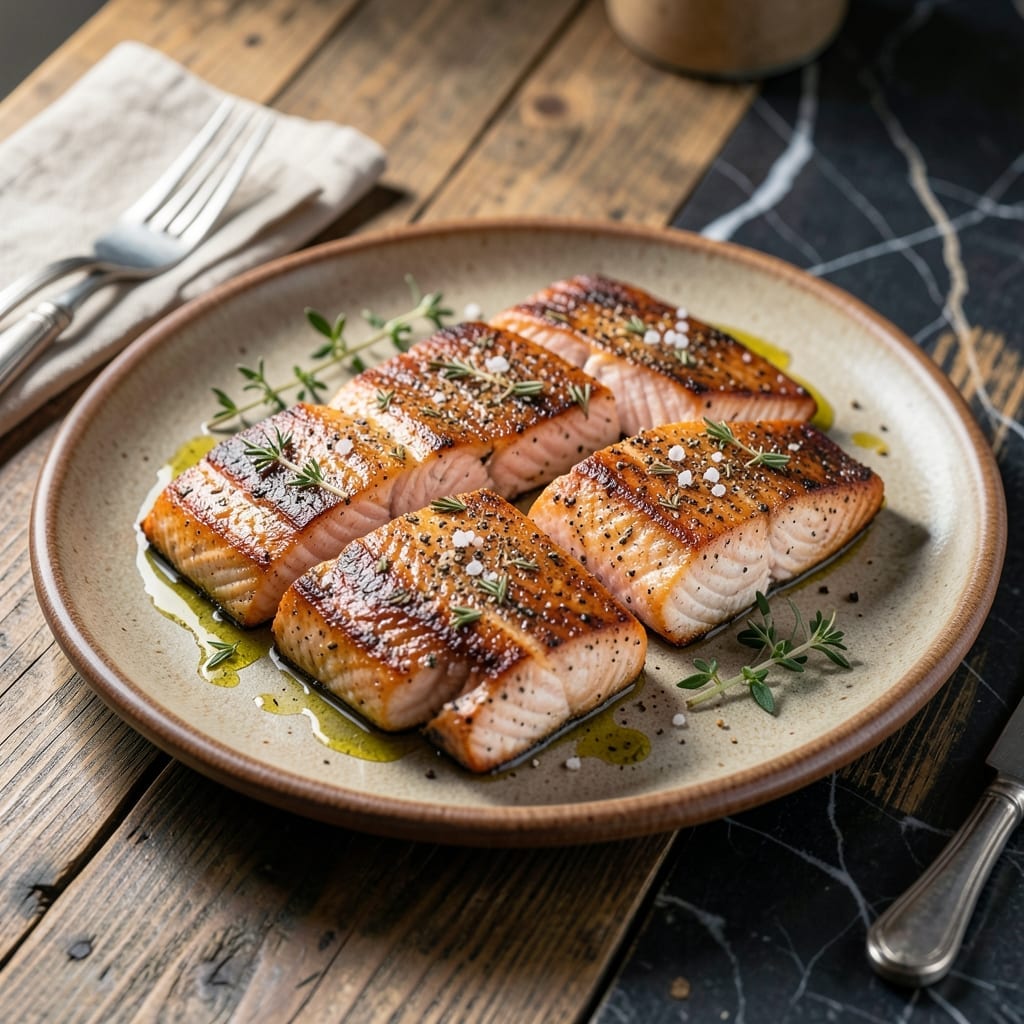
Achieving crispy salmon skin under the broiler is a game of precision and timing. I’ve refined this method to ensure the skin renders perfectly while the flesh stays tender.
Broiling at high heat locks in moisture and creates that coveted shatteringly crispy texture. The key is positioning the rack close to the element and watching closely to avoid overcooking.
You’ll end up with salmon that flakes effortlessly, its skin transformed into a golden, crackling layer. The contrast between the two textures is what makes this dish exceptional.
Serve with roasted asparagus or a light citrus salad to balance the richness. The results speak for themselves.
Ingredients for Broil Salmon Recipe with Skin
Quality salmon plus a handful of pantry staples deliver restaurant-worthy results every time.
| Ingredient | Amount | Notes |
|---|---|---|
| Salmon Fillets 🐟 | 4 pieces | Skin-on, about 6 oz each |
| Olive Oil 🫒 | 2 tbsp | Divided for brushing |
| Kosher Salt 🧂 | 1 tsp | Diamond Crystal preferred |
| Freshly Ground Black Pepper 🌶️ | ½ tsp | Coarse grind recommended |
| Garlic Powder 🧄 | ½ tsp | Not garlic salt |
| Dried Thyme 🌿 | ½ tsp | Or 1 tsp fresh thyme |
| Lemon 🍋 | 1 whole | Zested and juiced |
| Dijon Mustard 🟡 | 1 tbsp | Smooth, not whole grain |
| Fresh Dill 🌿 | 2 tbsp | Chopped, for garnish |
| Unsalted Butter 🧈 | 2 tbsp | Melted, for finishing |
[recipe_ingredient_scaler]
The salmon is everything here. Wild-caught sockeye or king salmon gives you the best fat content for crispy skin—avoid farmed Atlantic if possible. Look for skin that’s shiny and moist, not dull or dried out. Whole Foods or Costco have reliable selections. Pat the fillets dry before seasoning—this is non-negotiable for achieving that shatteringly crisp texture.
No fresh dill? Dried dill at one-third the amount works fine. Short on time? Skip the Dijon and just use olive oil, salt, and pepper—the skin will still crisp up beautifully. The lemon zest adds brightness, but bottled juice in a pinch keeps it simple. For extra flavor, a sprinkle of smoked paprika pairs well with salmon’s richness.
Cooked salmon keeps in the fridge for 2-3 days—store it skin-side down on a paper towel to absorb any moisture. Reheat gently to avoid drying it out. The butter-finished fillets freeze well for up to 1 month, though the skin won’t stay as crisp after thawing.
Why You’ll Love This Recipe
- Ready in 15: I toss the salmon with olive oil, salt, and pepper, then broil—dinner’s done before the oven even fully preheats.
- Crispy Skin Magic: That garlic powder plus high heat gives the skin a crackly, savory bite I can’t resist.
- Feeds My Busy Week: I make a double batch on Sunday for salads, wraps, or straight from the fridge with a squeeze of lemon.
- Zero Waste: Leftovers keep beautifully, and the skin stays crisp when reheated in a dry pan.
Step-by-Step Instructions for Broiled Salmon With Skin
This professional method ensures crispy skin and tender flesh with precise timing and technique.
Step 1: Prepare and Season the Salmon Fillets
Pat the 4 pieces salmon fillets completely dry with paper towels, paying special attention to the skin side. Moisture is the enemy of crispiness. Arrange them skin-side down on a parchment-lined baking sheet.
In a small bowl, mix 1 tsp kosher salt, 0.5 tsp freshly ground black pepper, 0.5 tsp garlic powder, and 0.5 tsp dried thyme. Sprinkle this mixture evenly over the flesh side of each fillet. Drizzle 1 tbsp olive oil over the fillets and rub it in gently to coat the surface. Let them sit at room temperature for 10 minutes while the broiler preheats.
Step 2: Broil the Salmon Skin-Side Down First
Position the oven rack 6 inches from the broiler element and preheat the broiler on high. Once hot, place the baking sheet with the salmon under the broiler. Broil for 4-5 minutes until the edges of the skin begin to crisp and curl slightly.
Watch closely—this step creates the foundation for that perfect crispy texture. The skin should start to turn golden brown and release from the parchment slightly. Avoid opening the oven door during this time to maintain consistent heat.
Step 3: Flip and Finish with Lemon-Mustard Glaze
Carefully flip each fillet using a thin spatula, keeping the skin intact. In a small bowl, whisk together the juice and zest of 1 whole lemon with 1 tbsp Dijon mustard and the remaining 1 tbsp olive oil. Brush this mixture generously over the flesh side of each fillet.
Return the salmon to the broiler and cook for another 3-4 minutes until the flesh is just opaque and flakes easily with a fork. The internal temperature should reach 145°F for perfect doneness.
Step 4: Finish with Butter and Dill
Remove the salmon from the oven and immediately drizzle with 2 tbsp melted unsalted butter. This adds a rich, glossy finish to the crispy skin.
Sprinkle with 2 tbsp fresh dill and serve immediately. The contrast between the crispy skin and tender, flaky flesh will be at its peak. Garnish with additional lemon wedges if desired.
Pro Tips For Making Broil Salmon Recipe With Skin
- Preheat the Broiler: Crank the broiler on high for at least 10 minutes before cooking—I learned this the hard way after my first few batches came out unevenly cooked.
- Pat the Skin Dry: Use a paper towel to thoroughly dry the salmon skin; it guarantees a crispier finish and prevents sticking to the pan.
- Skip the Overcrowding: Leave at least an inch between fillets on the tray, or they’ll steam instead of broil, and you’ll lose that perfect caramelization.
- Season the Skin: Sprinkle a pinch of salt and garlic powder directly on the skin side before broiling—it adds a subtle depth of flavor that most people miss.
Best Sauces and Condiments for This Recipe
Classic Lemon-Dill Sauce
Whisk together ¼ cup Greek yogurt, 1 tbsp fresh lemon juice, 1 tbsp chopped fresh dill, and 1 tsp lemon zest. This bright, creamy sauce complements the rich salmon perfectly. I love how it enhances the dish without overpowering it. 💛
Spicy Sriracha Mayo
Mix ¼ cup mayonnaise with 1 tbsp sriracha and 1 tsp honey for a sweet-heat contrast. The creaminess balances the crispy skin beautifully. I discovered this pairing at a local seafood shack along the coast.
Garlic-Herb Butter
Melt 4 tbsp unsalted butter with 1 minced garlic clove and 1 tsp fresh thyme. Drizzle over the salmon just before serving for an aromatic finish. This is my go-to for adding richness to the dish.
Tangy Caper Sauce
Combine 3 tbsp capers, 2 tbsp chopped red onion, 1 tbsp olive oil, and 1 tsp Dijon mustard. The briny capers cut through the salmon’s richness. It reminds me of coastal rides where I first tried this combination.
Sweet Chili Glaze
Simmer ¼ cup sweet chili sauce with 1 tsp rice vinegar until slightly thickened. Brush lightly over the salmon after broiling for a sticky, slightly spicy finish. This adds a touch of global flair to your meal.
Nutrition Facts
Frequently Asked Questions
Do I need to score the skin before broiling?
Scoring isn’t necessary, but making 2-3 shallow cuts can prevent curling. Use a sharp knife to create small slits in the skin. This helps the fillet stay flat and cook evenly under high heat.
Why does my salmon skin stick to the pan?
Sticking usually means the skin wasn’t dry or the pan wasn’t hot enough. Pat fillets thoroughly and preheat your broiler for 5 minutes. Using parchment paper eliminates this issue entirely.
Can I broil frozen salmon?
Never broil from frozen—thaw first in the fridge for 12-24 hours. Cooking from frozen results in uneven doneness and soggy skin. For best results, bring to room temperature before seasoning.
How do I know when it’s perfectly cooked?
The flesh should reach 145°F internally and flake easily with a fork. Look for the color to change from translucent to opaque. Overcooking dries out the fish—pull it out just as it reaches temperature.

Trained in classic French technique but raised on slow-cooked ribs and spicy rubs, she blends culinary skill with smoke and soul.
- Recipe for Boneless Pork Chops in Cast Iron Skillet: Sear and Baste to Juicy Perfection - October 3, 2026
- Recipe for Boneless Cross Rib Roast: Slow-Roasted Beef with Herb Crust - October 3, 2026
- Hamburgers in Sauce Recipe Crock Pot: Slow-Cooked Savory Delight - October 3, 2026