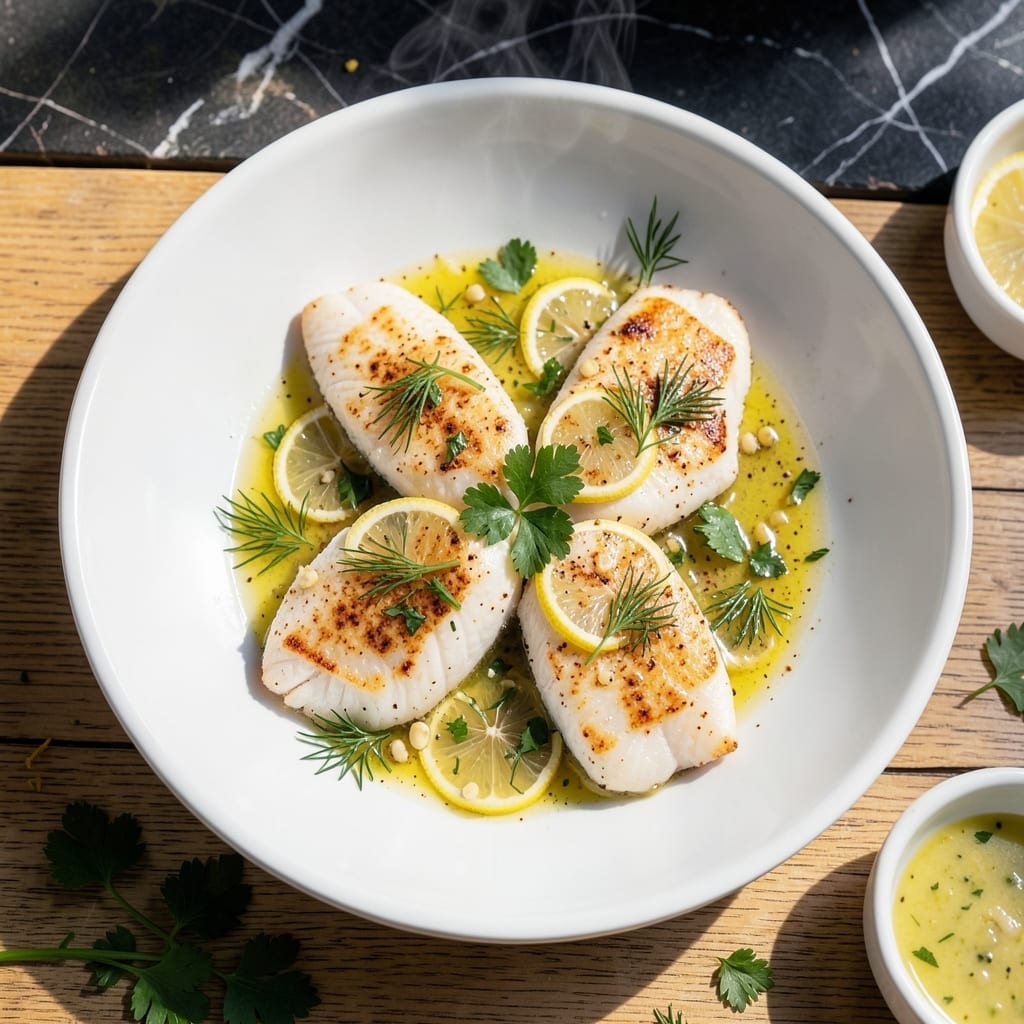
This broiled flounder delivers flaky, tender fish with minimal effort and maximum flavor. The high-heat method ensures a perfect finish every time.
With just a few ingredients and a quick broiling time, this dish brings restaurant-quality seafood to your home kitchen. The lemon-herb finish adds a bright, fresh note that complements the delicate fish beautifully.
Ingredients for Broiled Flounder
Fresh flounder, bright citrus, and aromatic herbs create this elegant seafood dish effortlessly.
| Ingredient | Amount | Notes |
|---|---|---|
| Flounder Fillets 🐟 | 1 ½ lb | Fresh or thawed, skinless |
| Extra-Virgin Olive Oil 🫒 | 3 tbsp | Divided for brushing and drizzling |
| Lemon 🍋 | 1 whole | Zested and juiced |
| Fresh Parsley 🌿 | ¼ cup | Finely chopped, flat-leaf variety |
| Fresh Dill 🌿 | 2 tbsp | Chopped, or 2 tsp dried |
| Garlic Cloves 🧄 | 3 cloves | Minced or pressed |
| Dijon Mustard 🟡 | 1 tbsp | Smooth, for herb mixture |
| Salt 🧂 | ¾ tsp | Diamond Crystal kosher preferred |
| Black Pepper 🌶️ | ½ tsp | Freshly ground |
| Paprika 🌶️ | ½ tsp | Sweet or smoked variety |
| Shallot 🧅 | 1 whole | Finely minced |
| Dry White Wine 🍷 | ¼ cup | Optional, for deglazing pan |
[recipe_ingredient_scaler]
The flounder is the star—opt for wild-caught from a reputable fishmonger or the seafood counter at Whole Foods. Look for fillets that are translucent with a mild aroma (never fishy). If buying frozen, thaw overnight in the fridge. The lemon should be organic if possible, since you’ll use the zest. Fresh herbs are non-negotiable here; dried won’t deliver the same bright finish.
No flounder? Sole or tilapia work well—adjust cooking time for thickness. Out of fresh dill? Fresh tarragon at half the amount adds a similar anise note. Skip the wine? Substitute chicken or vegetable broth. The Dijon can be swapped for whole-grain mustard, but avoid yellow mustard—it’s too sharp. Shallots add sweetness, but red onion in a pinch (soak in cold water for 10 minutes to mellow).
Prep the herb mixture up to 24 hours ahead—the flavors meld beautifully. Cooked flounder is best served immediately, but leftovers keep 2-3 days in the fridge. Reheat gently in a skillet with a splash of oil to avoid drying out. Not recommended for freezing (the texture suffers).
Why You’ll Love This Recipe
- 10-Minute Dinner: I toss the flounder with olive oil, lemon, and herbs, then it’s under the broiler—dinner’s ready before the oven fully preheats.
- Bright Lemon-Dill Pop: That zesty lemon with fresh dill and parsley makes every bite taste like a seaside escape.
- Weeknight MVP: It’s my go-to for busy evenings—light, fast, and fancy enough for company (Yes, even on a Tuesday night).
- Budget Seafood Win: Flounder is affordable, cooks in minutes, and leftovers reheat beautifully for next-day lunches.
Step-by-Step Instructions for Broiled Flounder
This method delivers tender, flaky fillets with a bright lemon-herb finish every time.
Step 1: Prepare the Lemon-Herb Marinade
In a small bowl, combine the zest and juice of the 1 whole Lemon with the 0.25 cup Fresh Parsley, 2 tbsp Fresh Dill, 3 cloves Garlic Cloves (minced), 1 tbsp Dijon Mustard, 0.75 tsp Salt, 0.5 tsp Black Pepper, and 0.5 tsp Paprika. Whisk in 2 tbsp Extra-Virgin Olive Oil until fully emulsified.
The mixture should be fragrant and slightly thick from the mustard. This marinade not only adds flavor but also helps the flounder retain moisture during broiling. Let it sit for 5 minutes to allow the flavors to meld before using.
Step 2: Coat and Marinate the Fillets
Pat the 1.5 lb Flounder Fillets completely dry with paper towels to ensure optimal browning. Arrange them on a plate or shallow dish and drizzle with the remaining 1 tbsp Extra-Virgin Olive Oil, rubbing it evenly over all surfaces.
Spoon the lemon-herb marinade over the fillets, coating them thoroughly on all sides. Let them marinate at room temperature for 10-15 minutes. The acidity of the lemon will begin to tenderize the fish, while the herbs infuse it with aromatic depth.
Step 3: Broil to Flaky Perfection
Preheat the broiler to high and position the oven rack about 6 inches from the heat source. Line a baking sheet with parchment paper for easy cleanup and to prevent sticking.
Place the marinated flounder fillets on the prepared baking sheet, shaking off any excess marinade. Broil for 4-5 minutes until the edges begin to turn opaque and the tops are lightly golden. Watch closely—the high heat means they’ll cook quickly.
Gently flip the fillets using a thin spatula and broil for an additional 2-3 minutes until the fish is opaque throughout and flakes easily with a fork. The flounder is done when it reaches an internal temperature of 145°F.
Step 4: Deglaze and Finish
While the fish broils, finely mince the 1 whole Shallot. After removing the flounder from the oven, transfer it to a serving platter and tent loosely with foil to keep warm.
Place the baking sheet on the stovetop over medium heat. Add the minced shallot and cook for 1-2 minutes until softened. Pour in the 0.25 cup Dry White Wine and scrape up any browned bits from the pan, simmering for 2-3 minutes until slightly reduced.
Spoon this pan sauce over the broiled flounder just before serving. The sauce adds a final layer of brightness that complements the delicate fish. Serve immediately with additional lemon wedges if desired.
Pro Tips For Making Broiled Flounder
- Preheat the Broiler: I learned this the hard way—give your broiler a full 10 minutes to get screaming hot before sliding in the flounder. Cold broilers make for sad, steamed fish instead of that golden, slightly crisp top.
- Pat Fillets Dry: Sounds tedious, but a quick pat with paper towels removes excess moisture so the olive oil and seasonings actually stick. Skip this and your herbs will slide right off.
- Don’t Overcrowd the Pan: After ruining a batch with uneven cooking, I now leave at least an inch between fillets. Too close and the flounder steams instead of broiling, losing that delicate texture.
- Zest Before Juicing: My grandmother swore by this: zest the lemon first for the parsley-dill topping, then juice the halves over the fish. You’ll get bright flavor without wasting a drop.
Common Mistakes When Making Great broiled flounder
Overcrowding the Pan
Always broil in a single layer with space between fillets. Crowding causes steaming instead of browning, resulting in soggy fish. I use a 17×12-inch baking sheet for 1.5 lb of flounder to ensure proper air circulation. 🔥
Skipping the Pat-Dry
Moisture is the enemy of good browning. Pat fillets thoroughly with paper towels before marinating. I learned this the hard way—wet fish steams rather than sears under the broiler.
Even 1 teaspoon of excess water can create a barrier between the heat and the fish surface.
Over-Marinating Time
The lemon’s acidity can turn flounder mushy if left too long. Stick to the 10-15 minute window at room temperature. For firmer fish like halibut, you could extend to 20 minutes, but flounder is delicate.
Ignoring Thickness
Thicker fillets need more time, while thin ones cook fast. Aim for 1-inch thick fillets for even cooking. If yours are thinner, reduce broiling time to 3-4 minutes per side to prevent drying out.
Neglecting the Broiler
Preheat your broiler for at least 5 minutes before adding fish. A cold broiler means uneven cooking and potential sticking. I always check with an oven thermometer to ensure it reaches 550°F. 🌡️
Flipping Too Soon
Wait until the edges turn opaque before flipping. Premature flipping causes breaking. Use a thin, flexible spatula—my Fish Spatula from Mercer Culinary is perfect for this delicate operation.
Nutrition Facts
Frequently Asked Questions
How do I know when flounder is done broiling?
Fish is done when it reaches 145°F internally and flakes easily with a fork. Look for opaque flesh throughout with lightly golden edges.
Can I use frozen flounder for this recipe?
Yes, but thaw overnight in the fridge first. Pat completely dry before marinating to ensure proper browning under the broiler.
What if my fillets are thinner than 1 inch?
Reduce broiling time to 3-4 minutes per side. Watch closely as thin fillets cook faster and can dry out if overcooked.
Do I need to preheat the broiler?
Preheat for at least 5 minutes to ensure even cooking. A cold broiler leads to uneven results and sticking.

Trained in classic French technique but raised on slow-cooked ribs and spicy rubs, she blends culinary skill with smoke and soul.
- Recipe for Boneless Pork Chops in Cast Iron Skillet: Sear and Baste to Juicy Perfection - October 3, 2026
- Recipe for Boneless Cross Rib Roast: Slow-Roasted Beef with Herb Crust - October 3, 2026
- Hamburgers in Sauce Recipe Crock Pot: Slow-Cooked Savory Delight - October 3, 2026