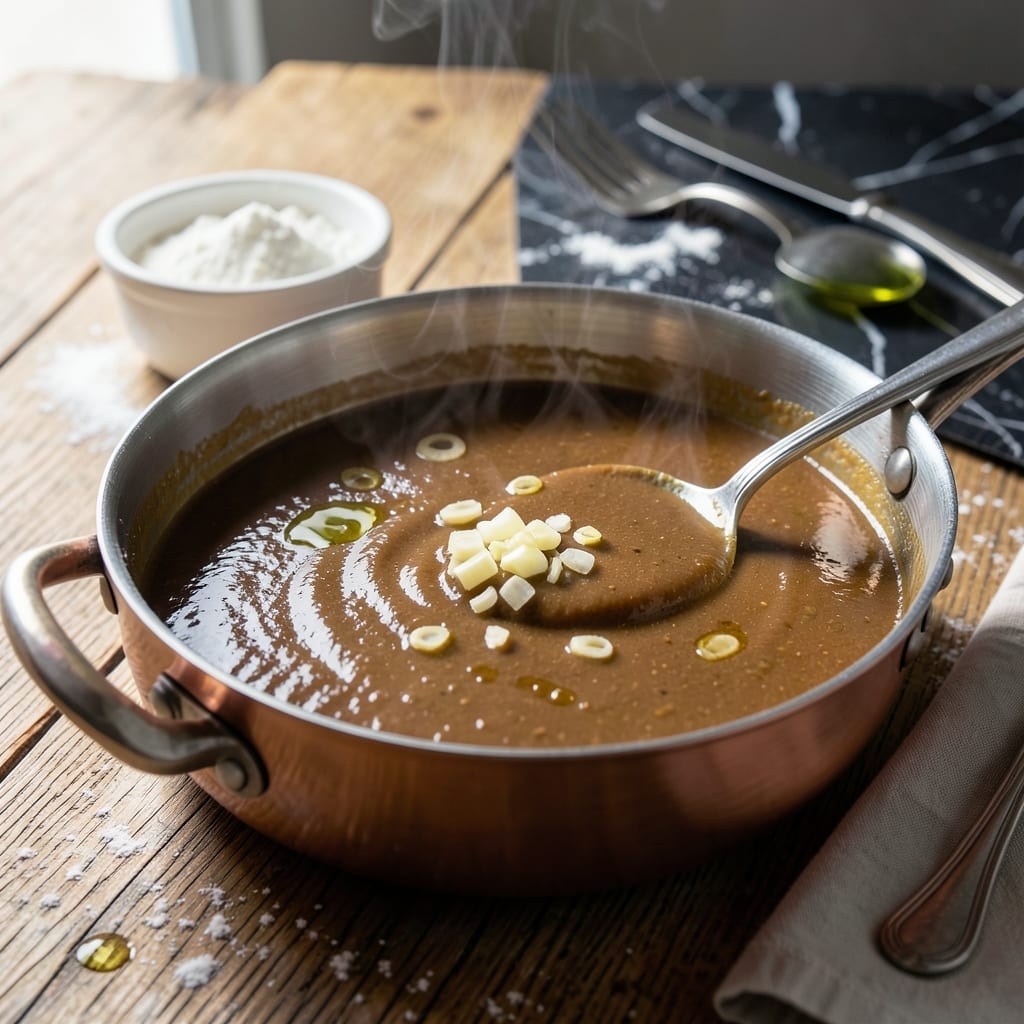
A rich, deep umami gravy can transform any meal from ordinary to extraordinary.
This proven method delivers a velvety, savory sauce that complements everything from roasted meats to mashed potatoes with professional results.
Ingredients for Brown Gravy
Velvety, rich, and deeply savory—this sauce elevates everything it touches with professional polish.
| Ingredient | Amount | Notes |
|---|---|---|
| Unsalted Butter 🧈 | ¼ cup | Divided for roux and finishing |
| All-Purpose Flour 🌾 | ¼ cup | For thickening the gravy |
| Beef Stock 🥩 | 2 cups | Low-sodium preferred for control |
| Dry Red Wine 🍷 | ½ cup | Cabernet or Merlot recommended |
| Soy Sauce 🫒 | 1 tbsp | Adds depth and umami |
| Worcestershire Sauce 🍶 | 1 tbsp | Essential for complexity |
| Shallot 🧅 | 1 whole | Finely minced for subtle flavor |
| Garlic Cloves 🧄 | 2 cloves | Minced for aromatic base |
| Fresh Thyme 🌿 | 1 tbsp | Chopped, stems removed |
| Black Pepper 🌶️ | ½ tsp | Freshly ground for best flavor |
[recipe_ingredient_scaler]
The stock is non-negotiable for deep umami. Homemade beef stock yields the most complex results, but Better Than Bouillon beef base (reconstituted) is a reliable shortcut for home cooks. The wine should be dry and bold—anything you’d drink works. For the butter, European-style (82% fat) creates a smoother roux, though standard unsalted is perfectly adequate. Fresh thyme is ideal, but dried at one-third the amount can substitute if necessary.
No wine? Additional beef stock with a splash of balsamic vinegar mimics the acidity and depth. For a gluten-free version, swap the flour for cornstarch at half the quantity (mix with cold water first). Tamari can replace soy sauce for gluten-free needs. If shallots aren’t available, yellow onion minced fine works, though the flavor will be slightly more pungent. The Worcestershire is traditional, but coconut aminos offer a vegan alternative.
Gravy thickens as it cools. Store in an airtight container in the fridge for up to 5 days, or freeze for 3 months (reheat gently with a splash of water). For the smoothest texture, strain before serving—especially if using fresh herbs. Always taste and adjust seasoning after reheating, as flavors can concentrate over time.
Why You’ll Love This Recipe
- One Pot Wonder: I melt the butter, whisk in flour, and let the beef stock and red wine do the rest—no complicated steps.
- Rich Umami Depth: The soy sauce and red wine give it this deep, savory flavor that’s way better than store-bought.
- Pairs With Everything: I drizzle it over mashed potatoes, roast beef, or even meatloaf—honestly, it’s my go-to for Sunday dinners.
- Budget Stretch: A handful of pantry staples and 15 minutes is all it takes to make a batch that lasts all week.
Step-by-Step Instructions for Brown Gravy
Master this fundamental technique to create a rich, velvety gravy that elevates any dish.
Step 1: Create the Roux Foundation
In a medium saucepan over medium heat, melt 0.25 cup unsalted butter until it begins to foam. This is your fat base for the roux that will thicken the gravy.
Immediately whisk in the 0.25 cup all-purpose flour and continue whisking constantly for 2-3 minutes until the mixture turns a light golden color. The roux should smell nutty and develop a smooth, paste-like consistency. This cooking step removes the raw flour taste and builds the base for your gravy’s rich texture.
Step 2: Build the Aromatic Base
Add the finely minced shallot to the roux and cook for 1-2 minutes until it becomes translucent. The shallot should soften without browning, releasing its subtle, sweet aroma.
Stir in the 2 minced garlic cloves and 1 tbsp fresh thyme, cooking for an additional 30 seconds until fragrant. Be careful not to let the garlic burn—it should just release its essence into the mixture.
Step 3: Deglaze and Develop Depth
Pour in the 0.5 cup dry red wine, using a wooden spoon to scrape up any browned bits from the bottom of the pan. The wine should sizzle as it hits the hot pan and will begin to reduce within 2-3 minutes.
Add the 1 tbsp soy sauce and 1 tbsp Worcestershire sauce, stirring to incorporate. These ingredients add layers of umami that transform a simple gravy into something deeply flavorful. The mixture should darken slightly as the liquid reduces by about half.
Step 4: Finish with Stock and Seasoning
Gradually whisk in the 2 cups beef stock, adding it in a slow, steady stream to prevent lumps from forming. The mixture will initially thicken as the stock hits the roux, then thin out as you continue whisking.
Bring the mixture to a gentle simmer and cook for 5-7 minutes until it reaches your desired consistency. The gravy should coat the back of a spoon but still be pourable. Season with 0.5 tsp black pepper, adjusting to taste. The final product should be smooth, glossy, and richly colored.
Pro Tips For Making Brown Gravy
- Toast the Flour: Cook the butter-flour roux until it turns a deep golden brown—about 3-5 minutes on medium heat. I learned this the hard way: pale roux makes thin, bland gravy.
- Deglaze with Wine: After browning, pour in the red wine immediately to scrape up all those flavorful browned bits. Sounds weird, but it works: this step actually changes the outcome.
- Skip Cold Stock: Use room-temperature beef stock to prevent lumps in your gravy. My grandmother swore by this, and she was right: cold stock seizes up the roux.
- Finish with Soy: Stir in the soy sauce at the very end—about 1 teaspoon is enough. This isn’t the prettiest method, but it’s the tastiest for adding depth without overpowering.
Common Mistakes When Making This Dish
Roux Too Light
Cooking your roux for just 1-2 minutes leaves raw flour flavor. I always whisk until it reaches a golden brown color—about 3-4 minutes over medium heat. This builds the toasty base that gives gravy its depth. 🔥
Lumpy Gravy
Adding stock too quickly causes clumping. I pour in the 2 cups beef stock in a slow, steady stream while whisking constantly. A flat whisk helps break up any lumps immediately.
Thin or Thick
If your gravy is too thin, simmer longer to reduce. Too thick? Whisk in ¼ cup warm stock at a time until it reaches the perfect consistency. Remember, it thickens as it cools.
Burnt Aromatics
Garlic and shallots burn easily in hot roux. I cook them over medium-low heat and pull the pan off heat if they start browning too quickly. Burnt bits make gravy bitter.
Skipping the Deglaze
Always deglaze with 0.5 cup dry red wine to dissolve those flavorful browned bits. Skipping this step means missing out on complex, layered taste that defines great gravy.
Over-Salting Early
Wait until the end to adjust salt. The soy sauce and Worcestershire add significant sodium. I taste after simmering, then season with black pepper and salt as needed.
Nutrition Facts
Frequently Asked Questions
Can I use chicken stock instead of beef?
Yes, but the flavor will be lighter. Use low-sodium chicken stock and add an extra 1 tsp soy sauce for depth. The result will still be delicious but less robust than with beef stock.
How do I fix gravy that’s too thin?
Mix 1 tbsp cornstarch with 1 tbsp cold water, then whisk into simmering gravy. Cook for 1-2 minutes until thickened. Never add dry cornstarch directly—it will clump.
Why does my gravy taste floury?
Your roux likely didn’t cook long enough. Cook the butter-flour mixture until it turns golden brown (3-4 minutes) to remove the raw flour taste. Patience is key here!
Can I make this ahead of time?
Store in an airtight container in the fridge for up to 5 days. Reheat gently, adding a splash of water if needed. The flavors often deepen after resting.

Trained in classic French technique but raised on slow-cooked ribs and spicy rubs, she blends culinary skill with smoke and soul.
- Recipe for Boneless Pork Chops in Cast Iron Skillet: Sear and Baste to Juicy Perfection - October 3, 2026
- Recipe for Boneless Cross Rib Roast: Slow-Roasted Beef with Herb Crust - October 3, 2026
- Hamburgers in Sauce Recipe Crock Pot: Slow-Cooked Savory Delight - October 3, 2026