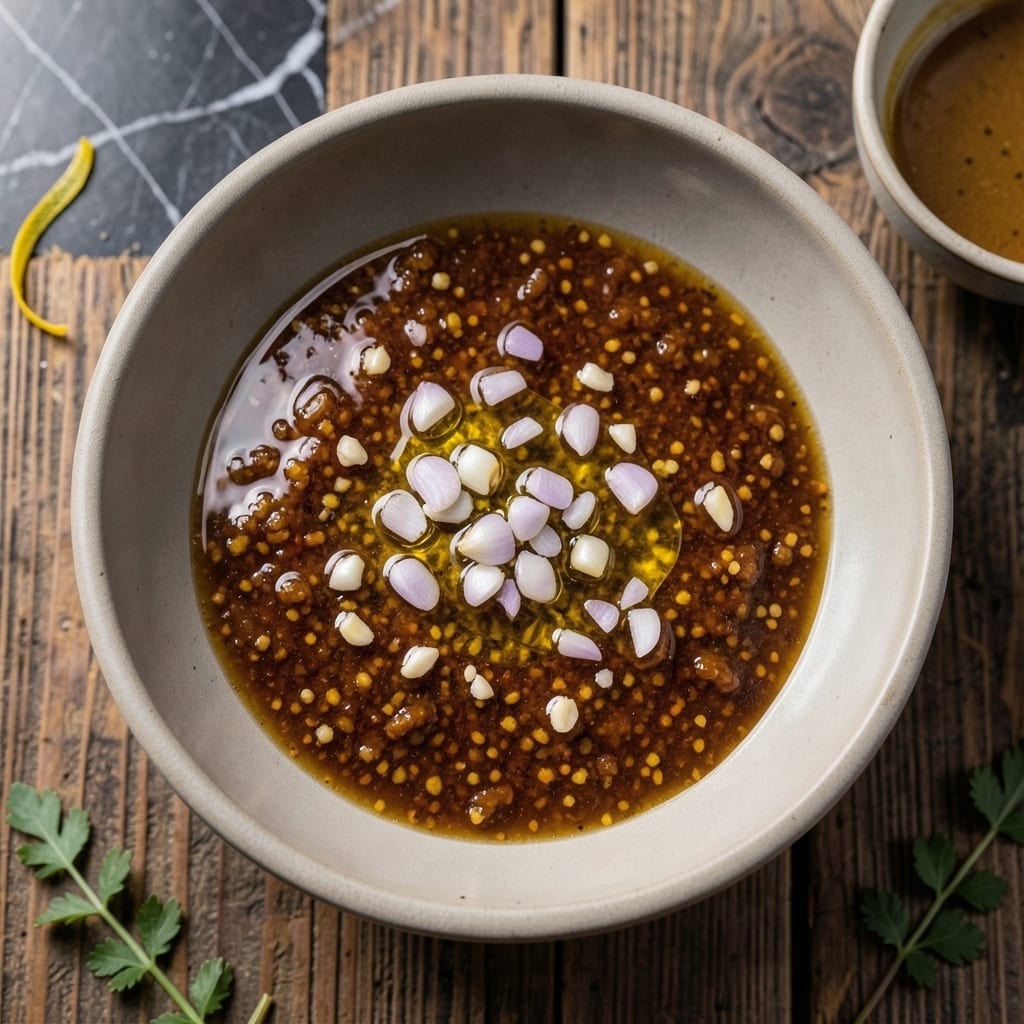
This maple-dijon emulsion transforms shaved brussels sprouts into a restaurant-quality dish. The sweetness of pure maple syrup balances the sharp tang of dijon, creating a perfectly balanced dressing that clings to every leaf.
I developed this recipe after years of experimenting with acid-to-sweet ratios. The key is whisking the ingredients while slowly drizzling in oil, which creates a stable emulsion that won’t separate in the bowl or on your plate.
What you get is a dressing that’s both bright and mellow, with just enough complexity to elevate the earthy sprouts. It comes together in 5 minutes with no special equipment.
Store in an airtight container in the refrigerator for up to one week. The flavors deepen after 24 hours.
Ingredients for Brussel Sprout Salad Dressing
Eight ingredients create this bright, balanced dressing for shaved brussels sprouts.
| Ingredient | Amount | Notes |
|---|---|---|
| Pure Maple Syrup 🍁 | ¼ cup | Grade A or B preferred |
| Dijon Mustard 🟡 | 2 tbsp | Smooth, no seeds preferred |
| Apple Cider Vinegar 🍎 | 2 tbsp | Or white wine vinegar |
| Extra-Virgin Olive Oil 🫒 | ¾ cup | High quality, fruity |
| Shallot 🧅 | 1 whole | Finely minced |
| Garlic Clove 🧄 | 1 clove | Minced or pressed |
| Sea Salt 🧂 | ½ tsp | Fine grain preferred |
| Black Pepper 🌶️ | ¼ tsp | Freshly ground preferred |
[recipe_ingredient_scaler]
The maple syrup is the soul here—Grade A or B gives the best depth. Trader Joe’s or Whole Foods carry solid options, but any pure syrup works. The Dijon mustard needs to be smooth (no whole seeds) for that silky texture. For the vinegar, apple cider brings a fruity tang, but white wine vinegar works if that’s what you’ve got open. Shallots add a gentle bite that’s milder than regular onions.
No shallot? Red onion at half the amount gets you close. Short on maple syrup? Agave nectar is a decent stand-in. The olive oil should be something you’d happily drizzle on bread—California Olive Ranch or Colavita are reliable. If you’re out of Dijon, yellow mustard plus a pinch of turmeric mimics the color and tang (though the flavor won’t be as complex).
This keeps 1 week in the fridge. The emulsion holds best in a jar—shake before using. Flavors meld and deepen after 24 hours, so make it a day ahead if you can. Freezing isn’t ideal (it can separate), but it works in a pinch for up to 3 months.
Why You’ll Love This Recipe
- Five-Minute Mix: I just whisk the shallot, maple syrup, mustard, vinegar, and oil in a jar—no chopping, no fuss.
- Sweet-Tangy Balance: The maple syrup and apple cider vinegar hit that perfect sweet-sour note every time.
- Dressing for Days: I make a double batch and it keeps beautifully, so I can drizzle it on salads all week.
- Budget-Friendly Staples: Honestly, these are pantry ingredients I already have, so it costs almost nothing to throw together.
Step-by-Step Instructions for a Maple-Dijon Salad Dressing
This emulsion comes together quickly with a whisk and a bit of patience.
Step 1: Mince Aromatics for Even Flavor Distribution
Finely mince the shallot and garlic clove until they’re nearly paste-like. This ensures every bite of your dressing carries their sharp, sweet depth without overpowering chunks. I like to use the flat of my knife to press the minced pieces against the cutting board for an even finer texture.
The shallot should yield about 2 tablespoons minced, and the garlic clove about 1 teaspoon. Take your time here—rushed mincing leads to uneven pieces that can make the dressing bitter. A microplane works wonders for the garlic if you want to skip mincing entirely.
Step 2: Combine Acidic and Sweet Components
In a medium bowl, whisk together the pure maple syrup, dijon mustard, and apple cider vinegar until fully combined. The ¼ cup pure maple syrup adds a deep, caramelized sweetness, while the 2 tablespoons dijon mustard brings a sharp tang that balances it perfectly.
The 2 tablespoons apple cider vinegar cuts through the richness and helps stabilize the emulsion. You’ll notice the mixture thickens slightly as the mustard integrates—this is normal and means your base is ready for the oil. If using white wine vinegar, expect a slightly milder acidity.
Step 3: Gradually Emulsify the Oil
With one hand, begin whisking the vinegar mixture vigorously. With the other, pour the ¾ cup extra-virgin olive oil in a thin, steady stream. Start with just a few drops at a time, then increase to a slow drizzle as the emulsion begins to form. This gradual addition is critical—too fast, and the dressing will separate.
After adding about half the oil, the mixture should thicken noticeably and turn a pale, creamy color. If it starts to look greasy or separated, stop adding oil and whisk more vigorously until it comes back together. High-quality, fruity extra-virgin olive oil will give your dressing the best flavor and texture.
Step 4: Season and Adjust to Taste
Add the minced shallot, garlic clove, ½ teaspoon sea salt, and ¼ teaspoon black pepper to the emulsion. Whisk again to fully incorporate. The sea salt enhances all the flavors, while the black pepper adds a subtle warmth that complements the maple and mustard beautifully.
Taste and adjust as needed. If it’s too sharp, add a touch more pure maple syrup. If it’s too thick, whisk in a teaspoon of warm water. The dressing should coat the back of a spoon but still drizzle easily. Let it sit for 10 minutes to allow the flavors to meld before using.
Step 5: Store for Optimal Freshness
Transfer the dressing to a clean jar or bottle with a tight-fitting lid. It’ll keep in the refrigerator for up to 5 days, though it’s best used within 3 days for peak flavor. The emulsion may separate slightly over time—this is natural. Just give it a good shake or whisk before each use.
For the creamiest texture, let it sit at room temperature for 15-20 minutes before dressing your salad. Cold dressing can make greens wilt prematurely. This recipe makes enough to generously dress 4 servings of brussel sprout salad.
Pro Tips For Making Brussel Sprout Salad Dressing
- Whisk Vigorously: I learned this the hard way—maple syrup and Dijon mustard separate easily, so whisk for at least 30 seconds until fully emulsified, or your dressing will cling to the bowl instead of the greens.
- Finely mince shallots: Sounds fussy, but finely minced shallots (about 1/8-inch pieces) distribute better and mellow faster in the acid—big chunks just taste harsh and uneven.
- Skip the balsamic: Resist the urge to swap apple cider vinegar for balsamic; it overpowers the maple and turns the dressing muddy brown instead of that bright, golden hue.
- Bloom the shallots: Let the minced shallots sit in the vinegar for 5 minutes before adding oil—it softens their bite and infuses the dressing with flavor without extra effort.
Serving Suggestions for Leftovers
Plating the Greens
Arrange shaved brussels sprouts in a wide, shallow bowl to maximize surface area for the dressing. I love using my white ceramic serving dish from the farmers market—it makes the greens pop visually. Drizzle with 3-4 tablespoons of dressing per serving, starting light and adding more to taste.
Garnish for Impact
Crumbled goat cheese or toasted pecans add texture and richness that complement the maple-dijon flavors beautifully. A sprinkle of dried cranberries brings a festive touch and echoes the sweetness in the dressing. These toppings transform it from simple salad to standout dish.
Protein Pairings
For a heartier meal, top with grilled chicken or crispy bacon crumbles. The smoky notes from the protein work wonderfully with the dressing’s tang. I often use leftovers from my Sunday cookout—saves time without sacrificing flavor. 💡
Bread on the Side
Serve with warm crusty bread or garlic naan to soak up any extra dressing at the bottom of the bowl. My local bakery’s sourdough baguette is perfect for this—just slice and toast lightly before serving.
Temperature Note
Let the dressing sit at room temperature for 10-15 minutes before using if stored in the fridge. Cold dressing can make the sprouts tough. I usually pull it out when I start prepping the rest of the meal.
Family-Style Serving
For gatherings, present the dressing in a small glass pitcher alongside the salad. This lets guests customize their portion. The dressing’s thick consistency makes it easy to control without overpouring. ✨
Nutrition Facts
Frequently Asked Questions
Can I use honey instead of maple syrup?
Yes, you can substitute honey in equal amounts. Keep in mind honey has a slightly different flavor profile and may make the dressing thicker. Warm it slightly to blend smoothly with the other ingredients.
How do I fix a separated dressing?
Place the separated dressing in a bowl and whisk vigorously while slowly drizzling in 1 teaspoon of warm water. This often recombines the emulsion. If it persists, start fresh with a new base.
What’s the best way to store leftover dressing?
Store in an airtight container in the refrigerator for up to 5 days. Shake or whisk before each use as separation is natural. For best flavor, use within 3 days.

Trained in classic French technique but raised on slow-cooked ribs and spicy rubs, she blends culinary skill with smoke and soul.
- Recipe for Boneless Pork Chops in Cast Iron Skillet: Sear and Baste to Juicy Perfection - October 3, 2026
- Recipe for Boneless Cross Rib Roast: Slow-Roasted Beef with Herb Crust - October 3, 2026
- Hamburgers in Sauce Recipe Crock Pot: Slow-Cooked Savory Delight - October 3, 2026