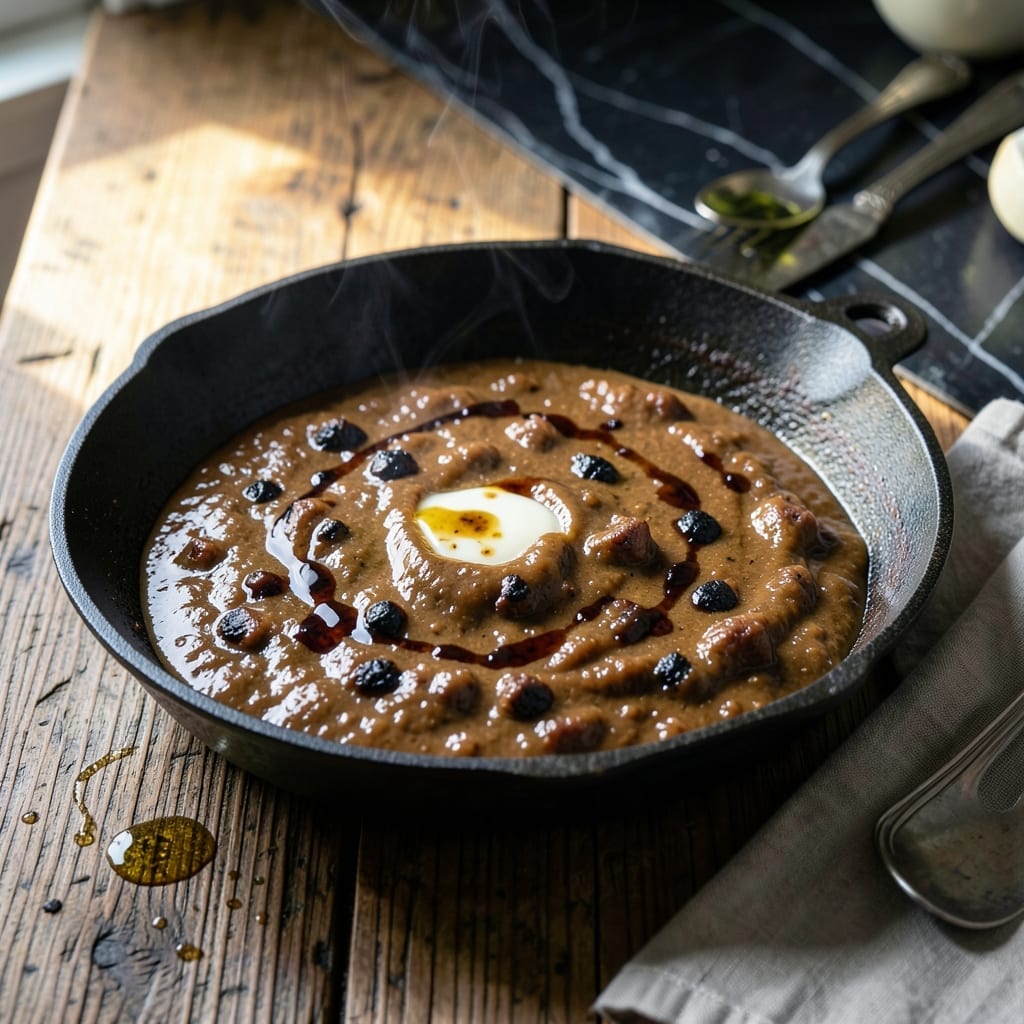
There’s a reason Southern cooks swear by burnt gravy for its unmatched depth of flavor. This sauce transforms simple pan drippings into a rich, smoky condiment that elevates any dish it touches.
I developed this method after years of perfecting my pitmaster techniques, blending tradition with precision. The key is controlled reduction, allowing sugars to caramelize without bitterness while developing deep, complex notes.
What emerges is a velvety, dark gravy with a subtle charred edge, perfect for drizzling over mashed potatoes, biscuits, or smoked meats. Its concentrated umami makes every bite unforgettable.
Make a batch and store it for up to a week—it only gets better with time.
Ingredients for Burnt Gravy
Nine ingredients turn pan drippings into that velvety, dark, smoky condiment everyone craves.
| Ingredient | Amount | Notes |
|---|---|---|
| Pan Drippings 🍖 | 1 ½ cups | From smoked meats preferred |
| All-Purpose Flour 🌾 | ¼ cup | For thickening the gravy |
| Unsalted Butter 🧈 | 4 tbsp | For richness and depth |
| Beef Stock 🥩 | 2 cups | Low-sodium preferred |
| Apple Cider Vinegar 🍏 | 1 tbsp | Balances the richness |
| Worcestershire Sauce 💧 | 1 tbsp | Adds umami complexity |
| Brown Sugar 🍚 | 1 tbsp | For caramelization |
| Kosher Salt 🧂 | 1 tsp | Adjust to taste |
| Black Pepper 🌶️ | ½ tsp | Freshly ground preferred |
| Garlic Powder 🧄 | ½ tsp | Enhances savory notes |
[recipe_ingredient_scaler]
The drippings are non-negotiable here. Save them from smoked brisket, pulled pork, or even burgers—the more flavor in the fat, the better your gravy. I always use low-sodium beef stock to control the salt level. If you’re starting from scratch, render some bacon fat first (worth the extra step). King Arthur Flour is my go-to for the roux, but any all-purpose works fine.
No pan drippings? Bacon grease plus a splash of beef broth gets you close. Out of Worcestershire? Soy sauce at half the amount works in a pinch. The vinegar cuts through the richness, but lemon juice can substitute if that’s what you’ve got. Skip the brown sugar if you’re watching carbs—the caramelization will still happen, just with less sweetness.
This keeps beautifully. Store in an airtight container in the fridge for up to 1 week. Reheat gently on the stovetop, adding a splash of water if it thickens too much. Freezes for 3 months (though it’s so good, it won’t last that long).
Why You’ll Love This Recipe
- One Pan Wonder: I just reuse the same pan from roasting, whisk in flour and butter, then deglaize with beef stock—no extra dishes.
- Deep Umami Punch: The pan drippings and apple cider vinegar create this rich, tangy depth that’s honestly addictive.
- Sunday Roast Staple: I make a big batch for weeknight leftovers—pairs perfectly with mashed potatoes or biscuits.
- Budget Hero: Uses ingredients I already have on hand, and stretches a roast into multiple meals.
Step-by-Step Instructions for Burnt Gravy
Here’s the method I use for rich, smoky gravy with deep Southern character every time.
Step 1: Create the Roux with Pan Drippings and Flour
Heat the 1.5 cups pan drippings in a heavy-bottomed saucepan over medium heat. I always use drippings from smoked meats for that authentic depth. Once hot, whisk in the 0.25 cup all-purpose flour and cook for 8-10 minutes, stirring constantly.
You’re looking for a deep, chocolate-brown color—this is where the “burnt” name comes from. The roux should smell nutty and rich, not acrid. If it starts to darken too quickly, reduce the heat slightly. This slow cooking builds the flavor foundation for your gravy.
Step 2: Deglaze and Build Flavor Base
Add the 1 tbsp apple cider vinegar and 1 tbsp Worcestershire sauce to the roux, whisking vigorously to incorporate. The vinegar will bubble up as it hits the hot pan—that’s normal. Cook for 1-2 minutes until the mixture smooths out.
Stir in the 1 tbsp brown sugar, 1 tsp kosher salt, 0.5 tsp black pepper, and 0.5 tsp garlic powder. The sugar will help balance the acidity and deepen the caramelized flavor. Let this cook for 1 minute to bloom the spices before adding liquid.
Step 3: Incorporate Stock and Butter for Creamy Finish
Slowly whisk in the 2 cups beef stock, a little at a time, to prevent lumps. I prefer low-sodium stock so I can control the seasoning. Bring the mixture to a gentle simmer, then reduce heat to medium-low.
Add the 4 tbsp unsalted butter and whisk until fully melted and incorporated. The butter adds richness and helps create that velvety texture. Simmer for 5-7 minutes until the gravy thickens enough to coat the back of a spoon.
Step 4: Adjust Consistency and Season to Taste
If the gravy is too thick, whisk in a small amount of warm water or additional stock. If it’s too thin, let it simmer a few more minutes. Remember that it will thicken slightly as it cools.
Taste and adjust seasoning if needed. The gravy should have a deep, smoky flavor with a slight tang from the vinegar and a hint of sweetness from the brown sugar. For the smoothest texture, I sometimes strain it through a fine-mesh sieve before serving.
Pro Tips For Making Burnt Gravy
- Scrape the Pan: Use a wooden spoon to really dig into those browned bits in the pan—those are pure flavor. I learned this the hard way after wasting a perfectly good batch of drippings.
- Toast the Flour: Cook the flour in the butter for at least 2-3 minutes until it turns a deep golden brown—this builds the rich, nutty base that defines burnt gravy.
- Deglaze with Vinegar: Add the apple cider vinegar first to lift all those stuck-on bits before adding the beef stock. Sounds weird, but it works.
- Simmer Low and Slow: Keep the heat at a gentle simmer for 10-15 minutes, stirring occasionally, to let the gravy thicken without burning. After burning three batches, I finally figured out patience pays off.
Wine and Beer Pairings for This Dish
Bold Red Wines
A full-bodied Cabernet Sauvignon from Napa Valley stands up to the rich, smoky depth of this creation. The tannins cut through the fat while the dark fruit notes complement the caramelized flavors. I love how a 2018 vintage brings enough structure without overpowering the dish.
Malty Beers
A porter or stout beer offers the perfect contrast with its roasted malt character. The chocolate and coffee notes in a Guinness Foreign Extra or Deschutes Black Butte enhance the gravy’s deep flavors beautifully. The carbonation also cleanses your palate between bites. 🍺
Whiskey Pairings
For a true Southern experience, serve with a glass of bourbon. The vanilla and oak notes in a Buffalo Trace or Maker’s Mark complement the smoky, caramelized elements perfectly. I always keep a bottle on hand for both cooking and sipping alongside this sauce.
Rich White Wines
If you prefer white wine, a bold Chardonnay with oak aging works surprisingly well. The buttery texture of a Sonoma Coast variety mirrors the gravy’s richness while the acidity provides balance. Serve slightly chilled but not ice cold.
Non-Alcoholic Options
For a non-alcoholic pairing, try a smoked black tea like Lapsang Souchong. Its deep, campfire-like aroma and bold flavor profile stand up to the intensity of the gravy. Brew it strong and serve without sweetener to let the flavors shine. ✨
Nutrition Facts
Frequently Asked Questions
What can I use if I don’t have pan drippings?
Use 4 tbsp bacon grease plus 1.25 cups beef broth for similar richness. The bacon adds smokiness while the broth provides the liquid base.
How do I fix lump-free gravy?
Whisk constantly while adding stock and strain through a fine-mesh sieve. For existing lumps, blend briefly with an immersion blender.
Can I make this without flour?
Yes! Use 2 tbsp cornstarch mixed with 2 tbsp cold water as a slurry. Add it at the end and simmer for 2-3 minutes to thicken.
Why does my gravy taste bitter?
Your roux likely cooked too long or at too high heat. Next time, keep it at medium heat and stop at a dark brown color. A pinch of sugar can help balance bitterness.

Trained in classic French technique but raised on slow-cooked ribs and spicy rubs, she blends culinary skill with smoke and soul.
- Recipe for Boneless Pork Chops in Cast Iron Skillet: Sear and Baste to Juicy Perfection - October 3, 2026
- Recipe for Boneless Cross Rib Roast: Slow-Roasted Beef with Herb Crust - October 3, 2026
- Hamburgers in Sauce Recipe Crock Pot: Slow-Cooked Savory Delight - October 3, 2026