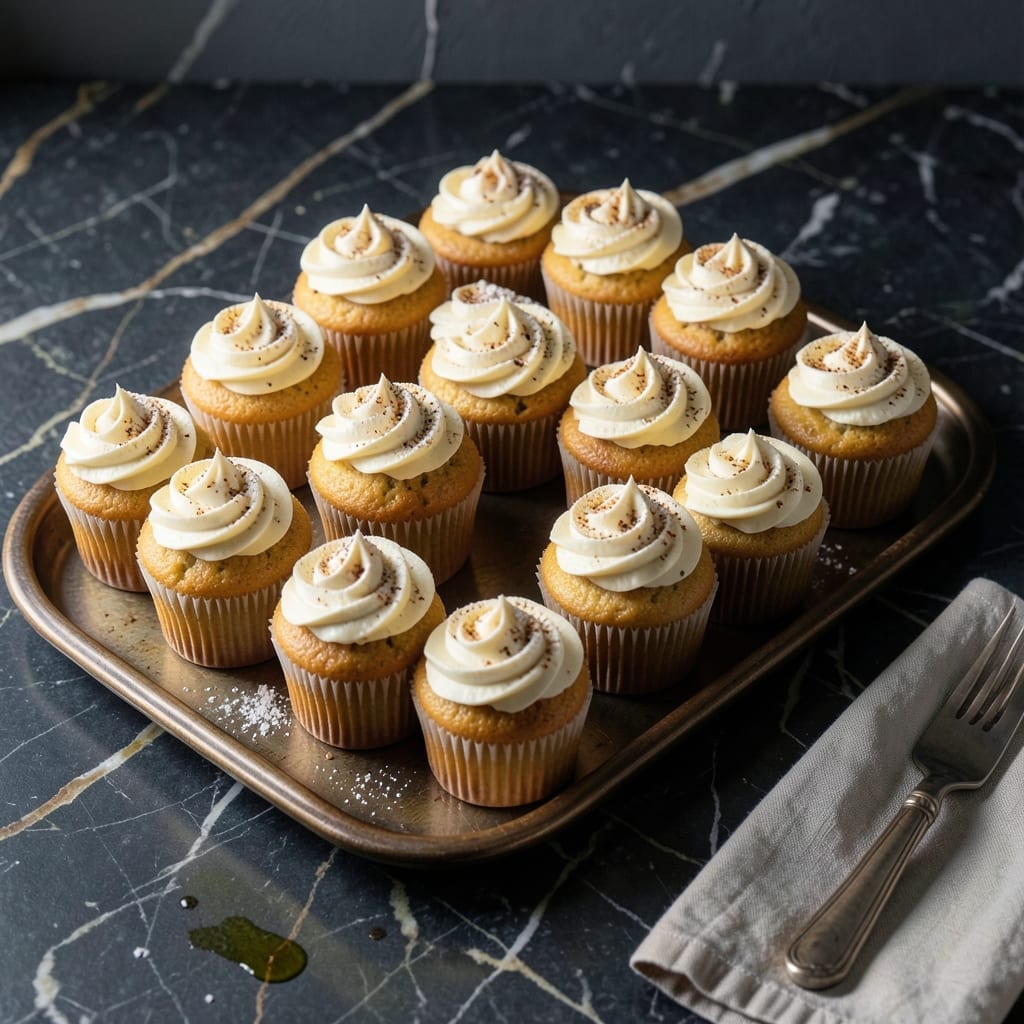
This butter icing delivers perfectly smooth results every time, ideal for piping or spreading on cupcakes. The recipe scales precisely for 24 cupcakes with just the right consistency.
I developed this method to ensure a creamy texture that holds its shape without being too stiff. It pipes beautifully and sets with a slight crust.
Ingredients for Butter Icing Recipe for 24 Cupcakes
Seven ingredients come together for that flawless cupcake topping texture and taste.
| Ingredient | Amount | Notes |
|---|---|---|
| Unsalted Butter 🧈 | 2 cups | Room temperature, softened |
| Powdered Sugar 🍚 | 8 cups | Sifted for smooth texture |
| Whole Milk 🥛 | ½ cup | Full-fat for creaminess |
| Vanilla Extract 🌿 | 2 tbsp | Pure vanilla for best flavor |
| Heavy Cream 🥛 | ¼ cup | Whipping cream works too |
| Salt 🧂 | ½ tsp | Fine sea salt preferred |
| Clear Vanilla Extract 🌿 | 1 tsp | Optional for whiter icing |
[recipe_ingredient_scaler]
The butter is non-negotiable here. European-style unsalted (like Plugrá or Kerrygold) gives you that velvety mouthfeel and holds up to piping. It must be truly room temperature—not melted, not cold—so plan ahead. The powdered sugar should be ultra-fine (Domino or C&H brands work well) and sifted to eliminate any graininess in the finished product.
No heavy cream? Whole milk works at a 1:1 ratio, though the icing will be slightly softer. For a dairy-free version, coconut cream maintains the richness. Vanilla bean paste can replace the extract for visible speckles and more intense flavor. If you’re out of powdered sugar, do not substitute granulated—it won’t dissolve properly and will ruin the texture.
This icing can be made 1 day ahead and refrigerated in an airtight container. Bring to room temperature and rewhip before using. For longer storage, freeze for up to 3 months. Pipe onto completely cooled cupcakes for best results.
Why You’ll Love This Recipe
- One Bowl Wonder: I mix everything in a single bowl—butter, powdered sugar, a splash of milk—and it’s ready before the cupcakes cool.
- Velvety Smooth Taste: The heavy cream and vanilla create that melt-in-your-mouth texture I crave every time.
- Party Ready: I’ve piped this onto 24 cupcakes for birthdays, bake sales, you name it—always disappears first.
- Budget Friendly: Unsalted butter and powdered sugar stretch far, and I’ll be real: it tastes like a bakery’s but costs pennies.
Step-by-Step Instructions for Butter Icing
Master this technique for a flawlessly smooth, professional-quality result every time.
Step 1: Cream the Unsalted Butter to Optimal Consistency
Begin by placing the 2 cups Unsalted Butter in a stand mixer fitted with the paddle attachment. Beat on medium-high speed for 3-4 minutes until the mixture becomes pale yellow and noticeably lighter in texture.
This step incorporates air, which creates a fluffy foundation. The butter should be room temperature—65-68°F—so it creams properly rather than remaining greasy. If it looks grainy, continue beating until completely smooth.
Step 2: Incorporate Powdered Sugar Gradually
Reduce the mixer speed to low and add the 8 cups Powdered Sugar one cup at a time, allowing each addition to fully incorporate before adding the next. This prevents a dust cloud and ensures even distribution.
After all the powdered sugar is added, increase the speed to medium and beat for an additional 2 minutes. The mixture will appear dry at first but will transform into a thick, crumbly paste. Scrape down the sides of the bowl as needed for uniformity.
Step 3: Add Liquid Ingredients for Creamy Texture
With the mixer on low speed, pour in the 0.5 cup Whole Milk, 2 tbsp Vanilla Extract, 0.25 cup Heavy Cream, and 0.5 tsp Salt. For an ultra-white finish, add the 1 tsp Clear Vanilla Extract at this stage.
Increase the speed to medium-high and beat for 3-4 minutes until the icing becomes light, fluffy, and holds soft peaks. The texture should be smooth and glossy, with no graininess. If it appears too thick, add a splash of milk; if too thin, incorporate a bit more powdered sugar.
Step 4: Adjust Consistency and Prepare for Use
Test the consistency by lifting the paddle—ribbons of icing should hold their shape for a few seconds before melting back into the bowl. For piping, aim for a slightly stiffer consistency; for spreading, a softer texture works best.
Use immediately for frosting cupcakes, or transfer to an airtight container and store at room temperature for up to 3 days. If stored, rebeat briefly before using to restore the creamy texture. This recipe yields enough to generously frost all 24 cupcakes with a smooth, professional finish.
Pro Tips For Making Butter Icing Recipe For 24 Cupcakes
- Soften the Butter: Let the unsalted butter sit at room temperature for 1-2 hours until it yields slightly when pressed—cold butter makes lumpy icing, and microwaving ruins the texture.
- Sift the Sugar: I learned this the hard way—powdered sugar clumps fast, so sift it first to guarantee smooth, creamy icing without those annoying white specks.
- Add Milk Slowly: Start with just 1 tablespoon of whole milk or heavy cream at a time, mixing fully between additions—too much too soon thins the icing and forces you to overcompensate with sugar.
- Beat for 5 Minutes: After everything’s combined, keep the mixer running on medium-high for a full 5 minutes—this incorporates air, making the icing fluffier and easier to pipe onto those 24 cupcakes.
Regional Styles of This Dish
Southern Style 🧁
In the Southern U.S., butter icing often takes on a richer, creamier profile with a touch of vanilla bean paste or bourbon for depth. This style leans toward a fluffier texture, achieved by whipping the butter and sugar longer. Historical ties to traditional pound cakes and layered desserts make it a staple for celebrations.
British Style 🍰
Across the pond, British buttercream is simpler, often using just butter, powdered sugar, and milk. It’s less sweet than American versions and favors a smooth, silky finish. This style pairs perfectly with sponge cakes and Victoria sandwiches, reflecting its roots in classic afternoon teas.
French Style 🥐
French buttercream, or beurre monté, incorporates egg yolks for a luxurious, custard-like consistency. It’s lighter yet richer, often flavored with almond extract or citrus zest. This technique stems from pâtisserie traditions, ideal for elegant pastries.
Australian Style 🎂
Down Under, butter icing tends to be less sweet, with a higher butter-to-sugar ratio. Some recipes include condensed milk for extra creaminess. It’s commonly used in lamington cakes and fairy bread, showcasing a love for bold, simple flavors.
Nutrition Facts

Trained in classic French technique but raised on slow-cooked ribs and spicy rubs, she blends culinary skill with smoke and soul.
- Recipe for Boneless Pork Chops in Cast Iron Skillet: Sear and Baste to Juicy Perfection - October 3, 2026
- Recipe for Boneless Cross Rib Roast: Slow-Roasted Beef with Herb Crust - October 3, 2026
- Hamburgers in Sauce Recipe Crock Pot: Slow-Cooked Savory Delight - October 3, 2026