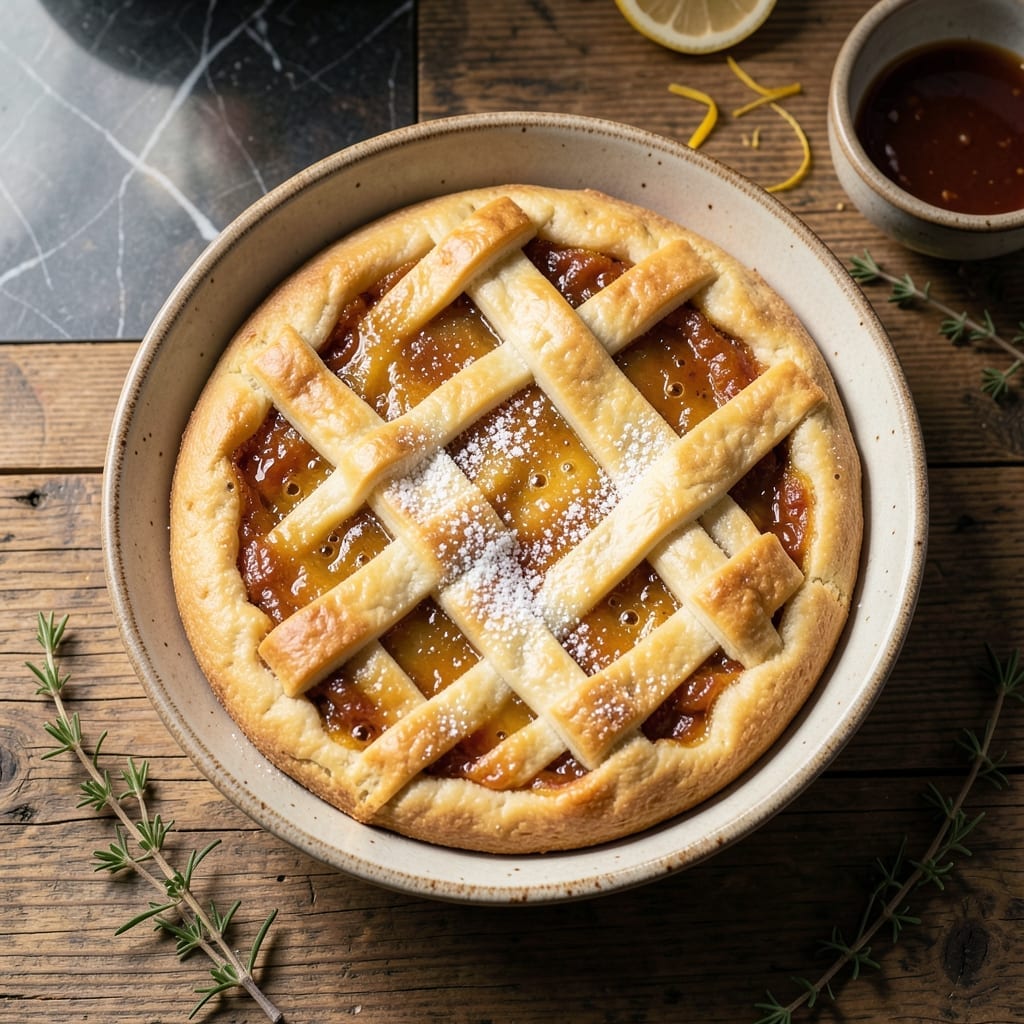
This traditional German butterkuchen is a testament to old-world baking, where simple ingredients transform into something extraordinary.
With a rich, buttery topping and a soft yeast dough, this cake captures the warmth of a German grandma’s kitchen in every bite.
Ingredients for Butter Kuchen Recipe German
Simple ingredients create a rich, buttery German cake with old-world charm and soft texture.
| Ingredient | Amount | Notes |
|---|---|---|
| All-Purpose Flour 🌾 | 3 ½ cups | Sifted, plus extra for dusting |
| Active Dry Yeast 🍞 | 2 ¼ tsp | One packet, proofed in warm liquid |
| Whole Milk 🥛 | ¾ cup | Warmed to 110-115°F |
| Granulated Sugar 🍚 | ¼ cup | Divided for dough and topping |
| Unsalted Butter 🧈 | 1 cup | Softened, divided for dough and topping |
| Large Egg 🥚 | 1 whole | Room temperature |
| Salt 🧂 | ½ tsp | Fine sea salt |
| Vanilla Extract 🌿 | 1 tsp | Pure extract preferred |
| Heavy Cream 🥛 | ½ cup | For buttery topping |
| Confectioners' Sugar 🍚 | ¼ cup | For dusting finished cake |
| Almond Slices 🌰 | ¼ cup | Optional, for topping garnish |
[recipe_ingredient_scaler]
The butter is non-negotiable here—use high-fat European-style for authentic richness. King Arthur Flour is my go-to for consistency, but any all-purpose works. Proof the yeast in warm milk (not hot!)—look for foamy bubbles within 5 minutes. The dough should be soft but not sticky. If your kitchen is cold, place the rising dough near a warm spot to encourage activity.
No heavy cream? Whole milk plus 2 tbsp melted butter per half-cup works in a pinch. Brown sugar can replace granulated in the topping for caramel notes. For a nut-free version, skip the almonds or swap for coarse turbinado sugar. The vanilla should be pure—imitation tastes harsh in this delicate cake.
Store cooled cake airtight at room temperature for 2-3 days. The flavors deepen overnight. For longer storage, freeze slices wrapped tightly in plastic and foil for up to 3 months. Reheat briefly in a warm oven to restore that fresh-baked feel.
Why You’ll Love This Recipe
- One Bowl Wonder: I mix the dough right in the same bowl I proof it in—no extra dishes, just flour, yeast, and milk coming together effortlessly.
- Buttery Heaven: That layer of melted butter soaking into the sweet, pillowy dough? Honestly, it’s the reason I make this every weekend.
- Breakfast or Dessert: I serve it warm for Sunday brunch or as a late-night treat—this kuchen doesn’t care what time it is.
- Stays Fresh: Leftovers? No problem. It keeps beautifully for days, and I’ll be real: it tastes even better the next morning with coffee.
Step-by-Step Instructions for Butter Kuchen
Master the technique for this traditional German yeast cake with precise, professional guidance.
Step 1: Activate the Yeast and Prepare the Dough
Begin by warming the 0.75 cup Whole Milk to 110-115°F—this temperature range is critical for yeast activation without killing it. In a small bowl, combine the warm milk with the 2.25 tsp Active Dry Yeast and a pinch of the 0.25 cup Granulated Sugar. Let it sit for 5-10 minutes until foamy.
In a large mixing bowl, whisk together the 3.5 cups All-Purpose Flour, remaining granulated sugar, and 0.5 tsp Salt. Create a well in the center and add the yeast mixture, 1 whole Large Egg, and 1 tsp Vanilla Extract. Mix until a shaggy dough forms.
Step 2: Incorporate the Butter and Knead
Add ½ cup of the 1 cup Unsalted Butter (softened) to the dough. The butter should be at room temperature but not melted. Knead the dough on a lightly floured surface for 8-10 minutes until smooth and elastic, gradually working in the remaining ½ cup Unsalted Butter a few tablespoons at a time.
The dough will be slightly sticky at first but should become silky as the gluten develops. If it sticks to your hands, dust them with a bit of the reserved All-Purpose Flour. The finished dough should pass the windowpane test—stretch a small piece thinly to see light through it without tearing.
Step 3: First Rise and Shape the Dough
Place the dough in a greased bowl, cover with a damp towel, and let it rise in a warm, draft-free place for 1-2 hours or until doubled in volume. I place it near my oven with the light on for consistent warmth. Punch down the dough to release the air, then transfer it to a greased 9×13-inch baking pan.
Press the dough evenly into the pan, stretching it to the edges. Use your knuckles to create dimples across the surface—this ensures the buttery topping will pool beautifully during baking. Cover and let it rise again for 30-45 minutes until puffy.
Step 4: Add the Buttery Topping and Bake
Preheat the oven to 375°F. Once the dough has risen, use your fingers to press deep dimples all over the surface. Pour the 0.5 cup Heavy Cream evenly over the dough, allowing it to pool in the dimples. Sprinkle the 0.25 cup Almond Slices over the top, pressing them lightly into the cream.
Bake for 25-30 minutes until the edges are golden brown and the center is set. The cream should be bubbly and the almonds lightly toasted. If the top browns too quickly, tent the pan with foil for the remaining baking time.
Step 5: Finish and Serve
Remove the kuchen from the oven and let it cool in the pan for 10 minutes. While still warm, dust the top evenly with the 0.25 cup Confectioners’ Sugar. This final touch adds a delicate sweetness and a professional bakery finish.
Slice into squares while still slightly warm. The texture should be tender and slightly custardy where the cream pooled, with a buttery richness in every bite. Serve the same day for the best flavor and texture.
Pro Tips For Making Butter Kuchen Recipe German
- Proof the Yeast: Always bloom your active dry yeast in warm milk (around 110°F) with a pinch of sugar first—I learned this the hard way after a few dense, sad kuchen loaves.
- Soften the Butter: Take the unsalted butter out 1-2 hours before baking, or microwave in 5-second bursts until just pliable, not melted. Cold butter won’t incorporate right into the dough.
- Avoid Over-Flouring: Resist the urge to dump extra flour on the counter when kneading. The dough should be slightly sticky—adding too much flour makes the kuchen tough.
- Chill Before Shaping: After the first rise, refrigerate the dough for 15 minutes before rolling it out. It relaxes the gluten and prevents shrinking when you press it into the pan.
Essential Equipment for This Dish
Must-Have Tools
To bake a perfect Butter Kuchen, start with a 9×13-inch baking pan—a staple for even heat distribution. A stand mixer (like the KitchenAid) is ideal for kneading the yeast dough effortlessly. Don’t forget a rolling pin to smooth out the dough and a pastry brush for buttery layers. 🍳
Nice-to-Have
A dough scraper helps divide portions cleanly, while a digital scale ensures precise measurements. For a golden finish, a pizza cutter makes slicing the cake neat and professional. These tools elevate your baking game! ✨
Budget Alternatives
Short on gear? A large mixing bowl and a wooden spoon work for kneading. Use a fork to poke holes in the dough, and a regular knife can replace a pastry brush. Simple swaps keep costs low without sacrificing quality. 💡
Nutrition Facts

Trained in classic French technique but raised on slow-cooked ribs and spicy rubs, she blends culinary skill with smoke and soul.
- Recipe for Boneless Pork Chops in Cast Iron Skillet: Sear and Baste to Juicy Perfection - October 3, 2026
- Recipe for Boneless Cross Rib Roast: Slow-Roasted Beef with Herb Crust - October 3, 2026
- Hamburgers in Sauce Recipe Crock Pot: Slow-Cooked Savory Delight - October 3, 2026