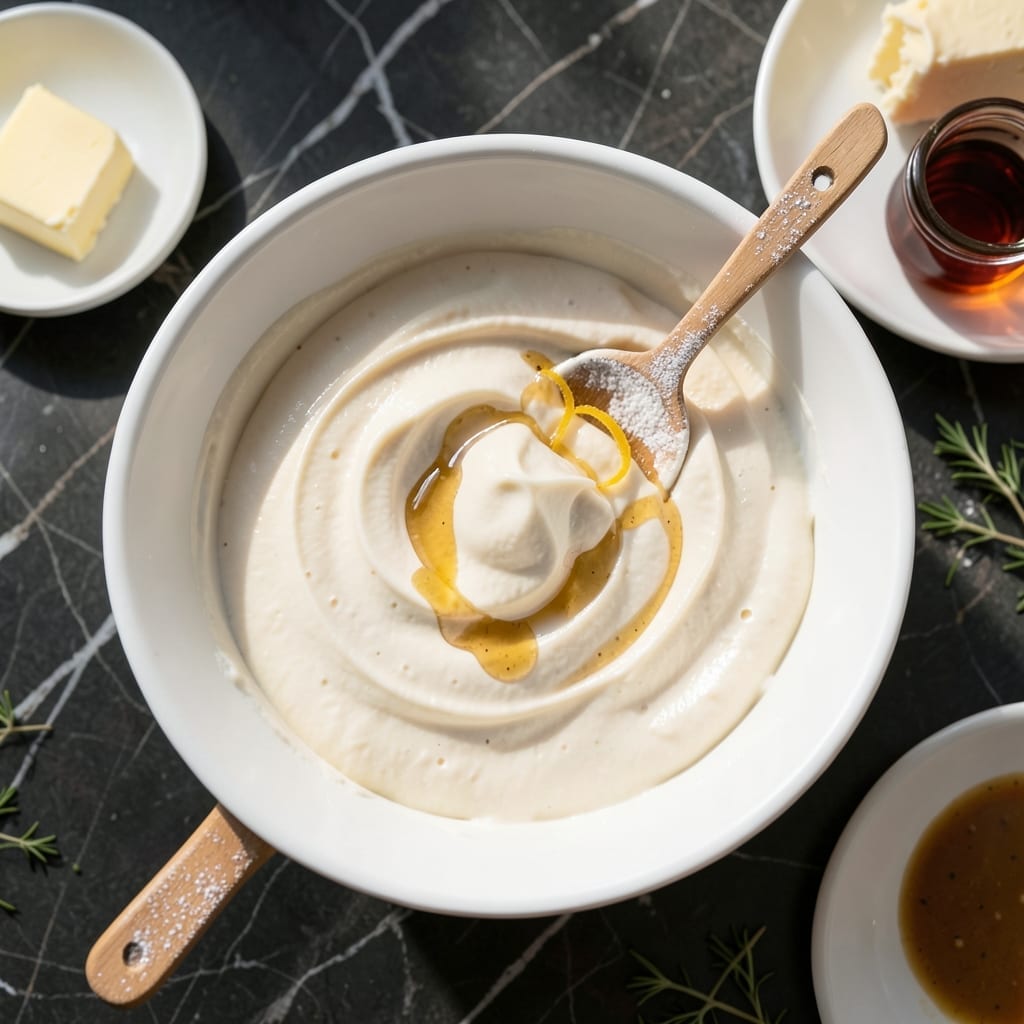
This buttercream frosting delivers perfect results every time—smooth, creamy, and ideal for piping intricate cake decorations. The key lies in proper cream and butter ratios plus precise mixing timing.
Unlike store-bought versions, this recipe creates a stable frosting that holds its shape while maintaining a velvety texture. It’s the professional standard for cake decorating at home.
Ingredients for Buttercream Frosting Recipe for Cake
Seven ingredients yield professional-grade pipeable frosting every time.
| Ingredient | Amount | Notes |
|---|---|---|
| Unsalted Butter 🧈 | 2 cups | Room temperature, 4 sticks |
| Heavy Cream 🥛 | ½ cup | Cold, at least 35% fat |
| Powdered Sugar 🧂 | 8 cups | Sifted for smooth texture |
| Vanilla Extract 🌿 | 2 tsp | Pure, not imitation |
| Salt 🧂 | ½ tsp | Fine sea salt preferred |
| Clear Vanilla Extract 🌿 | ½ tsp | Optional for white buttercream |
| Merengue Powder 🥚 | 2 tbsp | For stability in piping |
[recipe_ingredient_scaler]
The butter is non-negotiable here—use a high-fat European-style butter like Plugrá or Kerrygold for optimal plasticity and flavor. Room temperature means soft but not greasy (press your finger in; it should leave a slight indent). Powdered sugar quality matters: C&H or Domino are reliable brands. Avoid generic store brands, which can contain cornstarch that alters texture.
No meringue powder? Replace with 1 tbsp egg white powder (vegetarian-compliant as it’s pasteurized). For a lighter texture, substitute 1/4 cup additional cream, though piping stability may suffer. Clear vanilla ensures pure white frosting—Nielsen-Massey makes an excellent version. If using regular vanilla, expect a slight off-white tint.
Buttercream keeps at room temperature for 2 days in an airtight container. Refrigerate for up to 1 week or freeze for 3 months. Bring to room temperature and rewhip before using—this restores the perfect piping consistency.
Why You’ll Love This Recipe
- 5-Minute Magic: I can mix this up between commercial breaks—just cream the butter, dump in the powdered sugar, and let the vanilla do its thing.
- Velvety Vanilla: The real vanilla extract plus that pinch of salt turns sweet butter into something rich and balanced.
- Birthday to Tuesday: I’ve piped it onto cupcakes for a party and spread it on a humble sheet cake for dessert with zero regret.
- Leftover Luxury: Extra frosting keeps in the fridge for a week, so I can turn store-bought cookies into something special on a whim.
Step-by-Step Instructions for Buttercream Frosting
This professional method ensures a silky smooth, perfectly pipeable frosting with ideal consistency.
Step 1: Cream the Unsalted Butter to Ribbon Stage
In a stand mixer fitted with the paddle attachment, beat the 2 cups Unsalted Butter on medium-high speed for 3-5 minutes. The butter should become pale and fluffy, leaving distinct ribbons on the sides of the bowl when the paddle passes through.
Stop periodically to scrape down the bowl with a silicone spatula, ensuring even aeration. Room temperature butter is critical here—if it’s too cold, it won’t cream properly; if too warm, it will appear greasy. You’re building the foundation for a light, airy texture that holds its shape when piped.
Step 2: Gradually Incorporate the Powdered Sugar
With the mixer on low speed, gradually add the 8 cups Powdered Sugar, about 1 cup at a time. Allow each addition to fully incorporate before adding more—this prevents a cloud of sugar dust and ensures even distribution.
After all the sugar is added, increase the speed to medium and beat for 2-3 minutes until the mixture is smooth and free of graininess. The frosting will appear thick and somewhat stiff at this point. Scrape the bowl and paddle frequently to maintain consistency.
Step 3: Add Liquid Ingredients for Emulsion
Pour in the 0.5 cup Heavy Cream, 2 tsp Vanilla Extract, 0.5 tsp Salt, and 0.5 tsp Clear Vanilla Extract. If using the 2 tbsp Merengue Powder for added stability, add it now. Mix on low speed until the liquids are just combined.
Increase the speed to medium-high and beat for an additional 4-5 minutes. The frosting should become noticeably lighter in color and develop a silky, almost glossy appearance. The emulsion of fat and liquid is what gives this frosting its luxurious mouthfeel and piping stability.
Step 4: Adjust Consistency and Test for Readiness
Check the consistency by lifting the paddle—the frosting should hold a soft peak that gently slumps at the tip. If it’s too stiff, add additional heavy cream 1 tablespoon at a time, mixing well between additions.
For piping, you want the frosting to hold its shape when squeezed from a piping bag but still be smooth and spreadable. If it appears greasy or separates, the butter may have been too warm—chill the bowl for 10 minutes and rewhip. The final product should be perfectly smooth with no visible air bubbles.
Pro Tips For Making Buttercream Frosting Recipe For Cake
- Soften the Butter Right: Leave the butter out for 30-60 minutes until it yields slightly to pressure but isn’t greasy—this prevents a grainy frosting. I learned this the hard way after rushing it and ending up with lumpy messes.
- Sift the Sugar: Always sift the powdered sugar first, even if it’s pre-sifted. After clumpy frosting ruined a birthday cake, I now know it’s the only way to get that silky texture.
- Skip Cold Cream: Use room-temperature heavy cream, or your frosting might split or look curdled. Sounds weird, but it works: cold cream can shock the butter and ruin the emulsion.
- Beat Longer: Once everything’s combined, keep beating on medium-high for 3-5 minutes—this incorporates air for a light, fluffy texture. My grandmother swore by this, and she was right.
Perfect Pairings for This Dish
Cake Pairings
This frosting pairs beautifully with vanilla or chocolate cake—the classic combination that never fails. I love it on a moist yellow cake with raspberry filling for a sophisticated flavor contrast. The smooth texture complements any cake base perfectly. 🎂
Fruit Combinations
Add fresh berries between cake layers for a burst of color and tartness. Strawberries, raspberries, or blackberries work wonderfully. The frosting’s sweetness balances the fruit’s acidity beautifully. I often add a thin layer of fruit preserves under the frosting.
Beverage Matches
Serve with cold milk or a hot cup of coffee—both classic choices that complement the richness. For adults, a glass of Moscato d’Asti adds a delightful contrast with its light sweetness and effervescence. 🍷
Decorative Additions
Sprinkle with rainbow sprinkles, chopped nuts, or edible gold leaf for special occasions. Press chocolate shavings onto the sides for an elegant finish. These toppings add texture and visual appeal without overpowering the frosting.
Seasonal Variations
For winter, add peppermint extract and crushed candy canes. In summer, try citrus zest or coconut flakes. These small tweaks keep the frosting fresh and exciting all year round. ❄️
Nutrition Facts
Frequently Asked Questions
Can I use salted butter instead of unsalted?
Yes, but reduce the added salt to 1/8 tsp. Salted butter contains about 1/4 tsp salt per stick, so you’ll need to adjust to avoid an overly salty flavor.
Why does my frosting look grainy?
This usually happens if the powdered sugar wasn’t sifted or the butter wasn’t fully creamed. Beat for an extra 2-3 minutes on medium-high speed to smooth it out. If needed, add 1-2 tbsp warm cream to help dissolve sugar crystals.
How far in advance can I make this?
You can make it up to 2 days ahead and store at room temperature in an airtight container. For longer storage, refrigerate for 1 week or freeze for 3 months. Rewhip before using.
Can I tint this frosting colors?
Use gel-based food coloring for vibrant hues without altering the consistency. Add a toothpick-sized amount at a time, mixing well between additions to avoid over-saturating.

Trained in classic French technique but raised on slow-cooked ribs and spicy rubs, she blends culinary skill with smoke and soul.
- Recipe for Boneless Pork Chops in Cast Iron Skillet: Sear and Baste to Juicy Perfection - October 3, 2026
- Recipe for Boneless Cross Rib Roast: Slow-Roasted Beef with Herb Crust - October 3, 2026
- Hamburgers in Sauce Recipe Crock Pot: Slow-Cooked Savory Delight - October 3, 2026