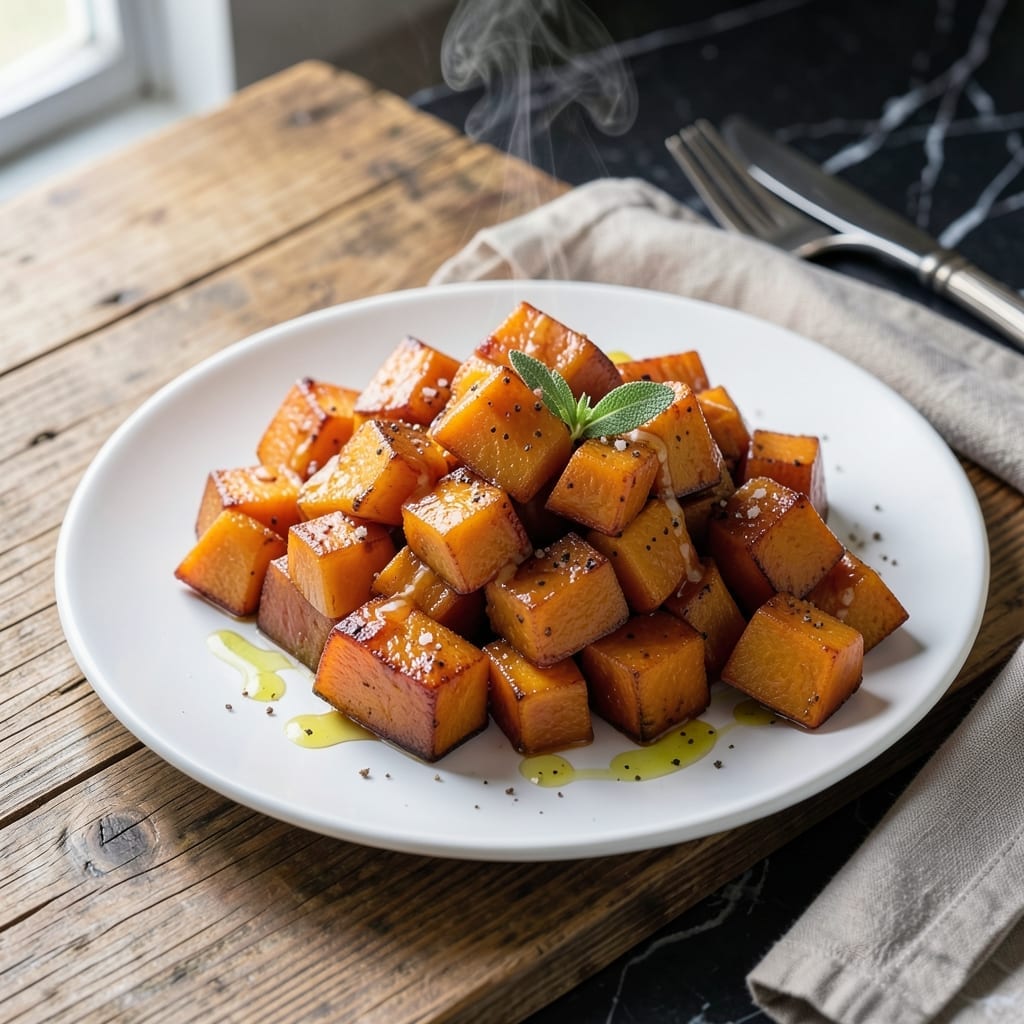
This roasted butternut squash delivers caramelized edges and tender centers with minimal effort. The combination of brown sugar and butter creates a glossy glaze that transforms the squash into something extraordinary.
A simple 400°F oven and 30 minutes is all it takes to achieve a side dish that balances sweetness with natural squash flavor. The result is a dish that pairs perfectly with any main course.
Ingredients for Butternut Squash Recipe Brown Sugar Butter
Minimal ingredients. Maximum flavor. Caramelized edges meet tender centers with a glossy brown sugar glaze.
| Ingredient | Amount | Notes |
|---|---|---|
| Butternut Squash 🎃 | 3 lb | Peeled, seeded, cubed into 1-inch pieces |
| Unsalted Butter 🧈 | 4 tbsp | Melted for glazing |
| Light Brown Sugar 🍚 | ¼ cup | Packed for even coating |
| Olive Oil 🫒 | 1 tbsp | For roasting prevention |
| Kosher Salt 🧂 | 1 tsp | Diamond Crystal preferred |
| Freshly Ground Black Pepper 🌶️ | ½ tsp | Coarse grind for texture |
| Ground Cinnamon 🌿 | ¼ tsp | Optional for warmth |
| Pure Vanilla Extract 🌿 | 1 tsp | Enhances caramelization |
| Pecans 🥜 | ½ cup | Chopped, toasted for garnish |
| Fresh Thyme Leaves 🌿 | 1 tbsp | Optional for aromatic finish |
[recipe_ingredient_scaler]
The squash quality is paramount. Select firm, heavy butternut squash with smooth, matte skin and a solid stem—avoid any with soft spots or mold. Whole Foods and Trader Joe’s consistently stock excellent specimens. For ease, many stores sell pre-cut squash (worth the premium if you’re short on time). The brown sugar should be light and moist—Domino is reliable, but any major brand works.
No light brown sugar? Dark brown sugar at half the quantity intensifies the molasses notes. Butter can be swapped for vegan butter if needed, though flavor will differ slightly. Skip the cinnamon if you prefer a purer squash flavor. The pecans are optional—walnuts or pepitas make fine substitutes. For a nut-free version, toasted pumpkin seeds add crunch without allergens.
Roasted squash holds well at room temperature for 2 hours. Store leftovers in an airtight container in the refrigerator for up to 4 days. Reheat in a 350°F oven for 10-15 minutes to restore texture. The glaze thickens upon cooling—this is normal and desirable.
Why You’ll Love This Recipe
- I’ll be real: it tastes even better the next day, and reheats in seconds for an easy lunch.
- One Pan Wonder: I toss the squash with olive oil, roast it, then just mix in butter and brown sugar—hardly any dishes to wash.
- Caramelized Perfection: That brown sugar and butter combo turns the squash into this sweet, buttery, almost dessert-like side. Honestly, it’s my favorite way to eat it.
- Feeds a Crowd: A big tray of this disappears fast at potlucks, and it pairs with literally anything from chicken to pork.
Step-by-Step Instructions for Butternut Squash with Brown Sugar Butter
This method ensures perfectly caramelized squash with a glossy, sweet glaze every time.
Step 1: Prepare and Season the Butternut Squash
Begin by peeling, seeding, and cubing the 3 lb Butternut Squash into uniform 1-inch pieces. Uniform sizing ensures even cooking and consistent caramelization. Toss the cubes immediately with the 1 tbsp Olive Oil—this prevents the exposed flesh from drying out.
Season the squash with the 1 tsp Kosher Salt and 0.5 tsp Freshly Ground Black Pepper. I always use Diamond Crystal kosher salt for its clean flavor and consistent grain size. Distribute the seasoning evenly so every bite is perfectly balanced.
Step 2: Create the Brown Sugar Butter Glaze
In a small saucepan, melt the 4 tbsp Unsalted Butter over medium heat. Once melted, add the 0.25 cup Light Brown Sugar (packed) and stir until fully dissolved into a smooth, glossy mixture. The brown sugar adds molasses notes that deepen the caramel flavor.
Remove the pan from heat and stir in the 1 tsp Pure Vanilla Extract and 0.25 tsp Ground Cinnamon. The vanilla enhances the natural sweetness of the squash, while the cinnamon adds a subtle warmth. Let this glaze cool slightly—it should thicken to a pourable consistency.
Step 3: Roast the Squash to Caramelized Perfection
Preheat your oven to 400°F. Spread the seasoned squash in a single layer on a rimmed baking sheet, ensuring pieces aren’t crowded. Crowding causes steaming rather than roasting. Roast for 20 minutes, then remove from the oven and flip each piece.
Drizzle the brown sugar butter glaze evenly over the squash, using a spoon to ensure full coverage. Return to the oven and roast for another 15-20 minutes until the squash is tender when pierced with a fork and the edges are deep golden brown with caramelized spots.
Step 4: Toast the Pecans and Finish the Dish
While the squash roasts, toast the 0.5 cup Pecans in a dry skillet over medium heat for 3-4 minutes, stirring frequently, until fragrant and lightly browned. Chop the pecans coarsely—their buttery crunch contrasts beautifully with the soft squash.
Transfer the roasted squash to a serving platter. Sprinkle with the toasted pecans and the 1 tbsp Fresh Thyme Leaves, if using. The thyme adds an aromatic, earthy note that balances the sweetness. Serve immediately while the glaze is still glossy and warm.
Pro Tips For Making Butternut Squash Recipe Brown Sugar Butter
- Roast High, Roast Hot: Crank your oven to 425°F—any lower and the squash steams instead of caramelizing. I learned this the hard way after pulling out pale, mushy cubes more times than I’d like to admit.
- Cube Evenly: Cut the squash into 1-inch pieces so they cook at the same rate. Sounds fussy, but nothing ruins a batch faster than half burnt, half raw chunks.
- Skip the Crowding: Spread the squash in a single layer on the sheet pan with space between pieces. Steer clear of piling it up—this just traps steam and gives you soggy squash instead of those browned edges.
- Butter Last: Toss the roasted squash with the brown sugar and butter right at the end, not before. The sugar burns if it goes in too early, and the butter just smokes in a hot oven.
Dietary Considerations for These Flavors
Keto-Friendly Options
This recipe can be adapted for keto by replacing brown sugar with a low-carb sweetener like erythritol or monk fruit. The natural sweetness of butternut squash pairs well with butter, so you won’t miss the sugar!
Keep portions moderate, as squash still contains carbs. A small serving (½ cup) fits well within daily keto macros.
Gluten-Free
This dish is naturally gluten-free! Just ensure all ingredients, including spices and butter, are certified gluten-free to avoid cross-contamination.
If adding toppings like breadcrumbs, opt for gluten-free alternatives such as almond flour or crushed nuts.
Allergens
This recipe contains dairy (butter). For a dairy-free version, substitute with coconut oil or a plant-based butter alternative.
Always check labels for hidden allergens in pre-packaged ingredients like brown sugar or seasoning blends.
Vegetarian Modifications
This dish is already vegetarian-friendly! For a vegan twist, swap butter for coconut oil and use coconut sugar instead of brown sugar.
A sprinkle of cinnamon or nutmeg can enhance flavor without compromising dietary preferences.
Low-Sodium
Reduce sodium by using unsalted butter and omitting added salt. Herbs like thyme or rosemary add flavor without extra sodium.
If using canned squash, rinse it thoroughly to remove excess salt before cooking.
Nutrition Facts

Trained in classic French technique but raised on slow-cooked ribs and spicy rubs, she blends culinary skill with smoke and soul.
- Recipe for Boneless Pork Chops in Cast Iron Skillet: Sear and Baste to Juicy Perfection - October 3, 2026
- Recipe for Boneless Cross Rib Roast: Slow-Roasted Beef with Herb Crust - October 3, 2026
- Hamburgers in Sauce Recipe Crock Pot: Slow-Cooked Savory Delight - October 3, 2026