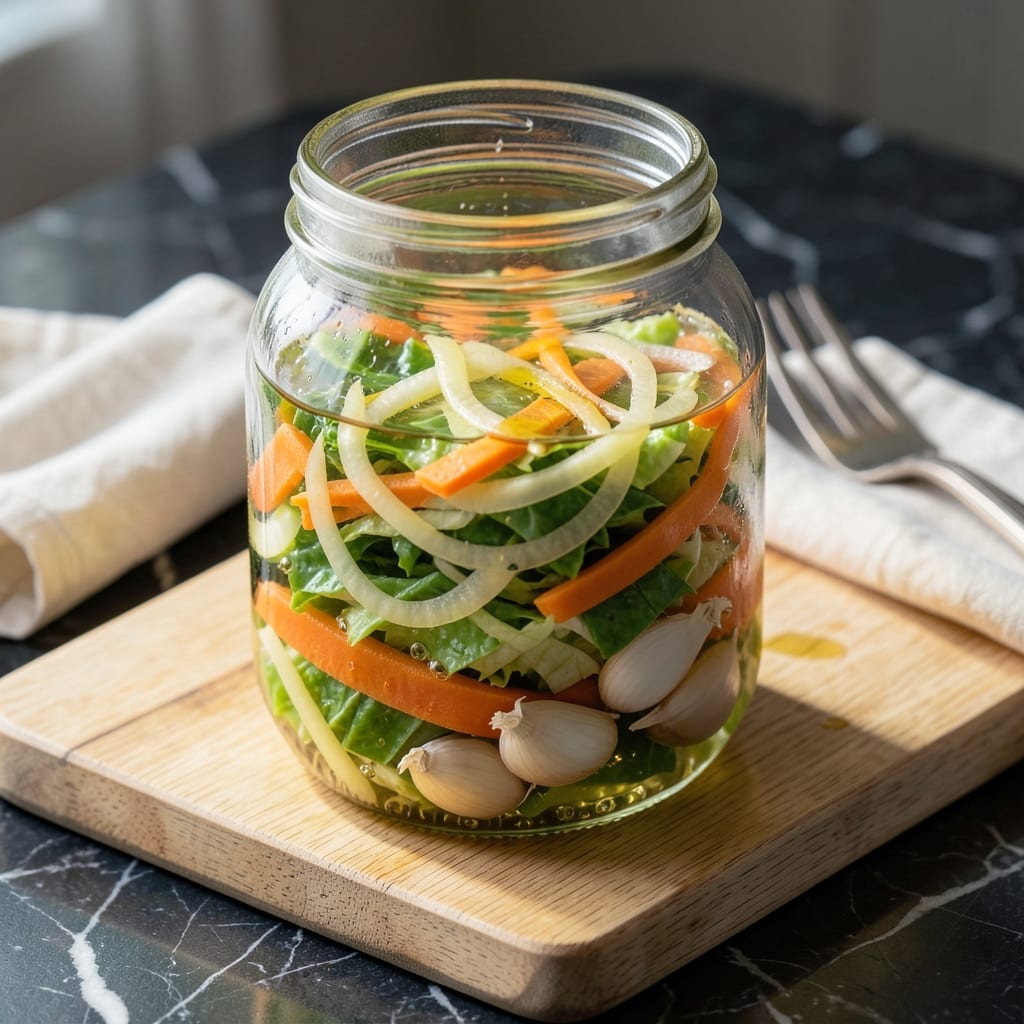
This fermentation method transforms humble cabbage into something extraordinary with minimal effort. The process relies on a simple saltwater brine and time to develop complex, tangy flavors.
The key is using fresh cabbage and maintaining the right salt-to-water ratio. Within days, natural lactic acid bacteria begin preserving the cabbage while creating that signature crunch and zing.
You’ll end up with a tangy, crunchy condiment that keeps for months in the refrigerator. The flavor deepens over time, making it worth the short wait.
Perfect for sandwiches, salads, or eating straight from the jar. This technique never fails to deliver consistent results.
Ingredients for Cabbage Pickled
Fresh cabbage, saltwater brine, and time work magic for this fermented dish.
| Ingredient | Amount | Notes |
|---|---|---|
| Green Cabbage 🥬 | 2 lb | Fresh, tightly packed heads only |
| Filter Water 💧 | 4 cups | Chlorine-free for fermentation |
| Kosher Salt 🧂 | 3 tbsp | Non-iodized, coarse grain preferred |
| Carrots 🥕 | 2 whole | Peeled, julienned for texture |
| Garlic Cloves 🧄 | 4 cloves | Peeled, smashed lightly |
| Yellow Onion 🧅 | 1 whole | Thinly sliced for flavor |
| Bay Leaves 🍃 | 2 pieces | Dried, whole for aroma |
| Black Peppercorns 🌶️ | 1 tsp | Whole, lightly crushed |
| Dill Seeds 🌿 | 1 tsp | Optional for added complexity |
| Red Pepper Flakes 🔥 | ½ tsp | Adjust to spice preference |
[recipe_ingredient_scaler]
The cabbage quality is non-negotiable. Select dense, heavy heads from farmers markets or Whole Foods—avoid pre-shredded bags (the good stuff, not the pre-shredded kind). Organic isn’t required, but avoid cabbage treated with growth inhibitors. The salt must be non-iodized; Diamond Crystal kosher salt is ideal for consistent fermentation. Water must be chlorine-free—use filtered or spring water.
No green cabbage? Napa or Savoy cabbage work well but may soften faster. Carrots and onion at half the amount can be omitted if unavailable. For a quicker start, use cabbage from a local CSA (frozen works in a pinch). The garlic can be reduced to 2 cloves for milder flavor. Dill seeds can be replaced with fresh dill fronds at double the volume.
Fermented vegetables keep improving with age. Store in a glass jar at room temperature for 3-5 days, then refrigerate. Best flavor develops after 2 weeks and lasts for 6 months. Burp jars daily during initial fermentation (worth the extra minute).
Why You’ll Love This Recipe
- Minimal Effort: I just shred, pack, and wait—no cooking, no fuss, just saltwater and time doing the work.
- Garlic Zing: The cloves infuse every bite with that sharp, warm punch that makes plain cabbage taste like a revelation.
- Fridge Staple: I keep a jar ready for tacos, sandwiches, or straight-from-the-jar snacking whenever I need a crunch.
- Dime a Dozen: Green cabbage and carrots stretch my grocery budget, and one batch gives me pickles for weeks.
Step-by-Step Instructions for Cabbage Pickling
Master the fermentation process with precision and patience for optimal results every time.
Step 1: Prepare the Vegetables for Fermentation
Begin by removing the outer leaves of the 2 lb Green Cabbage and cutting it into quarters. Remove the core and thinly slice the cabbage into ribbons about ⅛-inch thick. Consistency in slicing ensures even fermentation and texture throughout the batch.
Peel and julienne the 2 whole Carrots into matchstick-sized pieces. Thinly slice the 1 whole Yellow Onion into half-moons. Peel and lightly smash the 4 cloves Garlic Cloves. This preparation maximizes surface area for flavor extraction and even brining.
Step 2: Create the Brine Solution
In a large pot, combine the 4 cups Filter Water with the 3 tbsp Kosher Salt. Heat over medium heat, stirring constantly until the salt completely dissolves. This creates a 5% brine solution, ideal for Lactobacillus fermentation without compromising crispness.
Remove the brine from heat and let it cool to room temperature. Adding hot brine to vegetables would soften their texture and kill beneficial bacteria needed for fermentation. The brine should be completely cool before proceeding to the next step.
Step 3: Combine Vegetables and Aromatics
In a large, clean fermentation vessel or glass jar, combine the sliced cabbage, julienned carrots, sliced onion, and smashed garlic. Add the 2 pieces Bay Leaves, 1 tsp Black Peppercorns (lightly crushed), 1 tsp Dill Seeds, and 0.5 tsp Red Pepper Flakes. These aromatics infuse complexity while supporting the fermentation process.
Mix the vegetables and spices thoroughly with your hands, pressing down to start releasing the cabbage’s natural juices. This initial compression helps create the anaerobic environment necessary for proper fermentation.
Step 4: Submerge and Start Fermentation
Pour the cooled brine over the vegetable mixture until completely submerged. The liquid should cover all solids by at least 1 inch. Use a fermentation weight or a smaller jar filled with water to keep everything below the brine surface. This prevents mold growth and ensures even fermentation.
Cover the container loosely to allow gases to escape during fermentation. Store at room temperature (ideally between 68-72°F) away from direct sunlight. You should see bubbles forming within 24-48 hours, indicating active fermentation.
Step 5: Monitor and Complete Fermentation
Check the fermentation daily, skimming any foam or scum that rises to the surface. The mixture should develop a tangy aroma and the cabbage should remain crisp. Taste after 3 days—it should have a pleasant sourness with a slight crunch.
For full flavor development, continue fermenting for 7-10 days total. The pickles are ready when they reach your desired tanginess. Transfer to the refrigerator to slow fermentation and extend shelf life. The flavor will continue to develop and mellow over time in cold storage.
Pro Tips For Making Cabbage Pickled
- Shred Evenly: Use a sharp knife or mandoline to cut the cabbage into uniform 1/8-inch strips—thinner pieces ferment faster and pack tighter in the jar.
- Salt the Right Amount: Stick to 2-3 tablespoons of kosher salt per quart of water; I learned this the hard way after ruining a batch with too much salt.
- Pack It Tight: Press down the cabbage and carrots hard into the jar to remove air pockets—this prevents mold and speeds up fermentation.
- Add Garlic Last: Toss in the garlic cloves just before sealing the jar to keep their flavor fresh and sharp, rather than letting them sit in the brine too long.
Creative Variations of This Dish
Spicy Kimchi Style
Add 2 tbsp gochugaru (Korean chili flakes) and 1 tbsp grated ginger to the brine for authentic heat. Include 2 chopped scallions for freshness. This Korean-inspired version develops deep umami flavors within 5-7 days at room temperature. 🌶️
German Sauerkraut Twist
Use 1 tbsp caraway seeds and 1 tsp juniper berries in place of dill. The flavor profile becomes more earthy and robust. Ferment for 2-3 weeks to achieve the classic tangy-sour balance we know from traditional German recipes.
Sweet and Tangy
Add 2 tbsp honey or 1 tbsp maple syrup to the brine for a touch of sweetness that balances the acidity. 1 tsp celery seeds adds a subtle herbal note. This variation pairs beautifully with sandwiches or as a topping for hot dogs.
Quick Refrigerator Pickle
For faster results, use 1 cup apple cider vinegar and 1 cup water with 2 tbsp sugar instead of the saltwater brine. This method delivers crisp pickles in just 24-48 hours in the refrigerator, perfect when you’re short on time.
Asian-Inspired Fusion
Add 1 tbsp soy sauce and 1 tsp grated fresh turmeric to the brine. Include 1-inch piece of ginger (sliced) and 1 star anise pod for aromatic depth. This version develops complex flavors that work wonderfully in stir-fries or banh mi.
Mediterranean Flavor
Swap the dill seeds for 1 tbsp dried oregano and add ½ cup sliced fennel bulb. The anise notes from the fennel complement the cabbage beautifully. This variation tastes amazing with grilled meats or in Mediterranean-style wraps. ✨
Nutrition Facts
Frequently Asked Questions
How long does it take to ferment?
Fermentation begins within 24-48 hours and develops full flavor in 7-10 days at room temperature. For best results, taste after 3 days and refrigerate when it reaches your preferred tanginess.
What’s the best container to use?
A clean glass jar or fermentation crock works best. Ensure it’s large enough to submerge vegetables under brine by 1 inch. Avoid metal containers as they can react with the acidic environment.
Why is my batch soft instead of crunchy?
Soft texture usually means the cabbage wasn’t fully submerged or the salt ratio was off. Use 3 tbsp kosher salt per 4 cups water and keep everything under brine with a weight.
Can I use red cabbage instead?
Yes! Red cabbage works perfectly and creates a vibrant color. The fermentation process and timing remain the same. Just note that the brine may turn pink as the cabbage releases its natural pigments.

Trained in classic French technique but raised on slow-cooked ribs and spicy rubs, she blends culinary skill with smoke and soul.
- Recipe for Boneless Pork Chops in Cast Iron Skillet: Sear and Baste to Juicy Perfection - October 3, 2026
- Recipe for Boneless Cross Rib Roast: Slow-Roasted Beef with Herb Crust - October 3, 2026
- Hamburgers in Sauce Recipe Crock Pot: Slow-Cooked Savory Delight - October 3, 2026