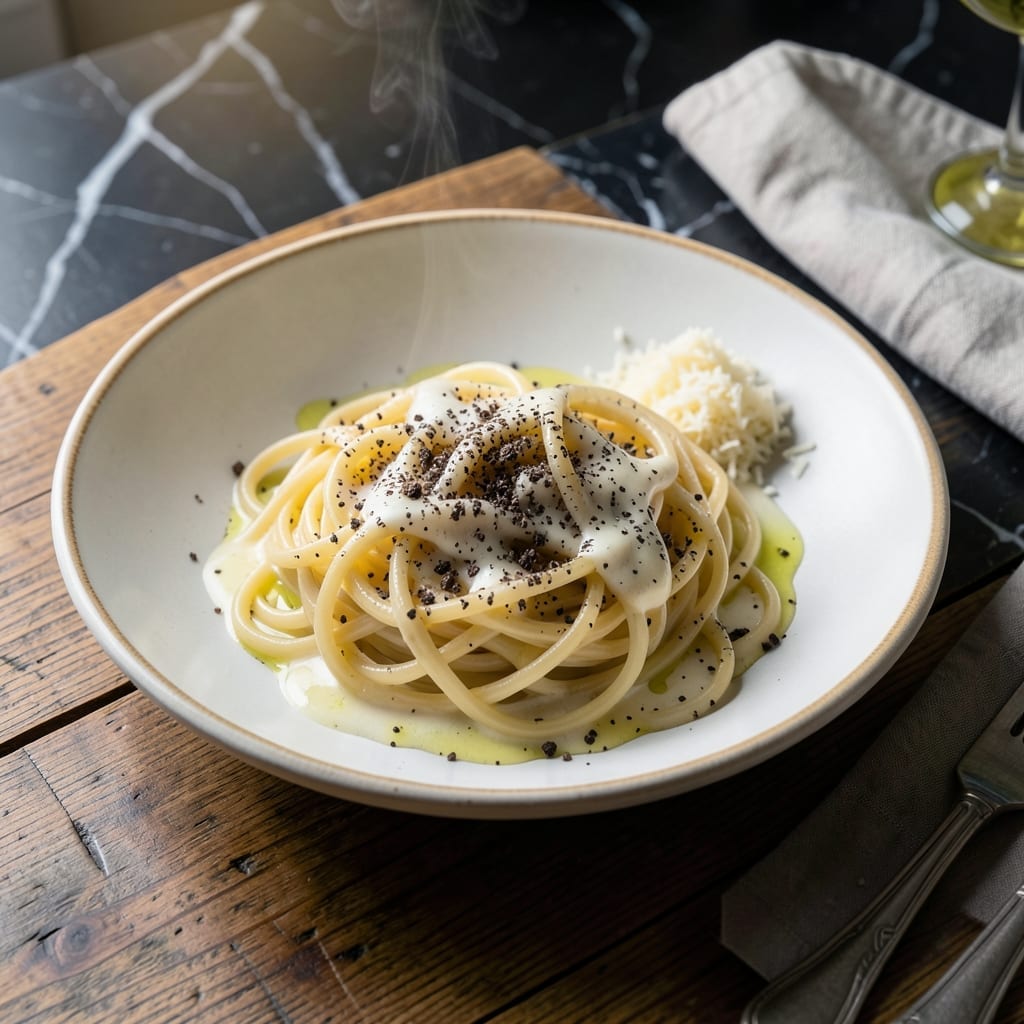
Roman pasta doesn’t get more elegant than this. I’ve simplified Stanley Tucci’s approach to deliver perfect cacio e pepe every time.
The secret lies in starchy pasta water and constant tossing to create a silky, emulsified cheese sauce that clings to every strand. No lumps, just pure Roman indulgence.
Ingredients for Cacio E Pepe Recipe Stanley Tucci
Six ingredients is all that stands between you and Roman pasta perfection.
| Ingredient | Amount | Notes |
|---|---|---|
| Spaghetti 🍝 | 1 lb | Dried, high-quality bronze-cut |
| Pecorino Romano Cheese 🧀 | 2 cups | Freshly grated, finely |
| Parmigiano-Reggiano Cheese 🧀 | ½ cup | Freshly grated, finely |
| Coarse Sea Salt 🧂 | 1 tbsp | Plus more for pasta water |
| Freshly Ground Black Pepper 🌶️ | 2 tsp | Coarsely ground |
| Reserved Pasta Water 💧 | 1 ½ cups | Starchy, from cooking pasta |
[recipe_ingredient_scaler]
The cheese is non-negotiable here. Pecorino Romano gives that sharp, salty bite that defines cacio e pepe—Parmigiano-Reggiano adds depth but shouldn’t overpower. Splurge on both at a good Italian market or Whole Foods. Look for wedges you can grate yourself (the pre-grated stuff has anti-caking agents that mess with the sauce). The pasta? De Cecco or Barilla bronze-die spaghetti holds sauce like a dream.
No Pecorino? Aged Asiago gets close but lean heavy on the pepper. Skipping Parmigiano? Just double the Pecorino. The pepper should be freshly cracked—pre-ground tastes dusty. If you’re out of spaghetti, bucatini or tonnarelli work beautifully. The salt in the pasta water needs to taste like the sea (about 2 tbsp Diamond Crystal per gallon).
The sauce comes together in minutes, so prep everything before boiling water. Leftovers? Reheat with a splash of water or milk—they’ll be thick but still tasty. Best eaten fresh, but keeps 2-3 days in the fridge (if it lasts that long).
Why You’ll Love This Recipe
- I count them on one hand: pasta, two cheeses, salt, pepper. That’s it.
- Stanolph’s 5-Ingredient Magic: I count them on one hand: pasta, two cheeses, salt, pepper. That’s it.
- Cheesy Pepper Bomb: The Pecorino’s sharp bite plus a cloud of fresh black pepper hits like a Roman hug.
- Weeknight Rescue: From pantry to plate in the time it takes to boil water and toast cheese.
Step-by-Step Instructions for Cacio E Pepe
Here’s my method for achieving that perfect creamy, peppery Roman classic.
Step 1: Cook the Spaghetti in Well-Salted Water
Bring a large pot of water to a rolling boil. Add the 1 tbsp Coarse Sea Salt plus an additional generous handful—it should taste like the Mediterranean. Drop in the 1 lb Spaghetti and cook until 1 minute shy of al dente.
Reserve 1.5 cups Reserved Pasta Water before draining. The starchy liquid is your secret weapon for creating that signature silky sauce. Don’t rinse the pasta; the surface starch helps the cheese cling beautifully.
Step 2: Toast the Freshly Ground Black Pepper
In a large skillet or sauté pan, toast the 2 tsp Freshly Ground Black Pepper over medium heat for 1-2 minutes. You’ll know it’s ready when the aroma becomes intense and the pepper just starts to sizzle.
This step is non-negotiable. Raw pepper tastes harsh and one-dimensional, but toasting mellows its bite and unlocks complex, floral notes that define this dish. Remove from heat immediately if it starts to smoke—burnt pepper ruins everything.
Step 3: Create the Cheese Emulsion
Working quickly, add the drained pasta to the skillet with the toasted pepper. Pour in ¾ cup of the 1.5 cups Reserved Pasta Water and toss vigorously. The starchy water will create a creamy base for your sauce.
Reduce heat to low. Add the 2 cups Pecorino Romano Cheese and 0.5 cup Parmigiano-Reggiano Cheese gradually, tossing constantly between additions. The cheese should melt into a glossy, creamy sauce that coats every strand of spaghetti.
Step 4: Adjust and Finish
If the sauce seems too thick, add more Reserved Pasta Water 1 tablespoon at a time until it reaches a silky consistency. If it’s too thin, keep tossing over low heat until it thickens.
The sauce should cling to the pasta without pooling at the bottom of the plate. Taste and adjust seasoning—remember, Pecorino is salty, so go easy on additional salt. Serve immediately while the sauce is at its creamiest, with extra grated cheese and cracked pepper on top.
Pro Tips For Making Cacio E Pepe Recipe Stanley Tucci
- Use pasta water: Reserve at least a cup of the starchy cooking water before draining—this is what helps the cheese melt into that silky sauce Stanley Tucci raves about.
- Grate cheese fresh: Pre-grated cheese has anti-caking agents that make the sauce clumpy; I learned this the hard way after ruining two batches with store-bought shredded Pecorino.
- Toast the pepper: Lightly toasting the freshly ground black pepper in a dry pan for 30 seconds before adding pasta water deepens its flavor without bitterness.
- Toss off heat: After mixing the cheese and pasta, remove the pan from heat and keep stirring—direct heat can make the sauce break and turn grainy, and nobody wants that.
Dietary Considerations for This Dish
Gluten-Free Option
Swap 1 lb Spaghetti for 1 lb gluten-free spaghetti like Jovial or Barilla. Cook 1-2 minutes longer than package instructions, as gluten-free pasta needs more time to soften. The sauce technique remains exactly the same, but I find gluten-free pasta benefits from an extra splash of Reserved Pasta Water. 💪
Vegetarian Considerations
This dish is naturally vegetarian, but check Pecorino Romano labels for animal rennet if strict vegetarianism is a concern. Opt for vegetarian rennet versions like BelGioioso. The Parmigiano-Reggiano is trickier—authentic versions always use animal rennet.
Lactose Intolerance
Aged cheeses like Pecorino Romano and Parmigiano-Reggiano are naturally low in lactose, making this dish often tolerable for those with mild intolerance. For severe cases, try lactose-free Pecorino from Whole Foods or specialty markets.
Lower Sodium Version
Cut sodium by using low-sodium Pecorino (if available) and reducing pasta water salt to 1 tbsp Diamond Crystal. Boost flavor with extra Freshly Ground Black Pepper—its warmth distracts from reduced salt. I also add a pinch of lemon zest to brighten the dish.
Vegan Adaptation
Replace cheeses with 1.5 cups nutritional yeast plus ½ cup cashew cream for a vegan version. Use chickpea pasta for protein. The sauce won’t be identical, but toasting the pepper and using starchy water still creates a creamy, flavorful dish. 🌱
Nutrition Facts
Frequently Asked Questions
Can I use pre-grated cheese?
No, pre-grated cheese contains anti-caking agents that prevent smooth melting. Always grate fresh for the creamiest sauce.
Why does my sauce turn clumpy?
This happens when cheese is added too quickly or heat is too high. Toss constantly and add cheese gradually over low heat for silky results.
Can I make this ahead of time?
It’s best served immediately, but leftovers keep 2-3 days in the fridge. Reheat with a splash of water or milk to restore creaminess.

Trained in classic French technique but raised on slow-cooked ribs and spicy rubs, she blends culinary skill with smoke and soul.
- Recipe for Boneless Pork Chops in Cast Iron Skillet: Sear and Baste to Juicy Perfection - October 3, 2026
- Recipe for Boneless Cross Rib Roast: Slow-Roasted Beef with Herb Crust - October 3, 2026
- Hamburgers in Sauce Recipe Crock Pot: Slow-Cooked Savory Delight - October 3, 2026