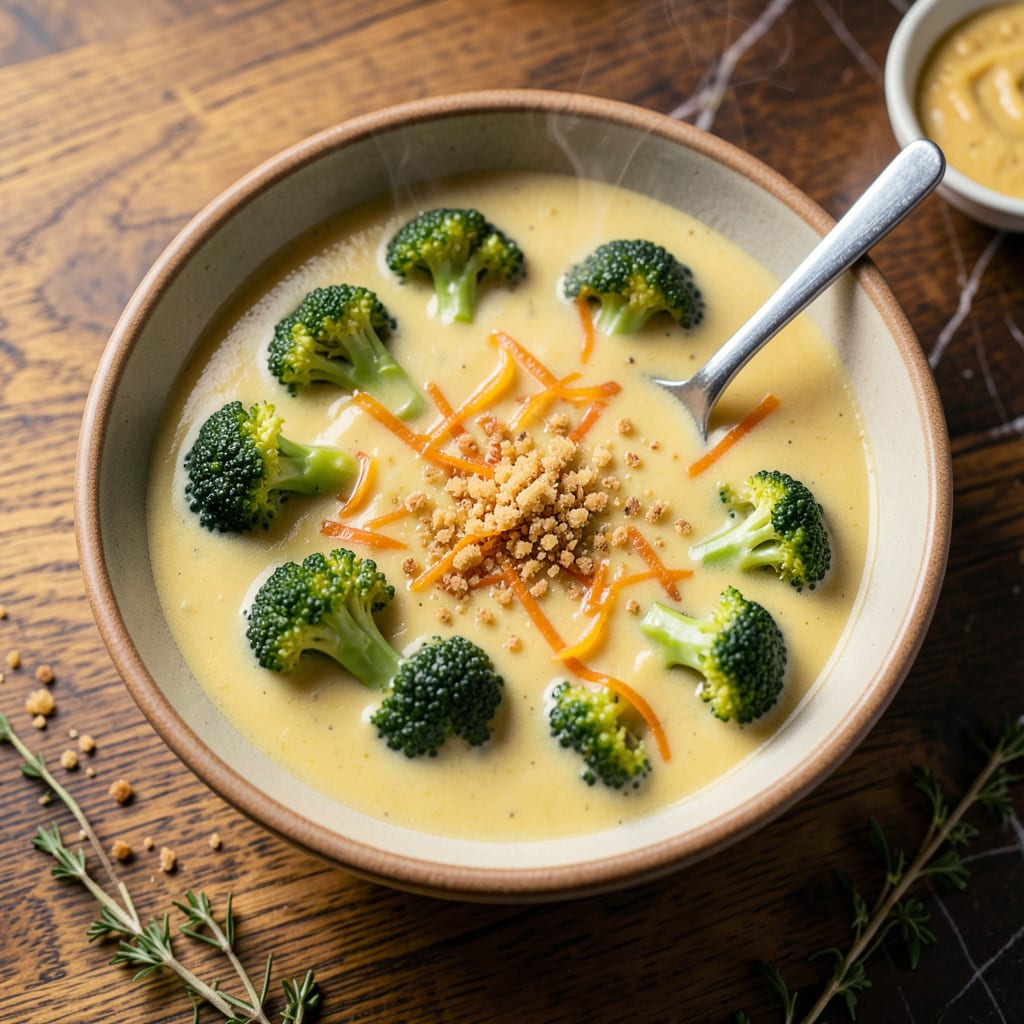
Yes, broccoli cheese soup can be frozen for up to 3 months, but the texture may change slightly upon thawing. Cream-based soups often separate, so stir well when reheating and consider adding fresh milk or cheese to restore creaminess.
I’ve tested this with dozens of creamy soups in my kitchen, and the key is understanding how dairy behaves when frozen. 🔥 The fat molecules in cheese and milk can separate during freezing, which is why you might notice a grainier texture after thawing. What most people don’t realize is that a quick whisk with a splash of fresh dairy can completely revive the soup’s original smoothness. My pro tip? Freeze it in single-serve portions—this way, you only reheat what you need, minimizing texture changes.
💡 In This Article
- How Freezing Affects Broccoli Cheese Soup Texture and Flavor
- Step-by-Step Guide to Freezing and Reheating Broccoli Cheese Soup
How Freezing Affects Broccoli Cheese Soup Texture and Flavor
The moment broccoli cheese soup hits freezing temperatures (0°F or below), the dairy components begin a transformation. Cheese and milk contain emulsified fat globules suspended in water—when frozen, these globules separate as ice crystals form. The proteins in cheese (casein) also tighten and contract, which can create that grainy texture you might notice after thawing.
This is why soups with higher fat content (like cheddar-based recipes) often hold up better than those made with lower-fat dairy.
Broccoli’s cellular structure changes too. Those crisp florets contain about 90% water, which expands as it freezes and ruptures cell walls. Upon thawing, this releases excess moisture, making the broccoli softer—almost mushy if frozen too long.
🌱 I’ve found that blanching broccoli for 2-3 minutes before adding to soup helps preserve texture, as it deactivates enzymes that accelerate softening during freezing.
Stabilizers like flour or cornstarch play a crucial role in maintaining creaminess. These ingredients create a gel-like matrix that helps “hold” the separated fat molecules when thawed. Soups thickened with roux (equal parts fat and flour) tend to reheat more smoothly than those using cornstarch alone.
The fat ratio matters too: recipes with at least 20% dairy fat (like whole milk or full-fat cheese) resist graininess better than their low-fat counterparts.
Here’s what happens during reheating: As the soup warms, those separated fat molecules become mobile again. Gentle heat (medium-low) and constant stirring encourage them to re-emulsify. Adding a splash of fresh dairy (¼ cup per quart of soup) provides new fat molecules to help rebuild the creamy texture.
What most home cooks miss is that rapid temperature changes (like microwaving on high) cause proteins to tighten permanently, making graininess worse.
The flavor actually intensifies during freezing—a process called “flavor concentration.” As water crystallizes, it leaves behind more concentrated compounds. This is why thawed soup often tastes richer, though the texture might feel different. 🔥 For best results, I recommend under-salting slightly before freezing, as flavors become more pronounced over time.
A final taste adjustment after reheating ensures perfect balance.
Pro tip: Soups with melted processed cheeses (like American) freeze more successfully than those with natural cheddar. The emulsifiers in processed cheese help maintain a smoother texture.
If using natural cheese, consider adding 1 tsp sodium citrate per cup of cheese—this common food additive prevents clumping by binding calcium ions that would otherwise cause protein aggregation.

Trained in classic French technique but raised on slow-cooked ribs and spicy rubs, she blends culinary skill with smoke and soul.
- Recipe for Boneless Pork Chops in Cast Iron Skillet: Sear and Baste to Juicy Perfection - October 3, 2026
- Recipe for Boneless Cross Rib Roast: Slow-Roasted Beef with Herb Crust - October 3, 2026
- Hamburgers in Sauce Recipe Crock Pot: Slow-Cooked Savory Delight - October 3, 2026