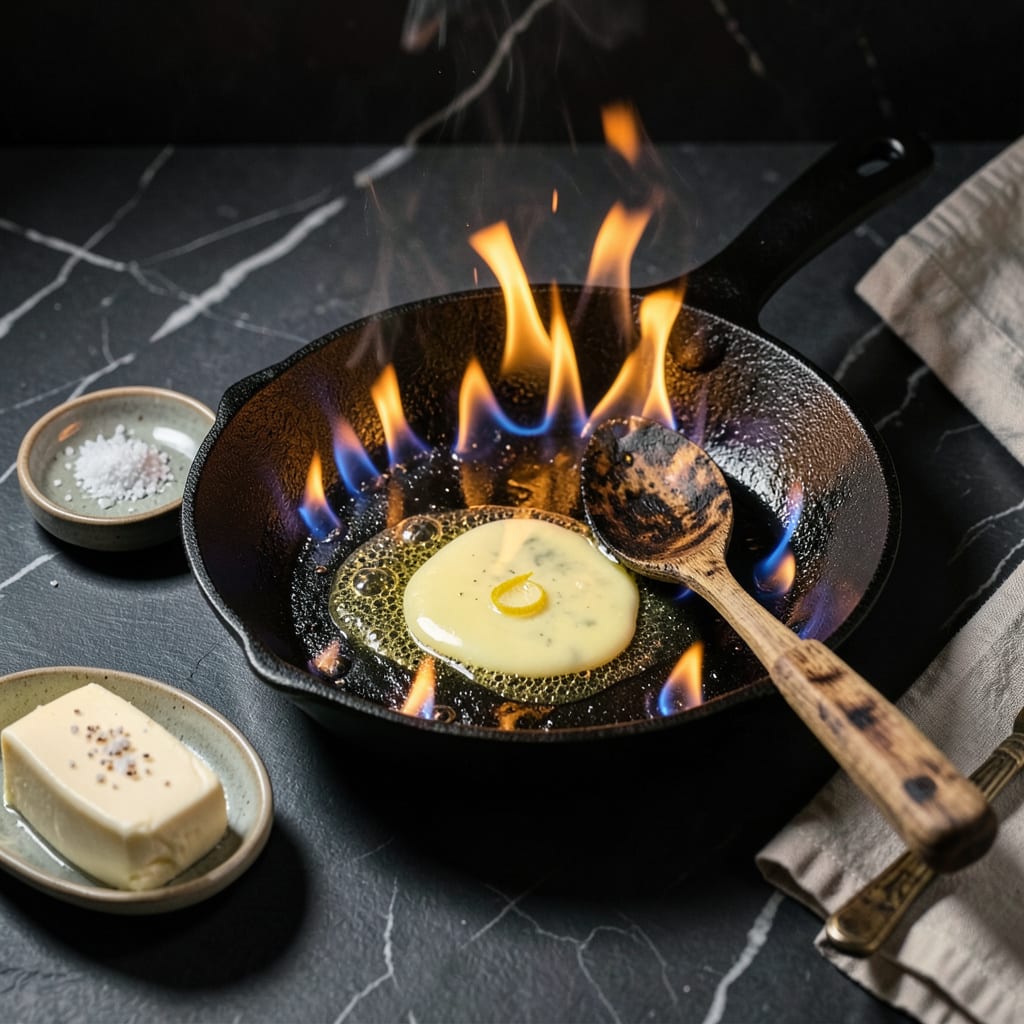
Yes, butter can catch fire when overheated beyond its smoke point (around 300°F/150°C). The milk solids in butter burn easily, creating flames if left unattended in high heat.
I’ve seen this happen more times than I’d like to admit—especially when home cooks crank up the heat for searing. 🔥 The issue isn’t just the fat content but those delicate milk proteins that brown too quickly. Unlike refined oils, butter’s composition makes it particularly vulnerable to sudden flare-ups. That’s why professional kitchens often reach for clarified butter or ghee when high temperatures are involved—they’ve removed those problematic solids.
What catches most people off guard is how fast butter transitions from golden brown to full-on flames. One moment you’re getting that perfect nutty aroma, the next you’re dealing with a smoke-filled kitchen and potential fire hazard. I always keep a metal lid nearby when cooking with butter—it’s the fastest way to smother unexpected flames without making a bigger mess.
💡 In This Article
- Why Butter Ignites Faster Than Other Cooking Fats
- How to Prevent Butter Fires in the Kitchen
Why Butter Ignites Faster Than Other Cooking Fats
Butter’s flammability comes down to its unique composition. Unlike pure fats like olive oil or lard, butter contains 4-5% milk solids and about 15-20% water. When heated, the water evaporates first, then the milk proteins and sugars begin to brown.
These solids burn at much lower temperatures than pure fat—around 300°F/150°C—creating that telltale nutty aroma before quickly progressing to smoke and potential flames. 🔥
The smoke point difference is dramatic: clarified butter smokes at 485°F/250°C, while regular butter starts breaking down at just 300°F/150°C. That’s why French chefs swear by beurre noisette (browned butter)—they carefully control the heat to toast the milk solids without burning them.
The moment you see foam subside and golden specks form, you’re in the danger zone where those solids can ignite if the heat isn’t reduced immediately.
What makes butter particularly tricky is its two-phase burning process. First, the milk solids carbonize and create smoke. Then, if the heat persists, the actual butterfat can ignite. I’ve watched this happen during high-heat searing—one second you’ve got beautiful browning, the next you’ve got blue flames dancing across the pan.
The milk solids act like kindling, making the fire spread faster than with pure oils.
Here’s the chemical breakdown: butter contains butyric acid and other short-chain fatty acids that vaporize quickly. When these vapors combine with oxygen and reach their flash point, they ignite. Compare this to refined oils where the fatty acids are more stable—canola oil won’t flame until 400°F/204°C, giving you much more control during high-heat cooking. ✨
The solution? Remove the milk solids. Clarified butter and ghee have had these removed, raising their smoke points dramatically. I always keep a jar of ghee on hand for searing steaks or making stir-fries—it gives that rich butter flavor without the fire risk.
For regular butter, the trick is low-and-slow heating with constant attention to color changes in the pan.
Pro tip: If you’re browning butter, use a light-colored pan so you can monitor the color change. The moment those milk solids turn from golden to dark brown (about 3-5 minutes on medium heat), remove it from the stove immediately.
That extra 30 seconds can mean the difference between perfect brown butter and a smoke-filled kitchen. 💫
Remember that butter’s behavior changes with salt content too. Unsalted butter burns slightly faster because the salt in salted butter actually raises the smoke point by a few degrees. This is why pastry chefs often prefer unsalted for flavor control, while line cooks might opt for salted when working with higher heat applications.
The difference is small but can be crucial in professional kitchens.

Trained in classic French technique but raised on slow-cooked ribs and spicy rubs, she blends culinary skill with smoke and soul.
- Recipe For Diced Pork In Slow Cooker: Melt-In-Your-Mouth Tenderness All Day - October 3, 2026
- Recipe for Crock Pot Lasagna Using Ravioli: No-Boil Cheese Layers - October 3, 2026
- Recipe for Cut Up Chicken: One-Pan Crispy Bites - October 3, 2026