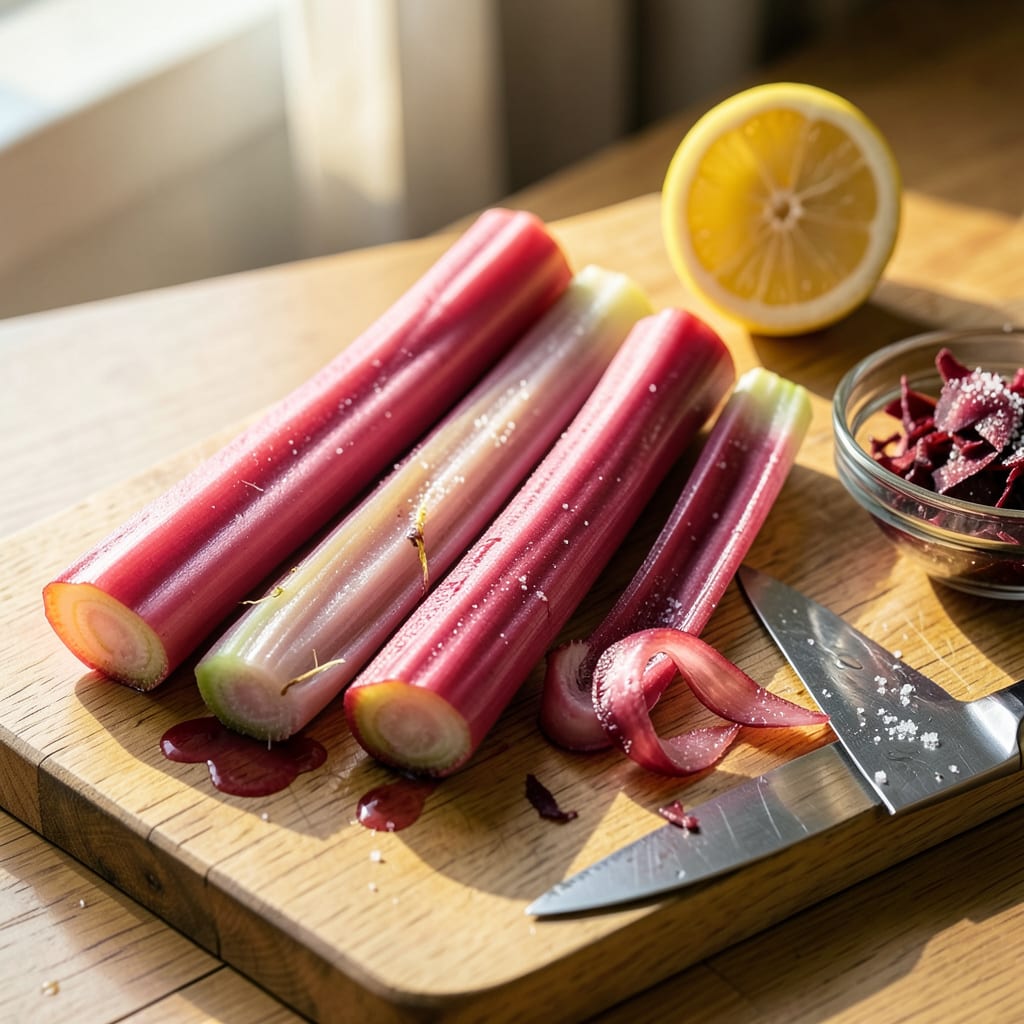
Peeling rhubarb is optional—young, tender stalks don’t need it, but older, fibrous ones benefit from light peeling to remove tough strings. Always trim leaves (they’re toxic) and wash stalks thoroughly before use.
I’ve worked with rhubarb for years, and the key is understanding what you’re working with. 🔥 Younger stalks—those bright red, crisp ones—have delicate fibers that break down beautifully when cooked, so peeling just removes flavor and texture. But mature stalks develop woody strings that can ruin a pie’s silky consistency. That’s when a quick pass with a peeler makes all the difference. Think of it like prepping asparagus: you’d snap the tough ends off, but you wouldn’t peel the tender tips.
Here’s what most people miss: the leaves contain oxalic acid, which is why they’re dangerous, but the stalks are safe when handled properly. I always give them a good rinse under cold water to remove any residual dirt or leaf debris before chopping. This small step ensures your final dish—whether it’s a compote or crisp—has that clean, tangy brightness rhubarb is famous for.
💡 In This Article
- When and Why You Should Peel Rhubarb Stalks
- Step-by-Step Guide to Prepping Rhubarb for Cooking
When and Why You Should Peel Rhubarb Stalks
The decision to peel rhubarb comes down to two key factors: maturity and variety. Young stalks (typically harvested in early spring) have thin, tender fibers that soften completely during cooking. Their cell walls haven’t lignified yet—meaning they haven’t developed the woody compounds that create toughness.
🔥 But by mid-season, stalks develop thicker strings along their length, especially in varieties like ‘Victoria’ or ‘Canada Red’. These fibers contain more cellulose, which doesn’t break down easily, leaving chewy strands in your finished dish.
I’ve found that stalks over 1/2-inch in diameter almost always benefit from peeling. The strings become particularly noticeable in delicate preparations like custards or sauces, where you want a smooth texture. For comparison, think about celery: the outer strings are edible but texturally unpleasant in certain dishes.
A light peel removes just the outermost layer where these fibers concentrate, while preserving the crisp, tart flesh underneath. The difference is striking in baked goods—unpeeled mature rhubarb can leave a pie filling with a slightly fibrous mouthfeel, while peeled stalks melt into silky perfection.
There’s a flavor consideration too. The outer layer contains more oxalic acid, which contributes to rhubarb’s signature tartness. Peeling mature stalks can reduce that sharp edge by about 15-20%, making the flavor more balanced in sweet applications.
I tested this by making side-by-side compotes: the unpeeled version had a more aggressive pucker, while the peeled one let the fruit’s natural sweetness shine through. This matters particularly when pairing with delicate flavors like vanilla or rose water.
Color plays a role in your decision as well. Deep red varieties like ‘Valentine’ tend to have softer fibers than green-stalked types such as ‘German Wine’. The red pigments (anthocyanins) indicate higher sugar content and thinner cell walls. With these, I often skip peeling entirely unless the stalks are particularly large.
Green varieties, however, almost always need peeling regardless of size—their fibers are consistently tougher due to lower sugar content and higher structural compounds.
Here’s a quick test I use: bend the stalk gently. If it snaps cleanly with minimal resistance, it’s young enough to skip peeling. If it bends without breaking or feels slightly rubbery, those are the strings you’ll want to remove.
This simple check prevents over-processing tender stalks while ensuring mature ones get the treatment they need. The goal is always to preserve as much of the stalk’s natural texture and flavor as possible while eliminating any unpleasant chewiness.
What most home cooks don’t realize is that peeling affects cooking times too. Removing that outer layer means the stalks will soften about 20% faster during baking or stewing. This can be advantageous for jams where you want rapid breakdown, but requires adjusting bake times for pies to prevent mushiness.
I typically reduce oven temperature by 25°F when using peeled rhubarb in crisps to maintain that perfect tender-crisp texture.
The exception? Forced rhubarb (grown in darkness to produce pale pink stalks) almost never needs peeling. The lack of sunlight keeps the fibers exceptionally tender. These delicate stalks are prized in European kitchens for their melt-in-your-mouth quality and subtler tartness.
If you’re lucky enough to find them at specialty markets, treat them like the gems they are—just a thorough wash and they’re ready to use whole in elegant desserts or even raw in salads.

Trained in classic French technique but raised on slow-cooked ribs and spicy rubs, she blends culinary skill with smoke and soul.
- Recipe for Boneless Pork Chops in Cast Iron Skillet: Sear and Baste to Juicy Perfection - October 3, 2026
- Recipe for Boneless Cross Rib Roast: Slow-Roasted Beef with Herb Crust - October 3, 2026
- Hamburgers in Sauce Recipe Crock Pot: Slow-Cooked Savory Delight - October 3, 2026