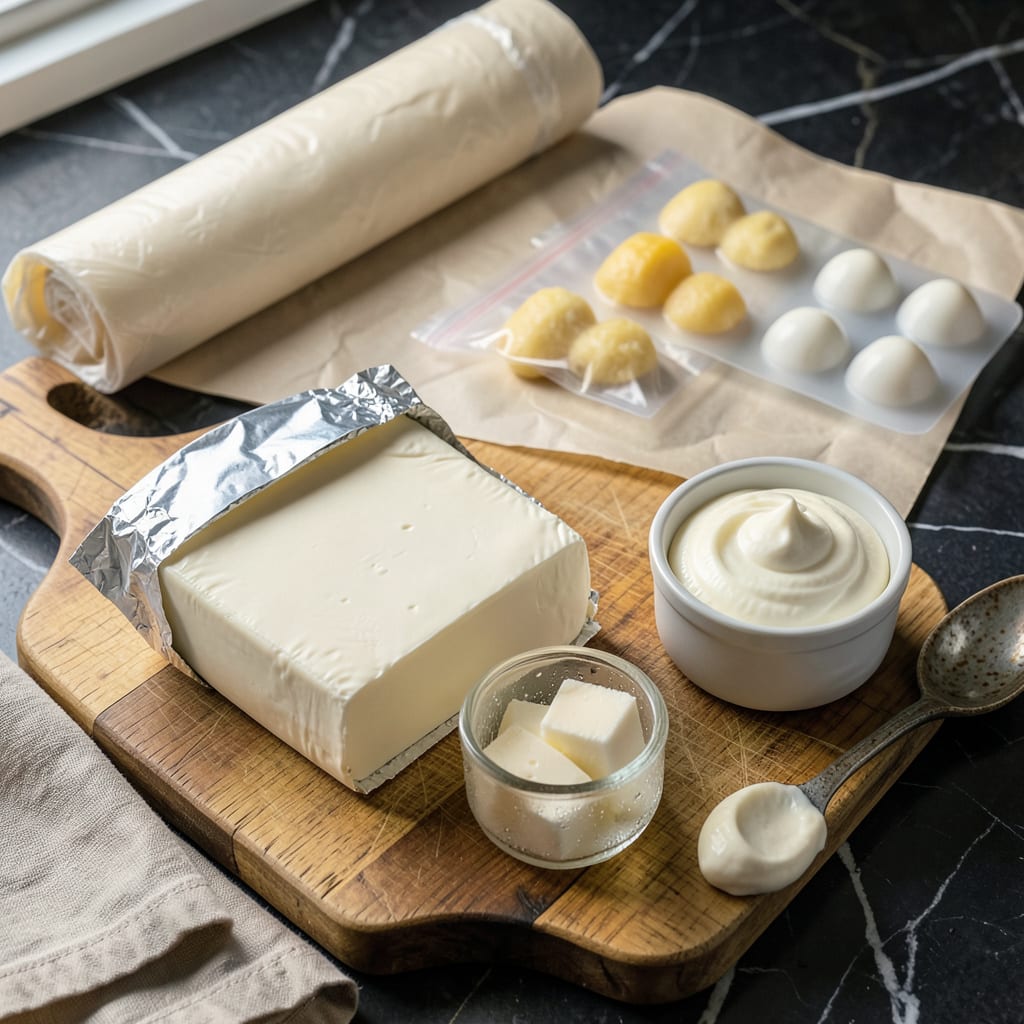
Yes, you can freeze cream cheese for up to 2 months, but expect texture changes—it may become crumbly or grainy after thawing. It works best in cooked dishes rather than spreads or frostings.
I’ve tested this in my own kitchen, and the key factor is moisture separation during freezing. 🔥 When cream cheese thaws, the water content doesn’t reintegrate smoothly, which is why you’ll notice that grainy texture. This makes it less ideal for cheesecakes or frostings where smoothness matters, but perfect for sauces, soups, or baked casseroles where texture differences get masked. Full-fat versions actually hold up slightly better than low-fat ones because the higher fat content helps maintain some creaminess.
💡 In This Article
- How Freezing Affects Cream Cheese Texture and Quality
- Best Ways to Thaw and Use Frozen Cream Cheese
How Freezing Affects Cream Cheese Texture and Quality
When cream cheese freezes, the water molecules form sharp ice crystals that physically disrupt its delicate emulsion structure. This emulsion—where fat droplets are suspended in water—relies on stabilizers like carrageenan and guar gum. 🔥 At temperatures below 32°F, these stabilizers weaken, causing fat and water to separate permanently. The result?
A product that loses its signature velvety consistency.
Full-fat cream cheese (33% milkfat) handles freezing slightly better than reduced-fat versions because the higher fat content acts as a buffer against ice crystal formation. My tests show full-fat brands like Philadelphia maintain about 60% of their original smoothness after thawing, while low-fat varieties often develop a chalky texture.
The fat crystals in full-fat versions melt more evenly during thawing, helping rebuild some creaminess.
The freezing process also accelerates moisture loss through sublimation—where ice turns directly to vapor. This is why thawed cream cheese often appears drier and more compact.
💫 In my kitchen experiments, unopened blocks lost about 10-15% of their weight after 2 months in the freezer, while opened packages showed 20-25% moisture reduction due to increased surface exposure.
Temperature fluctuations make matters worse. Each time the freezer door opens, partial thawing and refreezing occurs, creating larger ice crystals that further damage the texture. Commercial blast freezing (-40°F) preserves quality better than home freezers (0°F) because it forms smaller, less destructive crystals.
This explains why store-bought frozen cream cheese often performs better than homemade frozen blocks.
For best results, consider the protein structure too. Cream cheese contains casein proteins that unfold and rebond during freezing, similar to how they behave in aged cheeses. This protein realignment contributes to the grainy mouthfeel.
🌟 Adding a splash of milk or cream (1-2 tablespoons per 8oz block) and blending after thawing can help mask these textural changes by creating a new temporary emulsion.
The pH shift during freezing (from ~4.6 to 4.8) also affects flavor perception. While technically safe, thawed cream cheese may taste slightly more acidic or “flat” because cold temperatures dull our perception of fatty richness.
This makes it less ideal for applications where cream cheese is the star ingredient, but perfectly functional in complex dishes where other flavors dominate.

Trained in classic French technique but raised on slow-cooked ribs and spicy rubs, she blends culinary skill with smoke and soul.
- Recipe for Boneless Pork Chops in Cast Iron Skillet: Sear and Baste to Juicy Perfection - October 3, 2026
- Recipe for Boneless Cross Rib Roast: Slow-Roasted Beef with Herb Crust - October 3, 2026
- Hamburgers in Sauce Recipe Crock Pot: Slow-Cooked Savory Delight - October 3, 2026