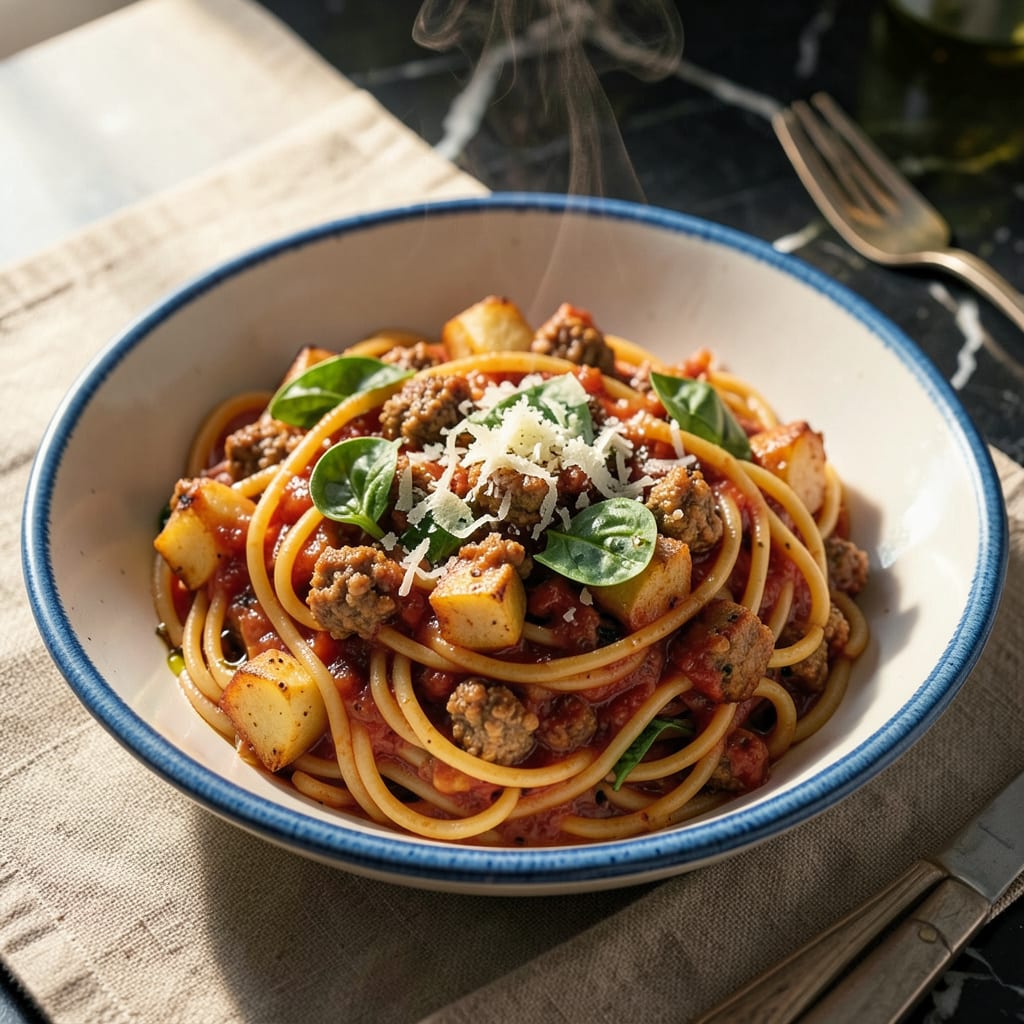
Yes, breakfast sausage works well in spaghetti, adding a rich, savory flavor with hints of sage and black pepper. Opt for mild or sweet varieties to avoid overpowering the dish, and brown it thoroughly for best texture.
I love using breakfast sausage in pasta because its herb-forward profile creates layers of complexity you won’t get from plain ground meat. The fennel seeds and marjoram in many blends develop a warm, aromatic base that marries beautifully with garlic and basil in tomato sauces. 🔥 For the best results, I recommend removing casings and breaking the meat into small pieces—this ensures even distribution throughout the dish and prevents chewy bites. What’s particularly great is how the sausage’s natural fat content enriches the sauce without needing extra oil or butter.
💡 In This Article
- How Breakfast Sausage Transforms Spaghetti Flavor
- Best Techniques for Cooking Spaghetti with Breakfast Sausage
How Breakfast Sausage Transforms Spaghetti Flavor
The magic happens when breakfast sausage’s signature spices—sage, fennel, and black pepper—meet tomato sauce. Sage contains thujone, a compound that releases earthy, slightly piney notes when heated, while fennel seeds contribute anise-like sweetness that softens acidity. 🔥 These flavors bloom during cooking, creating a warm aromatic base that Italian sausage lacks.
The fat content (typically 25-30%) renders into the sauce, adding body without heaviness.
Browning the sausage triggers the Maillard reaction at 300°F+, producing over 100 new flavor compounds. This chemical process transforms amino acids and sugars into rich, meaty notes that ground the dish. I’ve found that breakfast sausage develops deeper caramelization than ground beef due to its higher sugar content from added spices.
The result is a sauce with complex umami layers that cling beautifully to pasta.
Fat distribution matters tremendously. When you cook breakfast sausage properly, the rendered fat emulsifies into the tomato sauce, creating a velvety texture. This is different from leaner meats that can leave sauces watery. The key is cooking the sausage first until fully browned, then using those flavorful drippings as your sauce base.
I always remove about 1 tablespoon of excess fat per pound to prevent greasiness while keeping richness.
Consider the protein-to-pasta ratio for balance. For 1 pound of spaghetti, I use 12 ounces of breakfast sausage—enough for hearty flavor without overwhelming. The crumbly texture contrasts perfectly with al dente pasta, while the spice blend complements (rather than competes with) garlic, oregano, and basil.
Sweet Italian sausage works too, but breakfast varieties offer more herb complexity.
Temperature control during browning is crucial. Cook over medium-high heat until internal temperature reaches 160°F, but don’t rush it. The gradual browning develops more flavor compounds than quick cooking. I test doneness by checking that the sausage crumbles easily when pressed—this ensures perfect texture in the final dish. ✨
For those watching sodium, opt for low-sodium varieties and boost flavor with fresh herbs. The natural spices in breakfast sausage mean you can reduce added salt by 25-30% compared to recipes using plain ground meat. This makes it an excellent choice for health-conscious cooks who still want bold flavor.
The real transformation happens when you deglaze the pan with wine or broth after browning. Those caramelized bits (called fond) dissolve into liquid gold that forms your sauce foundation. This step is non-negotiable—it’s where breakfast sausage truly elevates spaghetti from good to restaurant-quality. 💫

Trained in classic French technique but raised on slow-cooked ribs and spicy rubs, she blends culinary skill with smoke and soul.
- Recipe for Boneless Pork Chops in Cast Iron Skillet: Sear and Baste to Juicy Perfection - October 3, 2026
- Recipe for Boneless Cross Rib Roast: Slow-Roasted Beef with Herb Crust - October 3, 2026
- Hamburgers in Sauce Recipe Crock Pot: Slow-Cooked Savory Delight - October 3, 2026