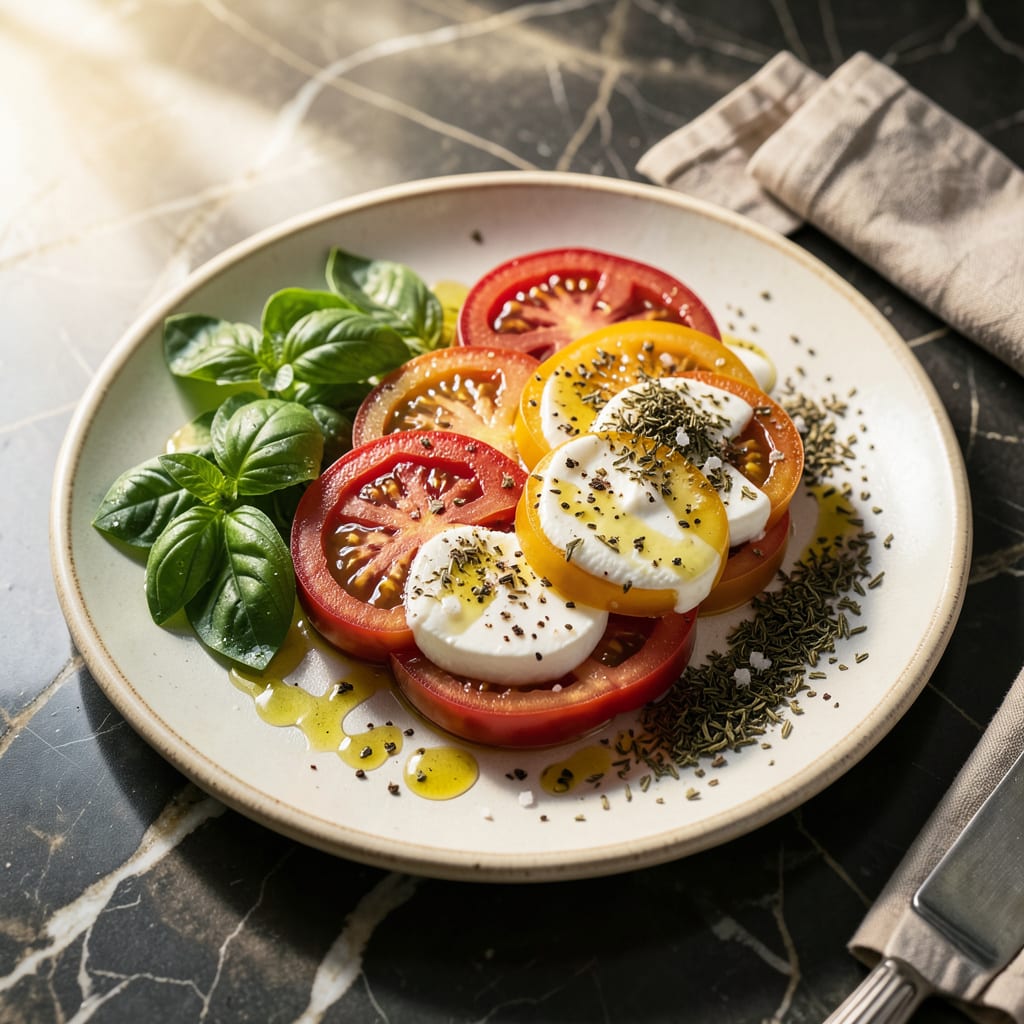
Yes, you can substitute dried basil for fresh, but use one-third the amount since dried herbs are more concentrated. Add it earlier in cooking to rehydrate and release flavor properly.
I’ve tested this swap countless times in my kitchen, and the key lies in understanding how dehydration transforms the herb. When basil leaves dry, their essential oils become more potent while losing the bright, grassy notes that make fresh basil so vibrant. That’s why I always recommend adjusting the timing—dried basil needs heat and moisture to wake up its flavors, unlike fresh leaves that shine when added at the end. 🔥
What most home cooks overlook is how the texture changes affect the dish. Dried basil crumbles into fine particles that distribute differently than fresh leaves, which can alter both appearance and mouthfeel in your final dish. I find it works beautifully in long-simmered sauces but can fall flat in quick-cooked dishes where fresh basil’s aroma is meant to stand out.
💡 In This Article
- Why Dried Basil Differs from Fresh in Flavor and Potency
- Best Practices for Substituting Dried Basil in Recipes
Why Dried Basil Differs from Fresh in Flavor and Potency
The dehydration process transforms basil in fundamental ways. When fresh basil leaves dry, they lose about 75% of their moisture content, concentrating the remaining essential oils. This creates a herb that’s 3-4 times more potent by weight.
The volatile compounds responsible for basil’s signature aroma—like linalool and eugenol—become more concentrated but also more fragile, which is why dried basil needs heat to release its full potential.
Fresh basil contains approximately 80% water, which carries its delicate, bright flavors. Drying removes this moisture, leaving behind a product where the oil content jumps from about 0.5% to 3-5% by weight. This concentration explains why you’ll use 1 teaspoon dried for every 1 tablespoon fresh.
The drying process also breaks down cell walls, making the remaining oils more accessible—but only when properly rehydrated during cooking. 🔥
Texture plays a crucial role in how each form performs. Fresh basil leaves maintain their structure, offering visual appeal and bursts of flavor. Dried basil, however, crumbles into fine particles that disperse evenly throughout dishes.
This makes dried basil ideal for long-cooked sauces where you want flavor distributed uniformly, while fresh basil excels in dishes where you want distinct herbal notes and visual contrast.
The flavor profile shifts noticeably during drying. Fresh basil offers bright, slightly peppery notes with hints of anise. Dried basil develops deeper, more earthy tones with a slight minty undertone. The drying process causes some of the more delicate volatile compounds to evaporate, while the more stable compounds—like the camphor-like notes—become more pronounced.
This is why dried basil works beautifully in hearty dishes but can overpower delicate preparations.
Heat activation becomes critical with dried basil. The concentrated oils in dried basil are bound within the leaf structure and need both moisture and heat to fully release. I’ve found that adding dried basil to cold liquids results in only about 30% flavor extraction, while simmering for 10-15 minutes can achieve nearly 90% flavor release.
This explains why dried basil performs best in cooked applications rather than raw preparations. ✨
Consider the dish’s cooking time when choosing between forms. For quick-cooked dishes like salads or garnishes, fresh basil’s immediate impact is irreplaceable. In long-simmered dishes like marinara or stews, dried basil has time to rehydrate and infuse the entire dish.
The key is matching the herb form to the cooking method—something I learned through many trial-and-error batches in my own kitchen.
Storage conditions affect dried basil’s potency over time. Properly stored dried basil (in airtight containers away from light) retains about 70% of its flavor for 6 months, while fresh basil loses flavor rapidly after 3-4 days.
This makes dried basil a more consistent option for pantry cooking, though it can never fully replicate the vibrant, complex flavor of just-picked fresh basil. 💫

Trained in classic French technique but raised on slow-cooked ribs and spicy rubs, she blends culinary skill with smoke and soul.
- Recipe for Boneless Pork Chops in Cast Iron Skillet: Sear and Baste to Juicy Perfection - October 3, 2026
- Recipe for Boneless Cross Rib Roast: Slow-Roasted Beef with Herb Crust - October 3, 2026
- Hamburgers in Sauce Recipe Crock Pot: Slow-Cooked Savory Delight - October 3, 2026