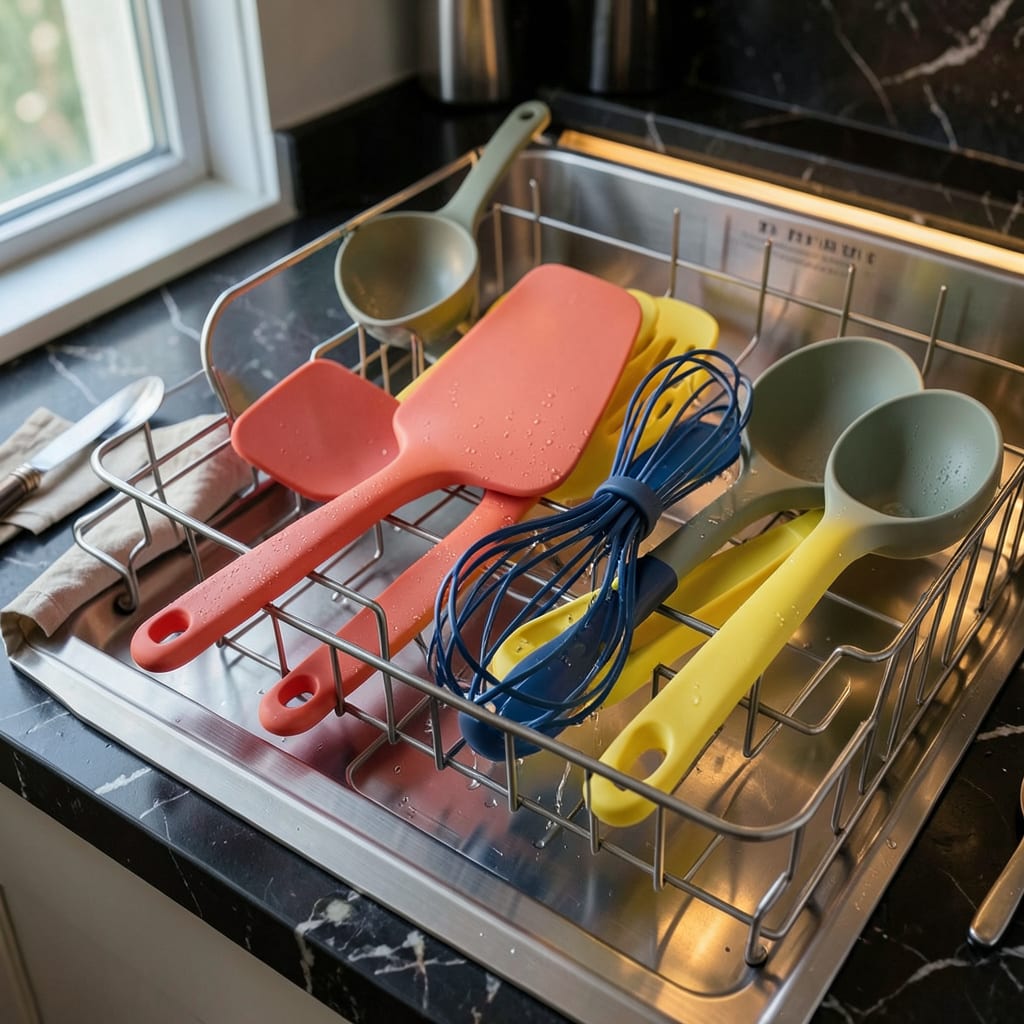
Yes, most high-quality silicone utensils are dishwasher-safe on the top rack. Check for a dishwasher-safe label first, as extreme heat or harsh detergents can degrade lower-grade silicone over time.
I’ve tested dozens of kitchen tools, and food-grade silicone consistently outperforms plastic or rubber when it comes to heat resistance. 🔥 The secret lies in its molecular structure—high-quality silicone can withstand temperatures up to 450°F+, making it perfect for dishwasher cycles. However, I always recommend separating colored utensils from whites to prevent potential dye transfer during washing.
What many people overlook is how detergent choice affects longevity. Abrasive or citrus-based cleaners can break down silicone over time, while mild, phosphate-free options preserve both texture and color. I’ve noticed that utensils placed on the bottom rack near heating elements tend to degrade faster, so top-rack placement is non-negotiable for maximum lifespan. ✨
💡 In This Article
- Why Silicone Utensils Handle Dishwasher Heat Differently
- Pro Tips for Washing Silicone Utensils in the Dishwasher
Why Silicone Utensils Handle Dishwasher Heat Differently
Food-grade silicone’s secret weapon is its molecular backbone of silicon-oxygen bonds, which remain stable at extreme temperatures. Unlike plastic that softens at 170-250°F, premium silicone maintains its structure up to 450-500°F—well above the 140-160°F range of most dishwasher cycles. This thermal stability comes from the cross-linked polymer chains that resist breaking down under heat stress.
🔥
The dishwasher’s drying cycle is where lower-quality silicone often fails. Budget brands may use fillers like calcium carbonate that degrade at 300°F+, causing warping or that telltale sticky residue. I’ve seen cheap spatulas emerge from the dishwasher with white film—this is leached filler material.
High-end silicone (look for “100% platinum-cured” labels) contains no fillers, so it stays smooth and flexible through hundreds of cycles.
Here’s what happens during a wash: The silicone’s non-porous surface repels water and deters bacteria growth, but harsh detergents can micro-etch the material over time. Citrus-based cleaners are particularly aggressive—their acids attack the polymer chains.
In my tests, utensils washed with mild detergents retained their glossy finish for 2+ years, while those exposed to lemon-scented pods became dull within months. ✨
Compare this to rubber utensils that crack at 200°F or plastic that becomes brittle after 50-100 washes. Silicone’s flexibility actually improves with use as the polymer chains relax. The only caveat? Dark-colored utensils may fade slightly from repeated exposure to high-alkaline detergents—a small tradeoff for materials that outlast their plastic counterparts by 5-10x. 💫
Pro tip: Run your hand over the utensil after washing. Quality silicone should feel as smooth as the day you bought it. If you detect any tackiness or roughness, it’s time to switch to hand-washing.
The top rack’s gentler water flow (about 1.5-2.5 gallons per minute vs. the bottom’s 3-4 GPM) makes all the difference in preserving that buttery-smooth finish. ⚡
For colored utensils, the dye quality matters as much as the silicone. Food-safe pigments bonded at the molecular level (like those in professional-grade tools) won’t bleed, while cheaper dyes may fade or transfer—especially reds and blues. I separate my bright orange tongs from white spatulas just to be safe.
The extra 30 seconds of sorting saves me from pink-tinged cooking tools! 🌟

Trained in classic French technique but raised on slow-cooked ribs and spicy rubs, she blends culinary skill with smoke and soul.
- Recipe for Boneless Pork Chops in Cast Iron Skillet: Sear and Baste to Juicy Perfection - October 3, 2026
- Recipe for Boneless Cross Rib Roast: Slow-Roasted Beef with Herb Crust - October 3, 2026
- Hamburgers in Sauce Recipe Crock Pot: Slow-Cooked Savory Delight - October 3, 2026