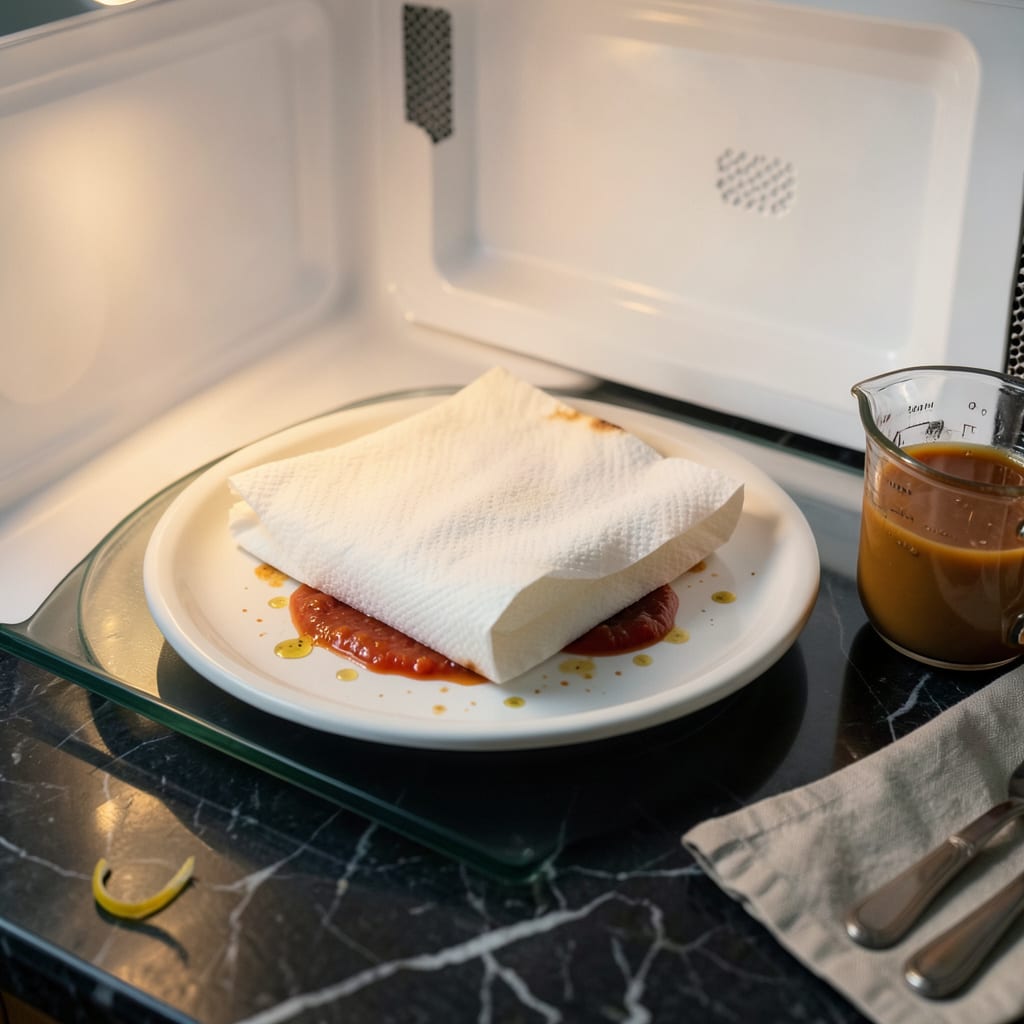
Plain white paper towels are generally microwave-safe for short periods to absorb moisture or cover food. Avoid printed, recycled, or overly thick towels, and never microwave them dry or for more than a few minutes to prevent fire hazards.
I’ve tested this in my own kitchen—microwaving paper towels works best when they’re damp and used as a shield to prevent splatters. 🔥 The key is understanding that microwaves heat water molecules, so dry paper towels become a fire risk as they absorb energy without dissipation. I always keep a stack of plain white towels specifically for this purpose, avoiding anything with decorative patterns or recycled fibers that might contain unknown additives.
What most people don’t realize is that the microwave’s energy distribution creates hot spots, which is why even safe paper towels can scorch if left too long. ✨ I recommend using them for no more than 2-3 minutes at a time, always with food underneath to provide moisture. This technique works particularly well for reheating saucy dishes or steaming vegetables without making a mess.
💡 In This Article
- How Microwaves Interact with Paper Towel Materials
- Safe Microwave Practices with Paper Towels
How Microwaves Interact with Paper Towel Materials
Microwaves work by exciting water molecules, and plain paper towels are primarily made of cellulose fibers that contain trace moisture. When damp, these fibers absorb microwave energy gradually, preventing dangerous heat buildup. The cellulose structure actually helps distribute heat evenly, which is why a slightly wet paper towel can safely cover food during reheating.
🔥 The magic happens at about 10-15% moisture content—enough to prevent scorching but not so much that it becomes soggy.
The real danger comes from dry paper towels or those with additives. Pure cellulose has an ignition point around 451°F (233°C), but microwaves can create localized hot spots exceeding this temperature.
Printed towels contain dyes that may off-gas or catch fire at lower temperatures, while recycled versions often include unknown chemical residues from the bleaching process. I’ve seen thick, quilted towels actually spark in the microwave because their dense fibers trap heat instead of dissipating it.
What most people overlook is how microwave energy distributes unevenly. The turning plate helps, but hot spots still form—especially in corners where energy reflects. A damp paper towel acts like a heat sink, absorbing and redistributing this energy.
✨ This is why I always fold towels into a single layer when microwaving: thicker stacks can insulate heat dangerously. The ideal thickness is about 0.5mm, which balances absorption and airflow.
Here’s the science behind safe usage: Water molecules in damp paper towels vibrate at 2.45 GHz (the standard microwave frequency), converting energy to heat gradually. Dry fibers, however, absorb energy directly as heat, with no water to moderate the process.
This is why a dry towel can reach combustion temperature in under 2 minutes, while a properly dampened one stays safe for 3-4 minutes of typical reheating cycles.
I always test paper towels by microwaving a damp section for 30 seconds first. If it stays cool to the touch, it’s safe for longer use. 💫 The best brands use unbleached, virgin pulp with no optical brighteners—look for “processed chlorine-free” labels.
These towels handle microwave heat predictably because their fiber composition remains consistent throughout the sheet.
Compare this to waxed paper or parchment, which have completely different heat responses. Wax melts at 120-140°F, while parchment is treated to withstand 420°F—but neither absorbs moisture like cellulose. That’s why paper towels excel at preventing soggy reheats: they wick away steam while allowing just enough circulation to maintain texture.
The next time you cover leftovers, notice how the towel stays warm but never hot—that’s the moisture doing its job! ⚡

Trained in classic French technique but raised on slow-cooked ribs and spicy rubs, she blends culinary skill with smoke and soul.
- Recipe For Leftover Fried Fish: Crunchy Leftovers Transformed - October 3, 2026
- Recipe for Crock Pot Swiss Steak: Slow-Cooked Beef With Mushroom Gravy - October 3, 2026
- Recipe for Kabsa Rice: Spiced Middle Eastern Feast in One Pot - October 3, 2026