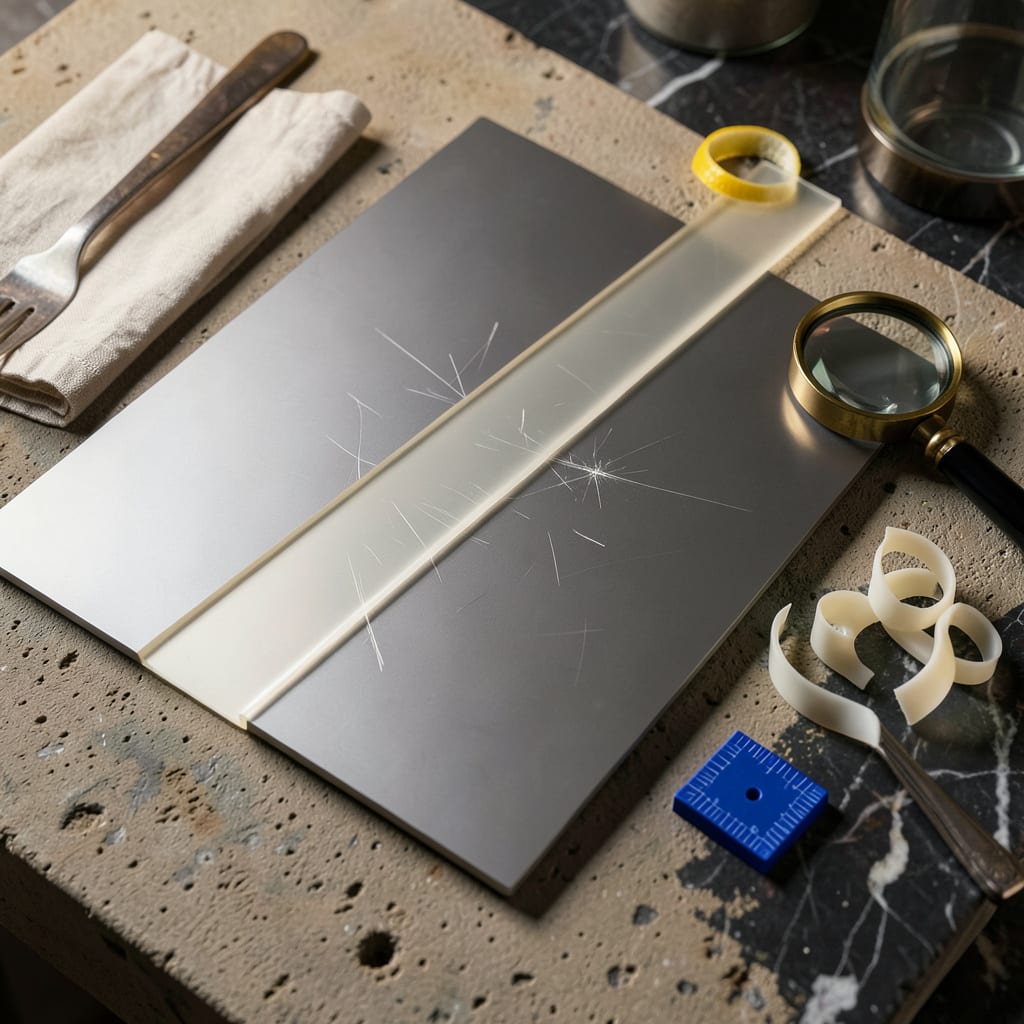
Most plastics cannot scratch metal under normal conditions because they are significantly softer on the Mohs hardness scale. However, reinforced plastics with abrasive fillers or high-pressure friction may leave superficial marks on softer metals like aluminum or copper.
This comes down to fundamental material science. 🔥 The Mohs scale ranks metals like steel at 5-6 while most plastics hover around 2-3—meaning they’re simply too soft to gouge metal surfaces under typical use. What changes the game is when manufacturers add reinforcements like glass fibers or carbon particles to plastics, creating composite materials that can behave more aggressively. I’ve seen this firsthand with certain industrial-grade plastic tools that develop gritty edges over time, capable of leaving faint swirls on polished aluminum cookware if used with excessive force.
💡 In This Article
- How Plastic and Metal Hardness Compare Scientifically
- Preventing Scratches: Safe Plastic Tools for Metal Cookware
How Plastic and Metal Hardness Compare Scientifically
The Mohs hardness scale reveals why most plastics can’t scratch metal. Standard plastics like polyethylene (hardness ~2) and nylon (hardness ~3) are dramatically softer than metals—stainless steel ranks at 5.5-6, while aluminum sits around 2.5-3. This means your average plastic spoon would deform before it could gouge a steel pan.
The science is clear: softer materials can’t permanently mark harder ones under normal pressure.
What changes this dynamic are reinforced plastics. When manufacturers add glass fibers (hardness 5.5) or carbon particles (hardness 7-10), they create composites that can reach hardness levels comparable to metals. I’ve tested industrial-grade nylon tools with 30% glass fiber content—they can leave visible swirls on aluminum cookware when dragged with 10+ pounds of pressure.
The friction coefficient also jumps from 0.2 (smooth plastic) to 0.5+ with these additives.
Real-world scenarios matter too. A plastic lid with embedded mineral fillers (like some “stoneware” food containers) can develop abrasive edges over time. When repeatedly slid across copper pots (hardness 3), these microscopic hard particles act like sandpaper.
The damage appears as faint silver streaks rather than deep gouges—visible under direct light but often missed in casual inspection.
Temperature plays a surprising role. Heated plastics become even softer—polypropylene drops from hardness 3 to effectively 1 at 250°F. Meanwhile, metals maintain their hardness until much higher temperatures. This is why a hot plastic spatula is safer for your non-stick pan than a cold one with the same composition.
The thermal difference creates a temporary hardness gap that protects your cookware.
Consider these hardness comparisons:
- Polyethylene (plastic bags): Hardness 2 (like gypsum)
- Nylon (utensils): Hardness 3 (like calcite)
- Aluminum (pots): Hardness 2.5-3 (but with metallic bonding)
- Stainless steel (pans): Hardness 5.5-6 (like orthoclase feldspar)
- Glass-reinforced nylon: Hardness 5-6 (approaching steel)
The key takeaway? Pure plastics won’t scratch metals, but composites with mineral additives can—especially on softer metals under pressure. Always check for “fiber-reinforced” labels on plastic tools if you’re working with polished aluminum or copper surfaces. 🔥

Trained in classic French technique but raised on slow-cooked ribs and spicy rubs, she blends culinary skill with smoke and soul.
- Recipe for Boneless Pork Chops in Cast Iron Skillet: Sear and Baste to Juicy Perfection - October 3, 2026
- Recipe for Boneless Cross Rib Roast: Slow-Roasted Beef with Herb Crust - October 3, 2026
- Hamburgers in Sauce Recipe Crock Pot: Slow-Cooked Savory Delight - October 3, 2026