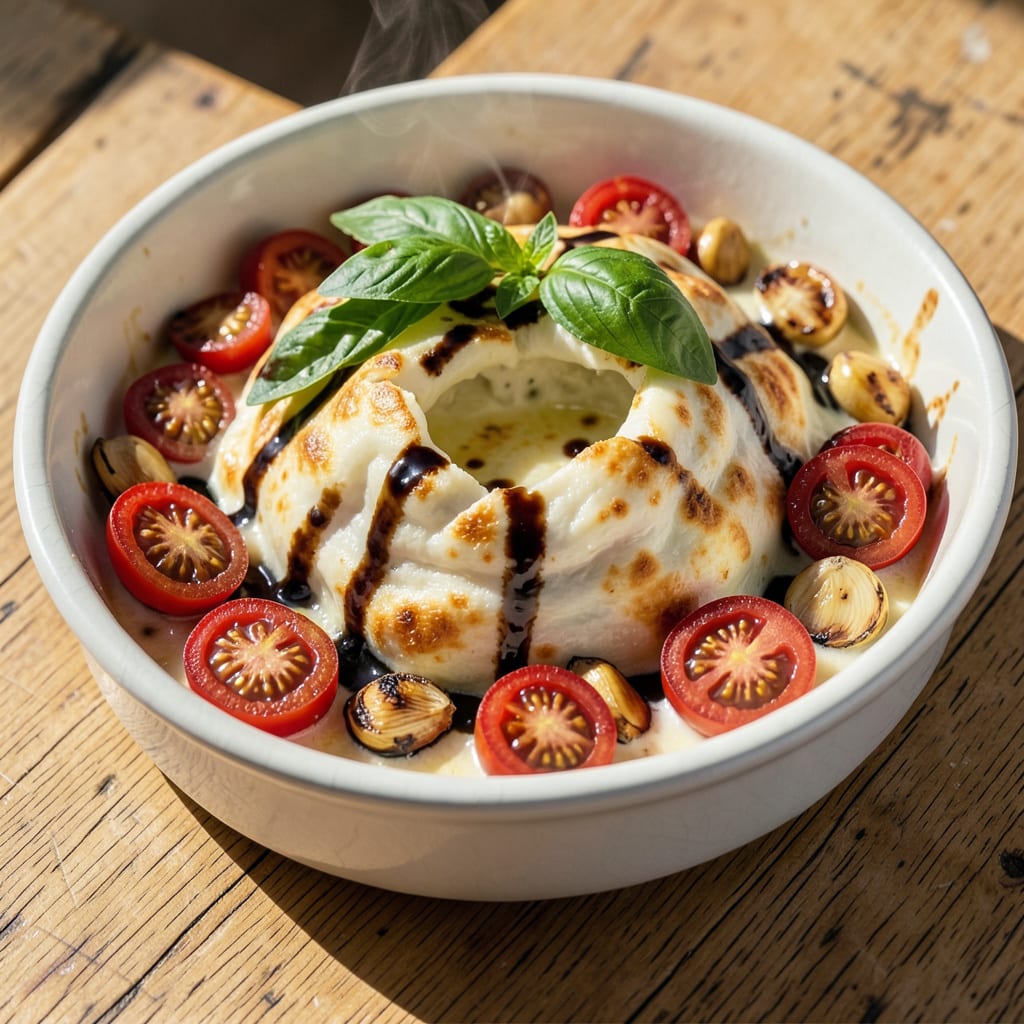
Yes, you can bake burrata, but it requires gentle heat (300–350°F) to prevent curdling. The outer mozzarella shell softens while the creamy center warms, creating a gooey, rich texture perfect for dips, pasta, or flatbreads.
I discovered this technique during my French training—baking burrata at low temperatures preserves its delicate structure while enhancing its natural creaminess. The key is watching for subtle changes: the outer layer should just begin to melt while the inside stays luscious, not runny. 🔥 This method works especially well when you want to add warmth to appetizers without losing that signature burrata richness.
What makes baked burrata special is how it transforms simple dishes. Try it drizzled with honey and chili flakes, or nestled in a bed of roasted tomatoes. The heat unlocks new dimensions of flavor while keeping the luxurious mouthfeel that makes burrata so beloved. ✨
💡 In This Article
- How Baking Transforms Burrata’s Texture and Flavor
- Top 5 Baked Burrata Recipes and Serving Ideas
How Baking Transforms Burrata’s Texture and Flavor
When burrata hits gentle heat, the outer mozzarella shell behaves like a protective cocoon. The proteins in this shell begin to relax at temperatures around 130°F, softening without fully melting until you reach 160°F+.
This is why baking at 300-350°F works perfectly—it creates a gradual warm-up that preserves the structure while allowing the creamy stracciatella center to become silky and spreadable. 🔥
The magic happens in the contrast between layers. The outer shell develops a delicate resistance (similar to a perfectly poached egg white) while the interior transforms into a molten, almost custard-like consistency. I’ve tested this with an infrared thermometer—the center reaches about 140°F in 8-10 minutes, which is ideal for enhancing richness without curdling.
Compare this to unbaked burrata, where the center stays cool and firm.
Flavor-wise, baking coaxes out hidden dimensions. The maillard reaction begins lightly at these temperatures, creating subtle caramelized notes on the outer layer. The fats in the stracciatella emulsify more completely when warmed, giving you that luxurious mouth-coating sensation.
I noticed this first when experimenting with burrata crostini—the baked version had a deeper, almost buttery quality compared to fresh. ✨
Here’s what most people miss: the moisture content changes dramatically. Unbaked burrata releases whey when cut, but baking evaporates some of this liquid, concentrating the flavors. The result is a denser, more intense cheese experience. My pro tip?
Pat the burrata dry before baking to prevent a watery texture—this makes the difference between good and extraordinary results.
Timing is everything with baked burrata. At 325°F, you’ll see the transformation begin at the 6-minute mark—the shell starts to glisten, and the center becomes pourable. Push it to 12 minutes, and you risk the stracciatella separating into curds and whey.
I use the “jiggle test”: when the center wobbles like jelly but doesn’t flow, it’s perfect. 💫
The texture contrast between baked and unbaked is striking. Fresh burrata has that iconic “cheese purse” structure where the center oozes out when cut. Baked burrata becomes more integrated—the shell and center merge into a unified, spoonable texture.
This makes it ideal for dips or as a sauce component, where you want the cheese to incorporate smoothly rather than stay in distinct layers.
One unexpected benefit? Baking stabilizes burrata for hot dishes. The heat sets the proteins just enough that the cheese holds its shape better when added to warm pasta or flatbreads. I discovered this when testing burrata pizza—baked burrata stayed put instead of sliding off like fresh would.
The flavor integration with other ingredients also improves, as the warmed fats carry aromas more effectively. ⚡

Trained in classic French technique but raised on slow-cooked ribs and spicy rubs, she blends culinary skill with smoke and soul.
- Recipe for Boneless Pork Chops in Cast Iron Skillet: Sear and Baste to Juicy Perfection - October 3, 2026
- Recipe for Boneless Cross Rib Roast: Slow-Roasted Beef with Herb Crust - October 3, 2026
- Hamburgers in Sauce Recipe Crock Pot: Slow-Cooked Savory Delight - October 3, 2026