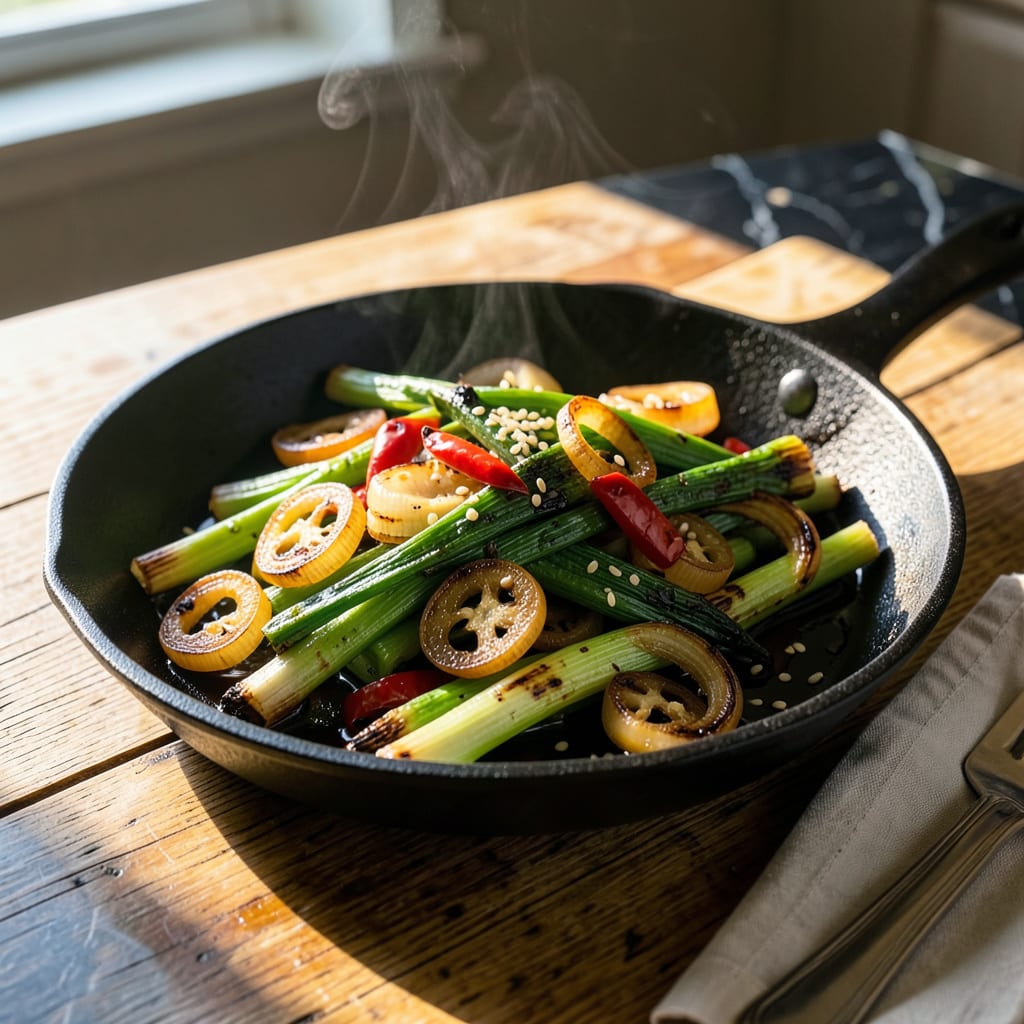
Absolutely! Green onions can be cooked to enhance their flavor—sauté for a mild sweetness, grill for smoky depth, or stir-fry for crisp-tender texture. Both the white and green parts are edible when cooked.
I love how heat unlocks hidden dimensions in these versatile alliums. The white bulbs caramelize beautifully when exposed to direct heat, while the green tops soften just enough to lose their raw sharpness. 🔥 What’s fascinating is how different cuisines leverage this—Asian stir-fries keep them bright and snappy, while Southern cooking often melts them into buttery richness. The key is controlling exposure time: 30 seconds for garnish crunch, 2-3 minutes for full flavor integration.
💡 In This Article
- How Cooking Transforms Green Onion Flavor and Texture
- Top 5 Cooking Methods for Green Onions in Everyday Dishes
How Cooking Transforms Green Onion Flavor and Texture
When green onions hit heat, their sulfur compounds undergo a magical transformation. The white bulb contains more concentrated alliinase enzymes that break down into sweet, aromatic compounds when cooked. At 280°F, these compounds begin caramelizing, creating that golden-brown color and nutty sweetness we love.
The green tops, with less sulfur, soften quickly while retaining their fresh, grassy notes—perfect for balancing rich dishes.
Here’s what’s actually happening at different temperatures: Quick sautéing at medium-high heat (350-375°F) for 1-2 minutes preserves crispness while mellowing the sharpness. Slow roasting at 300°F for 15-20 minutes breaks down cell walls completely, releasing natural sugars that create deep umami.
I’ve found the sweet spot for stir-fries is 30 seconds—just enough to soften the edges while keeping that vibrant green color. 🔥
The moisture content plays a huge role too. Green onions are about 90% water, which means they release liquid quickly when cooked. This is why they’re perfect for deglazing pans—the released moisture helps lift fond while infusing the dish with onion essence.
The white parts hold up better to prolonged cooking because of their denser structure, while the greens wilt almost immediately when exposed to heat.
What most people don’t realize is that cooking method dramatically alters the flavor profile. Grilling introduces smoky phenols that complement the onions’ natural sweetness, while blanching in boiling water for 20 seconds preserves color and texture for salads. The Maillard reaction kicks in around 310°F, creating those complex flavors we associate with perfectly cooked alliums.
✨
For maximum flavor development, I recommend cutting green onions into 1-inch pieces before cooking. This exposes more surface area to heat while maintaining structural integrity. The white portions can handle 3-4 minutes of cooking before becoming mushy, while the greens need only 45-60 seconds to soften perfectly.
This timing difference is why I always add the greens last when stir-frying.
Consider the oil you use too—neutral oils like grapeseed let the onion flavor shine at 400°F, while butter adds richness but burns below 350°F. The science here is fascinating: the onions’ sulfur compounds actually help stabilize the oil slightly, allowing you to push temperatures a bit higher without burning.
This is why green onions are such a chef’s secret for building flavor bases in everything from soups to stir-fries. 💫

Trained in classic French technique but raised on slow-cooked ribs and spicy rubs, she blends culinary skill with smoke and soul.
- Recipe for Curried Tofu: Aromatic Spices With Crispy Edges - October 3, 2026
- Recipe for Dumplings in Crock Pot: Fluffy Pillows with Minimal Effort - October 3, 2026
- Recipe For Diced Pork In Slow Cooker: Melt-In-Your-Mouth Tenderness All Day - October 3, 2026