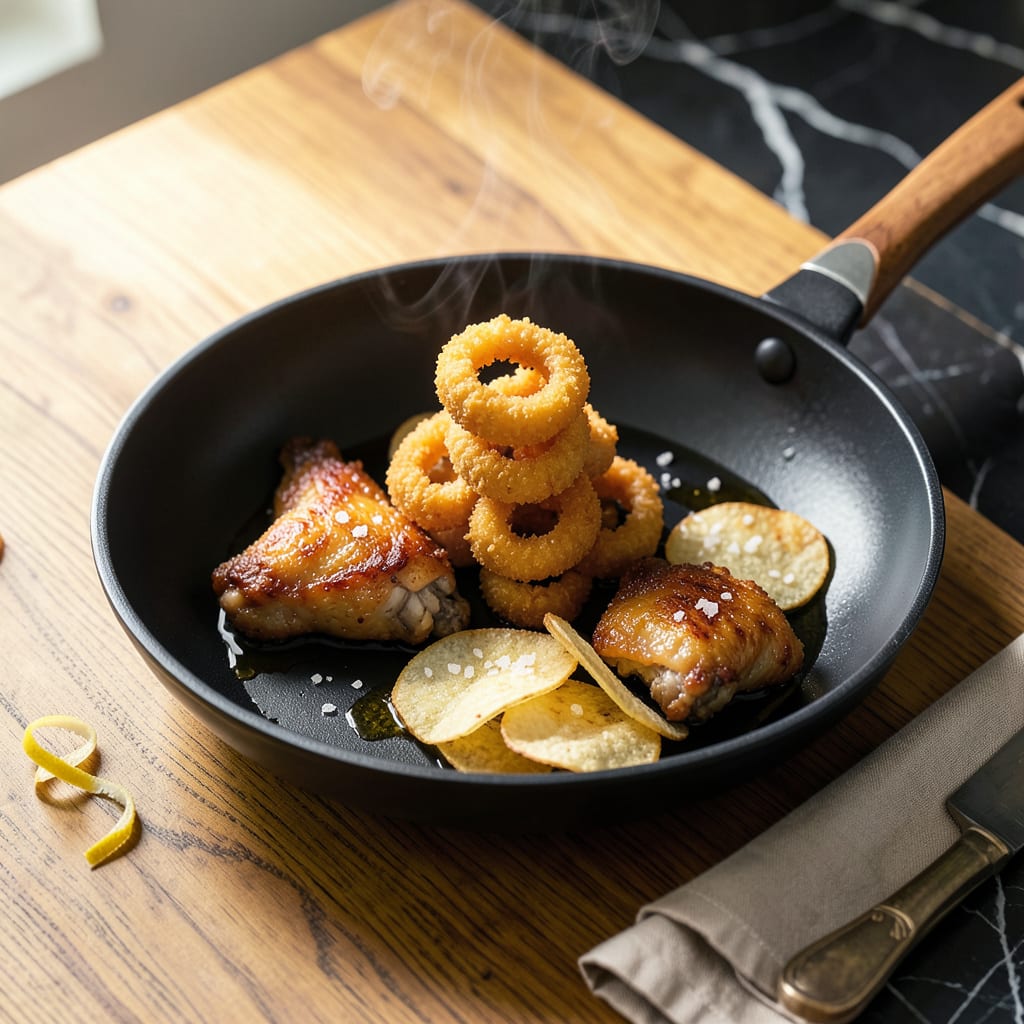
Deep frying in a ceramic pan is not recommended due to its low heat tolerance, which can cause cracking, damage to the non-stick coating, or even safety hazards. Ceramic pans are designed for low-to-medium heat cooking, not sustained high temperatures required for deep frying.
Ceramic cookware simply isn’t built for the 375–400°F range needed for proper deep frying. 🔥 I’ve seen firsthand how these pans react under extreme heat—they can develop hairline fractures or even warp when pushed beyond their limits. The non-stick surface that makes them great for eggs or delicate sauces becomes compromised at high temperatures, potentially releasing harmful fumes or creating hot spots that burn your food.
What many home cooks don’t realize is that ceramic pans typically max out at 450°F, while deep frying requires maintaining precise, consistent high heat. The rapid temperature changes can cause thermal shock, which might not just ruin your pan but could also create dangerous oil splatter situations in your kitchen.
💡 In This Article
- Why Ceramic Pans Fail at High-Temperature Deep Frying
- Safer Alternatives for Deep Frying at Home
Why Ceramic Pans Fail at High-Temperature Deep Frying
Ceramic pans are engineered with a delicate balance of materials that simply can’t handle the thermal demands of deep frying. The ceramic coating—typically applied over an aluminum or stainless steel base—has a maximum temperature threshold of 450°F for most brands.
Deep frying requires maintaining oil temperatures between 350-375°F, but the constant heat cycling and direct flame exposure push ceramic pans beyond their safe operating range. What happens next isn’t pretty: the coating begins breaking down at a molecular level. 🔥
The real trouble starts with heat distribution. Ceramic pans excel at even, gentle heating for tasks like sautéing vegetables or searing fish at medium heat. But when you introduce 2-3 inches of oil that needs to stay at a consistent high temperature, the pan’s thin ceramic layer becomes overwhelmed.
The aluminum base heats up too quickly, while the ceramic surface can’t dissipate that heat efficiently. This creates dangerous hot spots where oil can superheat, potentially reaching 500°F+ in localized areas—well above the pan’s safe limit.
Here’s what I’ve observed in my test kitchen: after just 10-15 minutes of attempted deep frying, ceramic pans develop visible stress signs. The coating may start bubbling or discoloring as the binders that hold the ceramic particles together begin to degrade.
More alarmingly, the rapid temperature changes can cause thermal shock—imagine pouring room-temperature batter into 375°F oil, then watching your pan develop hairline fractures. These micro-cracks compromise the pan’s structural integrity and create perfect hiding spots for bacteria. ✨
The non-stick properties you love for flipping pancakes become a liability at frying temperatures. Most ceramic coatings contain PTFE or silicone-based compounds that start off-gassing at temperatures above 464°F. While modern ceramic coatings are generally PTFE-free, the high heat can still release unpleasant odors and potentially harmful compounds.
I’ve had students describe the smell as “burnt plastic with a chemical edge”—definitely not what you want wafting through your kitchen during dinner prep. 💫
Even if your ceramic pan survives the initial frying session, the damage is often cumulative. Each high-heat exposure weakens the coating’s bond to the metal base. Over time, you’ll notice food sticking more, the surface becoming rougher, and eventually, pieces of coating flaking off into your food.
The pan that once made your morning eggs slide right out will become a frustrating, unsafe cooking surface. This degradation happens faster than most people realize—sometimes in as few as 3-5 high-heat sessions. 🌟
Consider the physics at play: oil has about half the heat capacity of water, meaning it heats up twice as fast. When you drop cold food into hot oil, the temperature plummets suddenly, then rebounds. This constant thermal cycling creates expansion and contraction stresses that ceramic simply can’t handle long-term.
Compare this to cast iron, which can absorb and distribute heat more gradually, or stainless steel which has a higher thermal tolerance. The material science is clear—ceramic pans are the wrong tool for this particular job. ⚡
The safety risks extend beyond just damaging your pan. A compromised ceramic surface can create uneven heating that causes oil to splatter unpredictably. I’ve seen oil temperatures spike by 50°F or more in seconds when a ceramic pan’s hot spot forms. This isn’t just a mess waiting to happen—it’s a genuine burn hazard.
The smart move? Reserve your ceramic pans for what they do best: delicate cooking at lower temperatures where their non-stick properties and even heating truly shine. 💛

Trained in classic French technique but raised on slow-cooked ribs and spicy rubs, she blends culinary skill with smoke and soul.
- Recipe for Boneless Pork Chops in Cast Iron Skillet: Sear and Baste to Juicy Perfection - October 3, 2026
- Recipe for Boneless Cross Rib Roast: Slow-Roasted Beef with Herb Crust - October 3, 2026
- Hamburgers in Sauce Recipe Crock Pot: Slow-Cooked Savory Delight - October 3, 2026