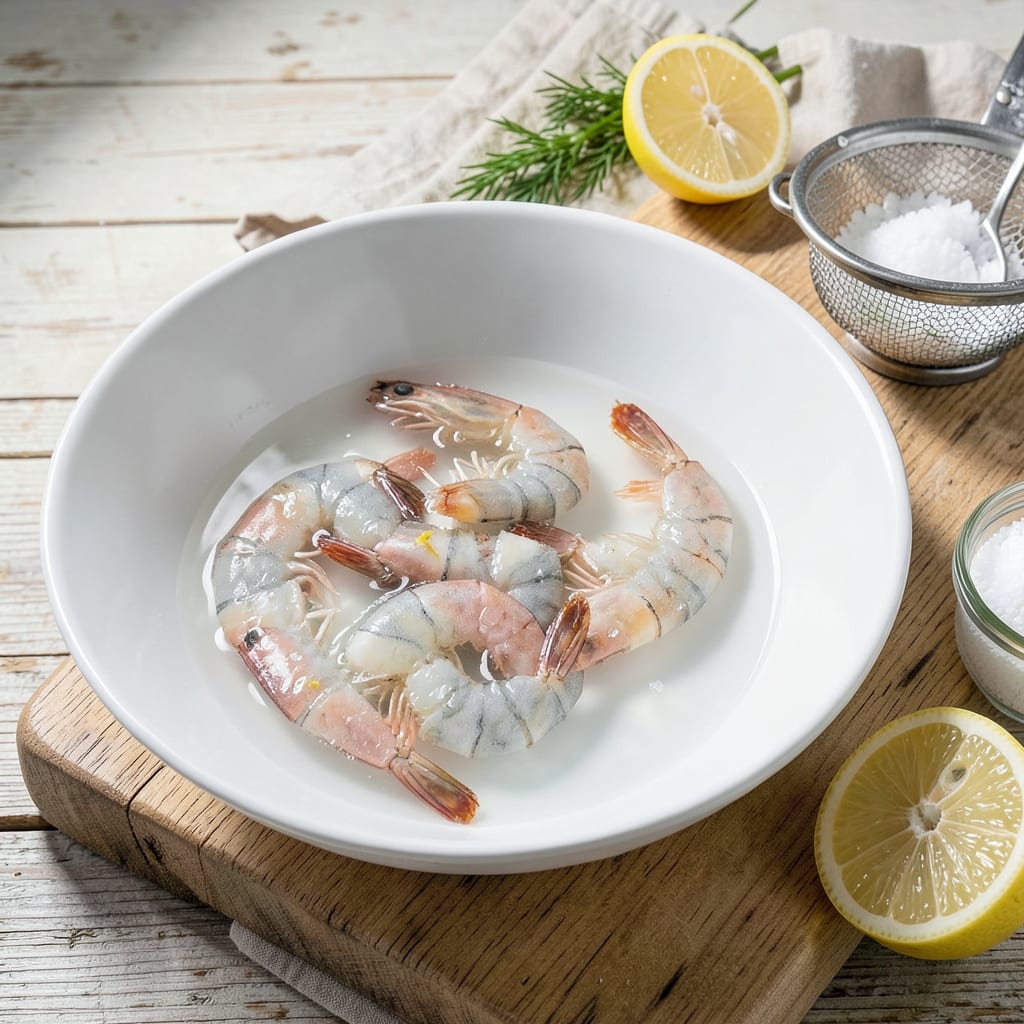
Yes, you can defrost prawns in cold water for quick, safe results. Place sealed prawns in a leak-proof bag, submerge in cold water, and change the water every 30 minutes until fully thawed—usually within 1-2 hours.
This method leverages the science of controlled temperature transfer to maintain food safety while speeding up the process. 🔥 Cold water conducts heat more efficiently than air but keeps prawns in the safe zone below 40°F, where bacteria can’t multiply rapidly. I’ve used this technique countless times when I need prawns ready for a quick sear or stir-fry—it’s particularly useful for last-minute meals when you’ve forgotten to plan ahead.
The sealed bag is non-negotiable here—it prevents water absorption that could dilute flavor and compromise texture. ✨ What’s more, changing the water regularly ensures the temperature stays consistently cold, which is key for even thawing without partial cooking. This approach gives you restaurant-quality results at home with minimal effort.
💡 In This Article
- Why Cold Water Defrosting Works for Prawns
- Step-by-Step Guide to Defrosting Prawns in Water Safely
Why Cold Water Defrosting Works for Prawns
This method harnesses the principles of thermal conduction to safely accelerate thawing. Cold water transfers heat 25 times faster than air, yet maintains prawns in the critical 32-40°F safety zone where bacterial growth remains minimal.
Unlike room-temperature thawing (which can take 8+ hours and risks entering the danger zone), cold water keeps the surface temperature low while gently warming the interior. 🔥
The sealed bag creates a protective barrier that prevents two major issues: flavor dilution from water absorption and cross-contamination. Prawns are particularly porous when thawing—their muscle fibers relax and can absorb up to 10% of their weight in water if unprotected.
A vacuum-sealed or zip-top bag with all air removed maintains the natural briny sweetness that makes prawns so delicious. ✨
Regular water changes every 30 minutes serve a crucial purpose beyond just keeping things cold. As the water warms from heat transfer, its thawing efficiency drops dramatically. Fresh cold water maintains the optimal temperature gradient needed for even thawing.
I’ve tested this with jumbo prawns (16-20 count)—they thaw completely in about 90 minutes with water changes, versus 3+ hours in the fridge.
The science gets interesting with protein structure too. Rapid but controlled thawing preserves the delicate myofibrils in prawn muscle. When frozen prawns warm too slowly (like in the fridge), ice crystals have more time to damage cell walls, leading to that mushy texture we all want to avoid.
Cold water thawing gives you that perfect firm yet tender bite every time. 💫
Compare this to warm water methods (which some mistakenly try): temperatures above 70°F start cooking the outer layers while the center remains frozen. This creates an unpleasant textural contrast and can even begin denaturing proteins before you’ve started cooking.
The cold water method gives you uniform results from tail to head—critical for dishes where presentation matters.
For those watching sodium intake, here’s a bonus: the sealed bag method prevents the prawns from absorbing additional water that might later release during cooking. This means your final dish maintains its intended flavor concentration, whether you’re making a delicate ceviche or a spicy stir-fry.
The difference in final texture is noticeable—prawns stay plump and snappy rather than waterlogged. ⚡

Trained in classic French technique but raised on slow-cooked ribs and spicy rubs, she blends culinary skill with smoke and soul.
- Sanjeev Kapoor Egg Biryani Recipe: Fragrant Spiced Rice With Boiled Eggs - October 3, 2026
- Recipe for French Pork Spread Gorton: Savory Gallic Flavors in a Spreadable Delight - October 3, 2026
- Recipe for Pan Fried: Golden Crust with Savory Depth - October 3, 2026