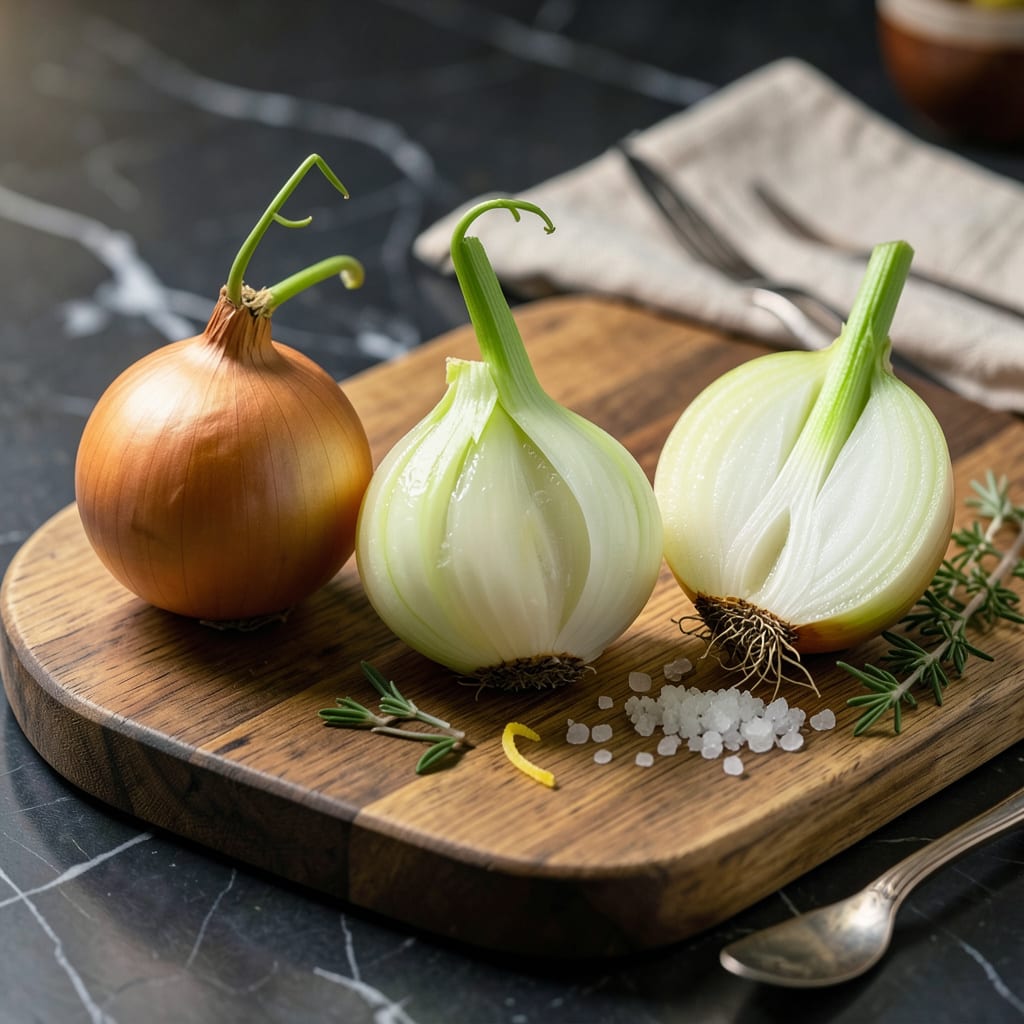
Yes, sprouted onions are safe to eat as long as they aren’t moldy or slimy. The sprouts may taste bitter, but the bulb remains edible—just trim the green shoots before using. Avoid eating if the onion feels soft or smells off.
I’ve found that sprouted onions often get a bad rap, but they’re actually packed with nutrients and flavor—if handled properly. The green shoots signal that the onion is still alive and growing, not that it’s spoiled. 🔥 In fact, many chefs intentionally use slightly sprouted onions in stocks and braises because they develop a deeper, more concentrated flavor during cooking. The key is checking for firmness and a clean, oniony aroma before prepping.
💡 In This Article
- Why Sprouted Onions Stay Safe to Eat (And When to Toss Them)
- Best Ways to Use Sprouted Onions in Cooking
Why Sprouted Onions Stay Safe to Eat (And When to Toss Them)
When an onion sprouts, it’s actually redirecting its stored energy to grow new shoots—not decaying. The bulb remains perfectly edible because sprouting is a natural growth process, not bacterial contamination. Think of it like a potato growing eyes: the main body stays intact while nutrients fuel the new growth.
The green shoots themselves are technically edible (though bitter), while the bulb retains its original flavor profile and nutritional value.
The key difference between sprouting and spoilage lies in cellular changes. Sprouting occurs when the onion’s dormancy breaks, triggered by warmth or moisture, causing the center to send up green shoots. Spoilage, however, involves microbial growth that produces mold, slime, or foul odors.
A sprouted onion should feel firm to the touch (like a fresh one) and smell clean and oniony—not sour or fermented. I always check for dry, papery outer layers too, as softness indicates internal breakdown.
Here’s what’s actually happening biologically: the sprouting process converts some of the onion’s carbohydrates into simpler sugars to fuel growth. This can make the bulb slightly sweeter while concentrating its flavor. The green shoots contain higher levels of sulfur compounds (responsible for that sharp onion taste), which is why they’re more bitter.
🔥 In my kitchen, I treat sprouted onions like slightly aged cheese—they develop more complexity but require proper handling.
Watch for these red flags that mean it’s time to toss the onion:
- Mold: Any fuzzy growth (white, green, or black) on the surface
- Soft spots: Areas that feel mushy or leak liquid when pressed
- Off smells: Sour, fermented, or ammonia-like odors
- Slimy texture: Sticky or slippery outer layers when peeled
Interestingly, sprouted onions often have higher antioxidant levels than fresh ones. A 2017 study in Food Chemistry found that sprouting increased quercetin (a beneficial flavonoid) by up to 30% in some onion varieties. The tradeoff is that the texture becomes slightly softer as the cell walls break down to support new growth.
For cooking, this means they’ll caramelize about 20% faster than fresh onions due to the increased sugar content.
The storage conditions that cause sprouting are actually different from those that cause spoilage. Sprouting happens when onions are kept in warm, humid environments (like your pantry in summer), while spoilage occurs in damp, airless conditions (like a sealed plastic bag).
I’ve found that moving onions to a cool, dark, well-ventilated space (like a mesh bag in the fridge) can slow further sprouting while maintaining quality for weeks. ✨

Trained in classic French technique but raised on slow-cooked ribs and spicy rubs, she blends culinary skill with smoke and soul.
- Recipe for Boneless Pork Chops in Cast Iron Skillet: Sear and Baste to Juicy Perfection - October 3, 2026
- Recipe for Boneless Cross Rib Roast: Slow-Roasted Beef with Herb Crust - October 3, 2026
- Hamburgers in Sauce Recipe Crock Pot: Slow-Cooked Savory Delight - October 3, 2026