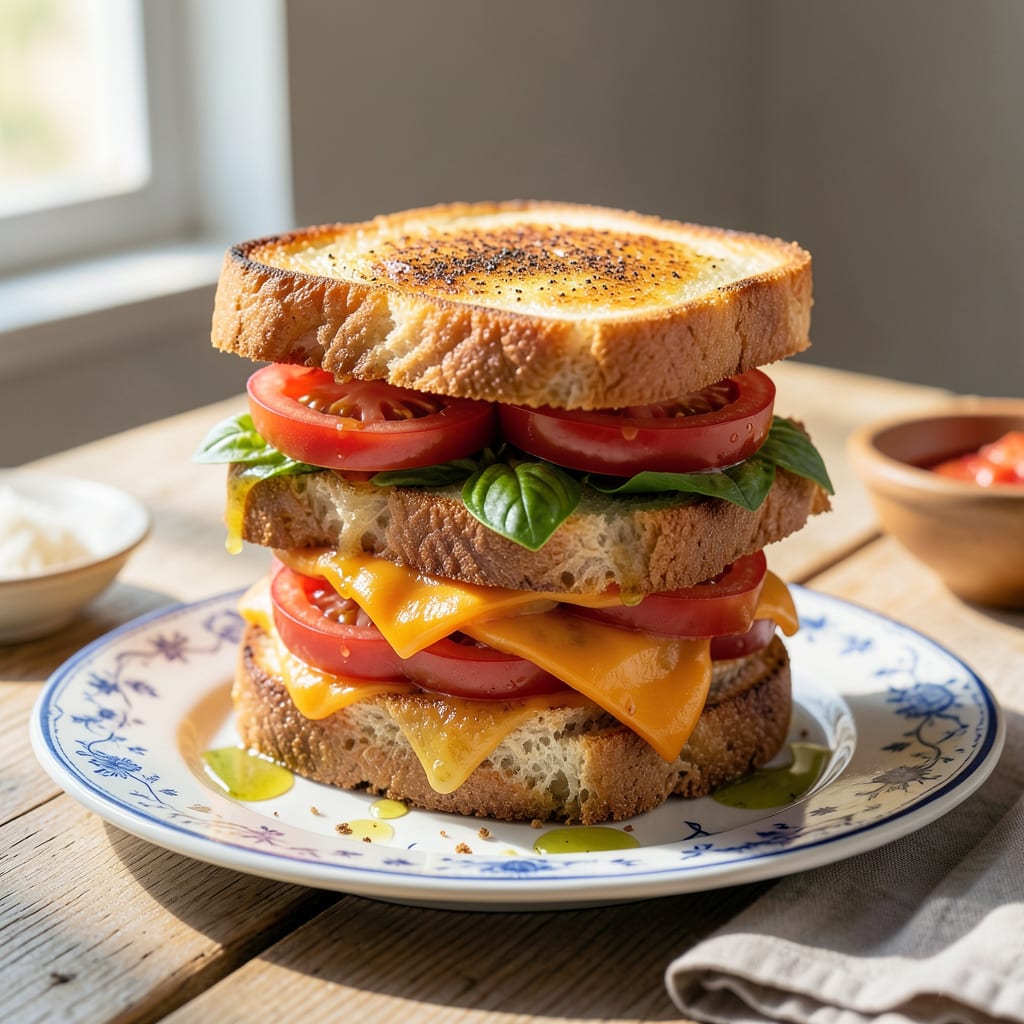
Yes, you can freeze grilled cheese sandwiches for up to 2 months. Wrap them tightly in plastic wrap or foil, then store in an airtight container to prevent freezer burn. Reheat in a toaster oven or skillet for best texture.
I’ve tested this method countless times in my own kitchen, and the key to success lies in how you prepare them for freezing. 🔥 Sandwiches with melty cheeses like cheddar or American hold up better than those with crumbly varieties, and adding a thin layer of butter to the bread before freezing helps maintain that golden crispness when reheated. What most people don’t realize is that the freezing process actually pauses the staling of bread, which means your sandwich can taste fresher when properly thawed than if you’d kept it in the fridge for days.
The real magic happens during reheating—this is where you can restore that just-made quality. A quick sear in a hot skillet with a pat of butter brings back the crunch, while a toaster oven at 375°F for 5-7 minutes works wonders for even browning. I always recommend avoiding the microwave if possible, as it tends to make the bread soggy and the cheese rubbery.
💡 In This Article
- How Freezing Affects Grilled Cheese Texture and Flavor
- Best Freezing and Reheating Methods for Grilled Cheese
How Freezing Affects Grilled Cheese Texture and Flavor
When you freeze a grilled cheese sandwich, two major transformations occur at the microscopic level. The bread’s starch molecules begin retrogradation—a process where they recrystallize and release moisture. This is why thawed bread often feels drier than fresh. Meanwhile, the cheese’s fat globules separate slightly during freezing, which can make the texture grainier upon reheating.
The key factor is ice crystal formation: larger crystals (from slow freezing) rupture cell walls more aggressively than small, rapid-freeze crystals.
Different cheeses handle freezing differently due to their moisture and fat content. Processed cheeses like American melt beautifully after freezing because their emulsifiers (sodium citrate) help maintain a smooth texture. Natural cheeses behave differently: cheddar’s 30-35% fat content makes it resilient, while mozzarella’s higher moisture (50-60%) can lead to a rubbery texture.
I’ve found that sandwiches with a cheese blend (like cheddar + Monterey Jack) freeze most successfully because the fat ratios balance each other out.
The bread’s structure matters just as much. Sourdough’s tight crumb holds up better than white sandwich bread’s open structure. When frozen, sourdough loses only about 10-15% of its moisture compared to 20-25% for standard white bread.
This is why I always recommend using slightly denser bread varieties for freezer-bound grilled cheese—they maintain their integrity during the freeze-thaw cycle.
Here’s what most people overlook: the freezing process actually preserves the Maillard reaction compounds that give your sandwich that golden, toasty flavor. These compounds remain stable at freezing temperatures, which means your reheated sandwich can still deliver that satisfying caramelized taste.
The trick is preventing moisture migration from the cheese to the bread during thawing, which is why proper wrapping techniques are so crucial.
Temperature fluctuations in your freezer can make or break the results. Each time the temperature rises above 25°F, larger ice crystals form and refreeze, accelerating texture degradation. This is why commercial blast freezers (which drop to -20°F in minutes) produce superior results to home freezers.
For home cooks, the solution is simple: freeze your sandwiches as quickly as possible and maintain a consistent 0°F environment.
What I love about this process is how it pauses the staling of bread. While refrigeration actually speeds up staling (bread goes stale 6x faster in the fridge than at room temperature), freezing halts this process completely.
This means your grilled cheese can emerge from the freezer with better texture than if you’d stored it in the fridge for just a few days. 🌟
The final texture also depends on your reheating method. A skillet at medium-high heat can recreate that perfect crispness by driving off excess moisture, while a toaster oven at 375°F provides more even heating. The science here is about moisture redistribution—proper reheating techniques can actually improve the texture compared to the initial cooking!

Trained in classic French technique but raised on slow-cooked ribs and spicy rubs, she blends culinary skill with smoke and soul.
- Recipe for Boneless Pork Chops in Cast Iron Skillet: Sear and Baste to Juicy Perfection - October 3, 2026
- Recipe for Boneless Cross Rib Roast: Slow-Roasted Beef with Herb Crust - October 3, 2026
- Hamburgers in Sauce Recipe Crock Pot: Slow-Cooked Savory Delight - October 3, 2026