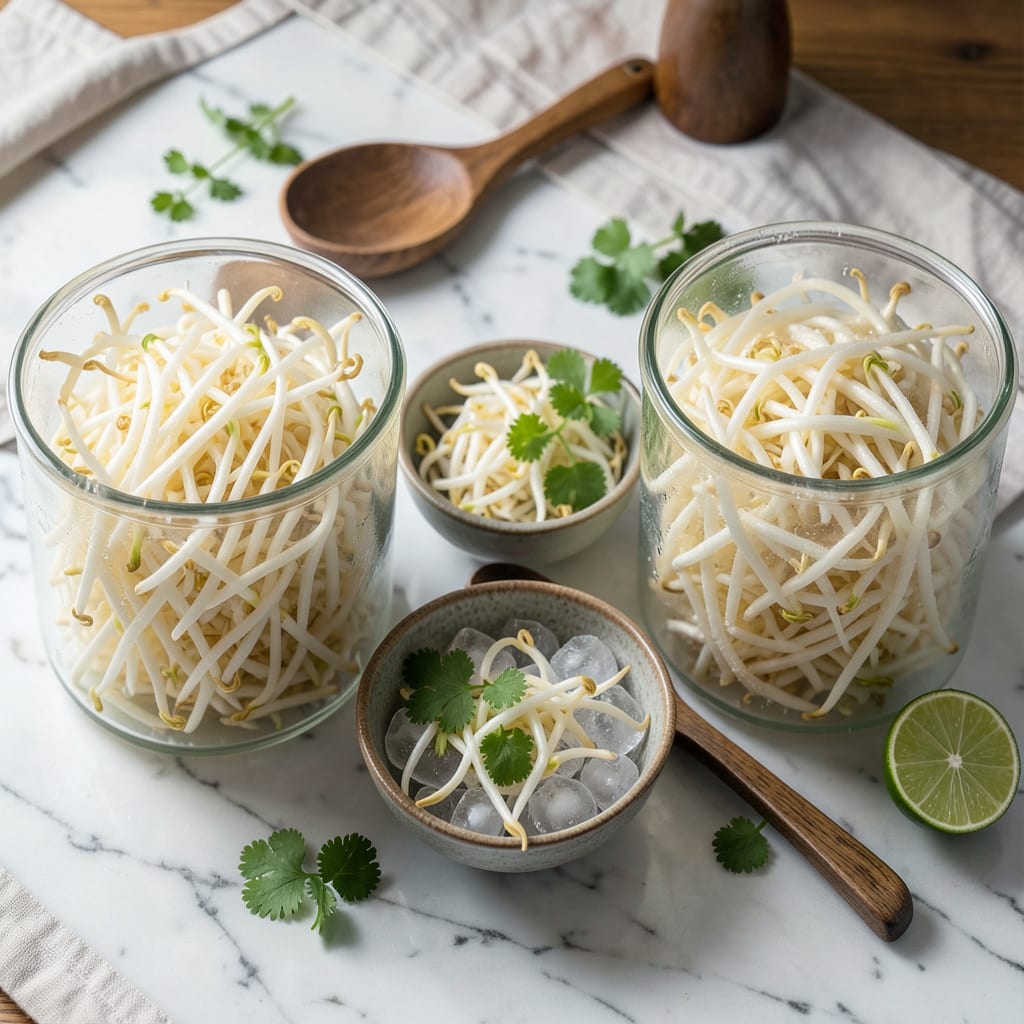
Yes, you can freeze bean sprouts for up to 3 months, but their crisp texture will soften. Blanch them first in boiling water for 2 minutes, then ice bath, drain, and pack in airtight containers to preserve quality.
Freezing these delicate sprouts is all about balancing preservation with practicality. The blanching step isn’t just busywork—it halts enzyme activity that would otherwise turn them mushy and dull-colored during storage. 🔥 I’ve found that properly frozen sprouts work beautifully in cooked dishes like stir-fries or soups, where texture isn’t the star. What you lose in crunch, you gain in convenience, especially when fresh sprouts aren’t available.
Think of this as a culinary compromise rather than a perfect solution. The ice bath shock after blanching locks in that bright green hue, while vacuum-sealing (if possible) prevents freezer burn better than standard bags. My pro tip: Label containers with dates—sprouts frozen beyond 3 months start developing off-flavors that even cooking can’t mask. ✨
💡 In This Article
- How Freezing Affects Bean Sprout Texture and Nutrition
- Step-by-Step Guide to Freezing Bean Sprouts Properly
How Freezing Affects Bean Sprout Texture and Nutrition
When bean sprouts hit sub-zero temperatures, their cell walls don’t stand a chance. The water inside each cell forms sharp ice crystals that literally puncture the delicate plant structures. This is why thawed sprouts lose that signature crunch—what you’re experiencing is cellular collapse.
The damage happens fastest in the outer layers, which is why blanching creates a protective barrier by partially cooking those vulnerable surfaces. 🔥
The blanching process does more than just preserve texture—it’s a nutrient-saving operation. Enzymes like peroxidase and lipoxygenase would otherwise continue breaking down vitamins C and B during freezing. A quick 2-minute boil deactivates these enzymes while maintaining about 80-90% of the sprouts’ original vitamin content.
Compare that to unblanched frozen sprouts, which can lose up to 50% of vitamin C within just 3 months. The ice bath shock stops the cooking process immediately, locking in that bright green color.
Here’s what changes when you freeze: Fresh sprouts contain about 90% water, which gives them that juicy crunch. After freezing and thawing, that water content redistributes—some leaks out as liquid, while the rest gets absorbed into the now-softened cell structures. The result? Sprouts that feel more like cooked greens than crisp raw vegetables.
This transformation makes them perfect for stir-fries where they’ll absorb sauces beautifully, but disappointing in salads where texture matters most. ✨
Nutritionally, frozen sprouts hold their own in some areas while faltering in others. The fiber content remains virtually unchanged at about 2 grams per cup, and minerals like potassium and iron stay stable. However, heat-sensitive vitamins take a hit—expect about 20-30% loss in folate and vitamin C compared to fresh.
The tradeoff becomes worthwhile when you consider that properly frozen sprouts retain more nutrients than sprouts that sit in your fridge for a week and gradually degrade. 💫
Temperature fluctuations are the silent killer of frozen sprouts. Each time your freezer door opens, tiny ice crystals melt and refreeze, expanding like miniature daggers through the cell walls. This is why commercial flash-freezing (at -40°F) preserves texture better than home freezers (typically 0°F).
For home cooks, the solution is simple: freeze sprouts in single layers on trays first, then transfer to containers. This prevents the sprouts from freezing into one solid, crushable block. ⚡
The thawing process matters just as much as freezing. Quick-thawing in a colander under cold running water preserves more cellular structure than slow thawing in the fridge, which gives those destructive enzymes more time to reactivate.
I’ve found that sprouts thawed this way retain about 15% more crispness—enough to make a noticeable difference in dishes where they’re lightly cooked rather than fully softened. 🌟
Remember that younger, smaller sprouts freeze better than mature ones. Their tighter cell structures resist ice crystal damage more effectively. If you’re growing your own, harvest for freezing when sprouts reach about 1-2 inches long rather than the typical 3-4 inches you’d use fresh.
This size difference might seem small, but it translates to significantly better texture after thawing. The same principle applies when buying—choose the freshest, firmest sprouts at the store for freezing projects. 💛

Trained in classic French technique but raised on slow-cooked ribs and spicy rubs, she blends culinary skill with smoke and soul.
- Recipe for Boneless Pork Chops in Cast Iron Skillet: Sear and Baste to Juicy Perfection - October 3, 2026
- Recipe for Boneless Cross Rib Roast: Slow-Roasted Beef with Herb Crust - October 3, 2026
- Hamburgers in Sauce Recipe Crock Pot: Slow-Cooked Savory Delight - October 3, 2026