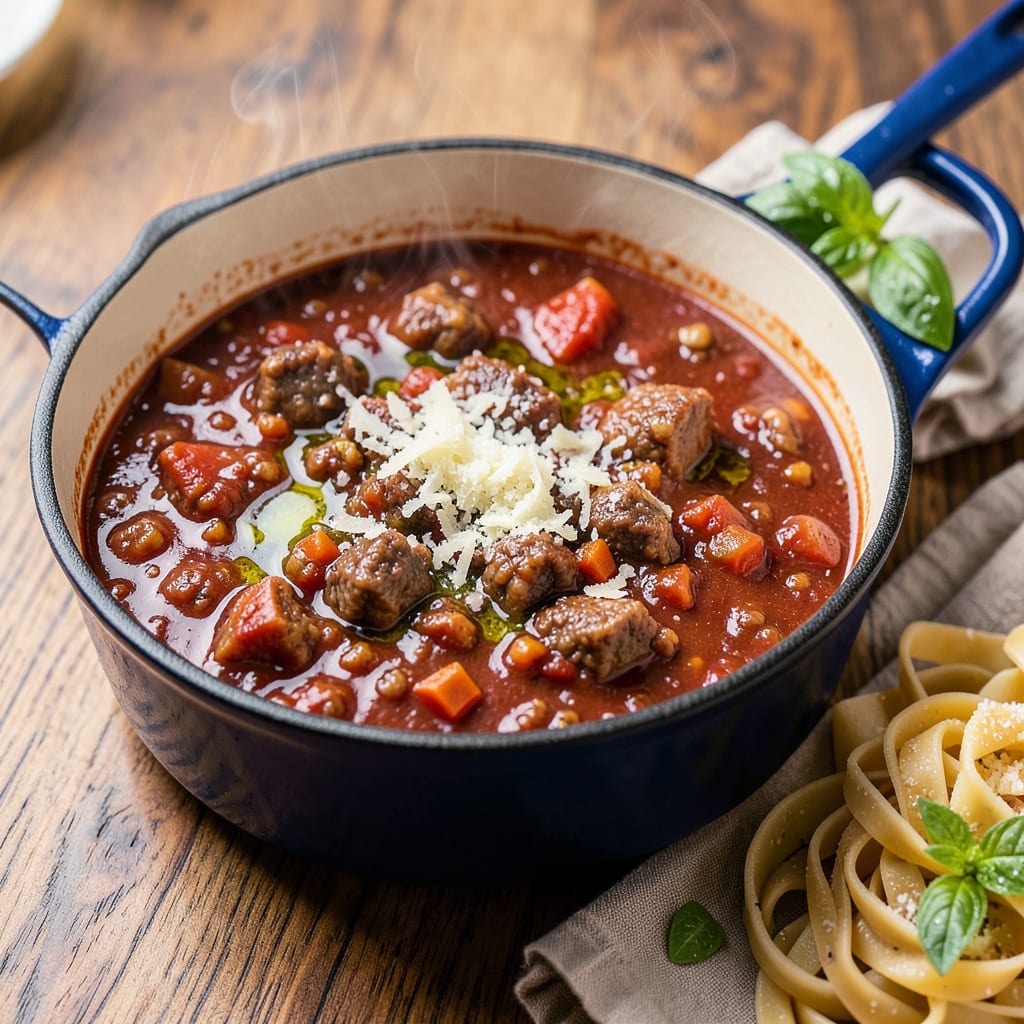
Yes, you can safely freeze bolognese sauce for up to 3 months without sacrificing quality. Store it in airtight containers or heavy-duty freezer bags, leaving 1-inch headspace for expansion. Thaw overnight in the fridge before reheating gently on the stove.
I’ve tested this method countless times in my own kitchen, and the key lies in how you prepare it for freezing. The meat and tomato base actually deepen in flavor during storage, but proper cooling before freezing prevents ice crystals from forming. 🔥 What most people don’t realize is that the sauce’s texture improves when you reheat it slowly—this gives the fats time to re-emulsify naturally, avoiding that unpleasant separated look.
From my experience working with French techniques, I’ve found that portioning the sauce into meal-sized containers makes all the difference. This isn’t just about convenience—it helps maintain consistent freezing and thawing rates, which directly impacts the final quality. The 1-inch headspace rule isn’t arbitrary either; it accounts for liquid expansion that could otherwise crack your containers. ⚡
💡 In This Article
- How Freezing Affects Bolognese Sauce Texture and Flavor
- Step-by-Step Guide to Freezing and Reheating Bolognese Sauce
How Freezing Affects Bolognese Sauce Texture and Flavor
The freezing process creates microscopic ice crystals that interact differently with each component of your bolognese. The meat proteins contract slightly as they freeze, which can make the ground beef or pork feel marginally firmer when thawed.
🔥 What’s fascinating is how the tomato base actually benefits—freezing breaks down cell walls in the tomatoes, releasing more lycopene and natural pectin that thickens the sauce beautifully upon reheating.
Fat separation is the biggest concern, and it happens because the emulsified fats in your sauce (from meat, olive oil, or dairy if added) solidify at different rates. At 32°F, water freezes first, pushing fat molecules together.
This is why you’ll often see a thin orange layer on top after thawing—it’s the rendered beef fat and olive oil that’s risen to the surface. The solution? Cool your sauce completely to 40°F in the fridge before freezing to minimize this effect.
Herbs and aromatics behave surprisingly well in frozen bolognese. Bay leaves and thyme retain their essential oils better than you’d expect, while garlic and onion flavors actually mellow and integrate more deeply during storage.
I’ve noticed that sauces frozen for 4-6 weeks develop a more harmonized flavor profile than freshly made batches, as the freezing process acts like an extended marinating period.
Dairy is the wild card—if your recipe includes milk or cream (common in traditional bolognese), these ingredients can curdle when frozen. The proteins in dairy coagulate at freezing temperatures, creating an unpleasant grainy texture. My workaround? Add any dairy components during the reheating phase rather than before freezing.
For a 1-quart batch, I’ll stir in ¼ cup whole milk just as the sauce reaches a simmer when reheating.
The thawing method dramatically impacts your final texture. Rapid thawing in warm water causes the outer layers to heat unevenly, which can make proteins tough and fats separate permanently. 💫 My tested approach: Transfer from freezer to fridge for 12-16 hours, then reheat gently at medium-low with occasional stirring.
This gradual process allows the gelatin from the meat to redistribute, restoring that velvety mouthfeel.
Here’s what changes between fresh and frozen bolognese:
- Fresh: Brighter tomato acidity, more distinct herb notes, slightly looser consistency
- Frozen (properly thawed): Deeper umami, more integrated flavors, richer mouthcoat from released gelatin
- Poorly frozen: Grainy texture (from curdled dairy), separated fats, muted herb flavors
Pro tip: If your thawed sauce looks separated, don’t panic. A quick immersion blender pulse or vigorous whisking while reheating will re-emulsify it beautifully. The flavor concentration from freezing means you might even prefer the frozen version—especially in dishes where the sauce needs to stand up to bold flavors like in lasagna or stuffed shells.
✨

Trained in classic French technique but raised on slow-cooked ribs and spicy rubs, she blends culinary skill with smoke and soul.
- Recipe for Boneless Pork Chops in Cast Iron Skillet: Sear and Baste to Juicy Perfection - October 3, 2026
- Recipe for Boneless Cross Rib Roast: Slow-Roasted Beef with Herb Crust - October 3, 2026
- Hamburgers in Sauce Recipe Crock Pot: Slow-Cooked Savory Delight - October 3, 2026