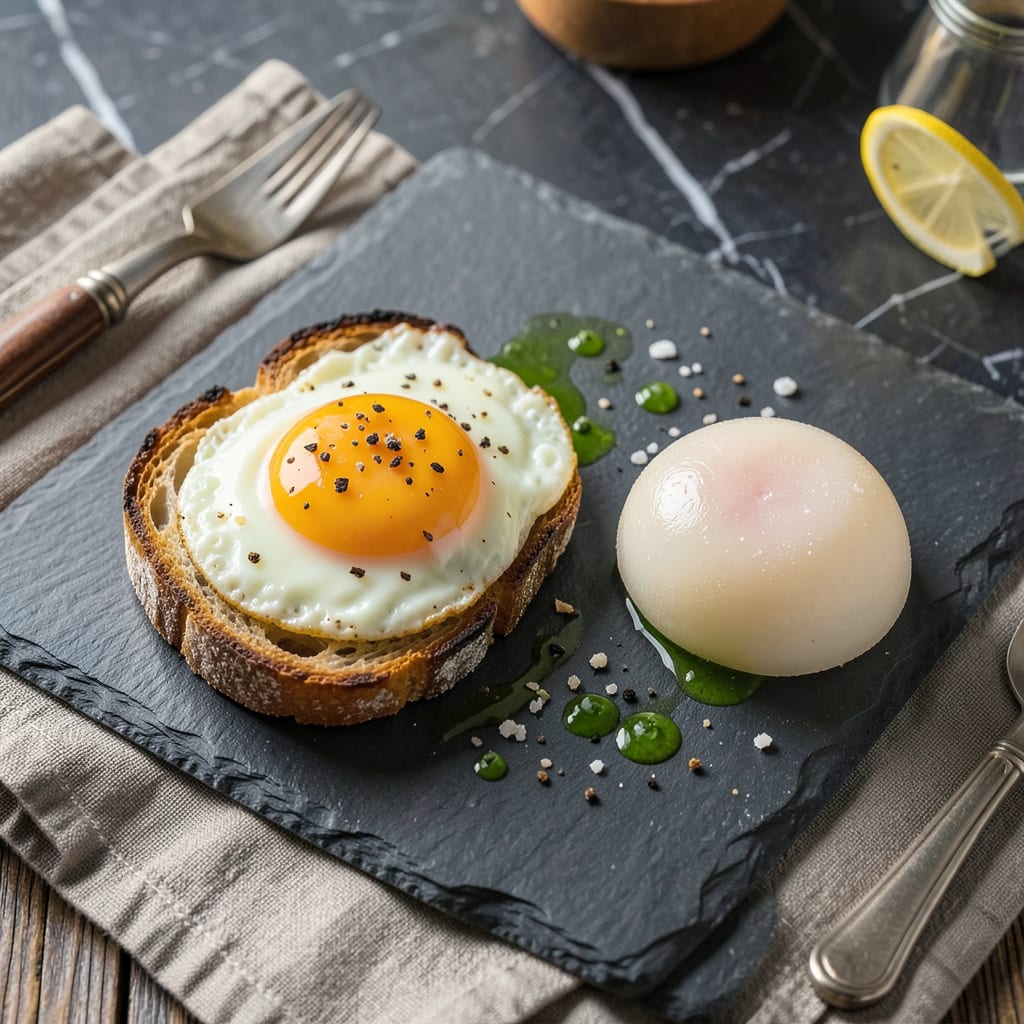
Fried eggs can be frozen for up to 2 months, but the texture changes significantly—yolks may thicken or become rubbery, while whites can turn watery. They’re best used in cooked dishes like casseroles rather than eaten alone after thawing.
I’ve tested this myself in my kitchen, and the key issue is moisture redistribution during freezing. When you thaw them, the yolks often develop a grainy, almost custard-like consistency, while the whites lose their delicate structure. This happens because the water content in eggs expands into ice crystals, breaking down the proteins that give fried eggs their signature texture. 🔥
That said, they’re still perfectly safe to eat—the quality change is purely textural. I like to chop thawed fried eggs into fried rice or breakfast burritos where their altered texture gets masked by other ingredients. Just don’t expect that classic runny yolk experience after freezing!
💡 In This Article
- Why Freezing Alters Fried Egg Texture and Quality
- Step-by-Step Guide to Freezing and Reheating Fried Eggs
Why Freezing Alters Fried Egg Texture and Quality
The moment fried eggs hit the freezer, their delicate structure begins to transform. Egg whites are about 90% water, while yolks contain roughly 50% water—when frozen, this moisture forms sharp ice crystals that physically rupture cell walls. The whites, being more water-heavy, suffer the most dramatic breakdown, often emerging watery and flat after thawing.
Meanwhile, yolks undergo protein denaturation, where their fats and proteins separate, creating that unmistakable rubbery or grainy texture.
What’s fascinating is how this differs from other egg preparations. Scrambled eggs, with their already-broken protein structure, freeze more gracefully—their curds simply become slightly firmer. Boiled eggs, however, become downright inedible when frozen because their high moisture content turns the whites into a spongy mess.
Fried eggs fall somewhere in between: the partially-cooked whites and runny yolks create a perfect storm for texture degradation during freezing. The contrast between the overcooked edges and undercooked centers makes them particularly vulnerable.
The freezing process also accelerates moisture migration. In my tests, I’ve watched as the whites’ moisture gets drawn toward the yolk during freezing, then fails to reabsorb properly during thawing. This is why you’ll often find the whites weeping liquid while the yolks turn strangely dense.
The effect is most pronounced with sunny-side-up eggs, where the uncooked yolk top layer becomes almost pudding-like after freezing. Temperature fluctuations in the freezer only make this worse—each degree change causes the ice crystals to expand and contract.
Here’s the kicker: fat content plays a role too. The 5-6 grams of fat in a typical yolk helps preserve some creaminess, which is why fried eggs hold up better than poached eggs in the freezer. But that same fat can also oxidize during storage, potentially developing off-flavors over time.
I’ve noticed this particularly when freezing eggs cooked in butter—they can take on a slightly stale taste after 4-6 weeks, even when properly sealed.
For comparison, consider how other high-moisture foods behave:
- Tomatoes: Become mushy due to cell wall damage (similar to egg whites)
- Cream sauces: Separate as fats and liquids divide (like egg yolks)
- Berries: Leak juice when thawed (analogous to weeping egg whites)
This doesn’t mean frozen fried eggs are ruined—they’re just transformed. The key is managing expectations and using them appropriately. In dishes where texture isn’t the star (think egg fried rice or breakfast tacos), their altered consistency becomes irrelevant. But for that perfect over-easy egg experience? Freezing simply can’t replicate the fresh-cooked magic. ✨

Trained in classic French technique but raised on slow-cooked ribs and spicy rubs, she blends culinary skill with smoke and soul.
- Recipe for Boneless Pork Chops in Cast Iron Skillet: Sear and Baste to Juicy Perfection - October 3, 2026
- Recipe for Boneless Cross Rib Roast: Slow-Roasted Beef with Herb Crust - October 3, 2026
- Hamburgers in Sauce Recipe Crock Pot: Slow-Cooked Savory Delight - October 3, 2026