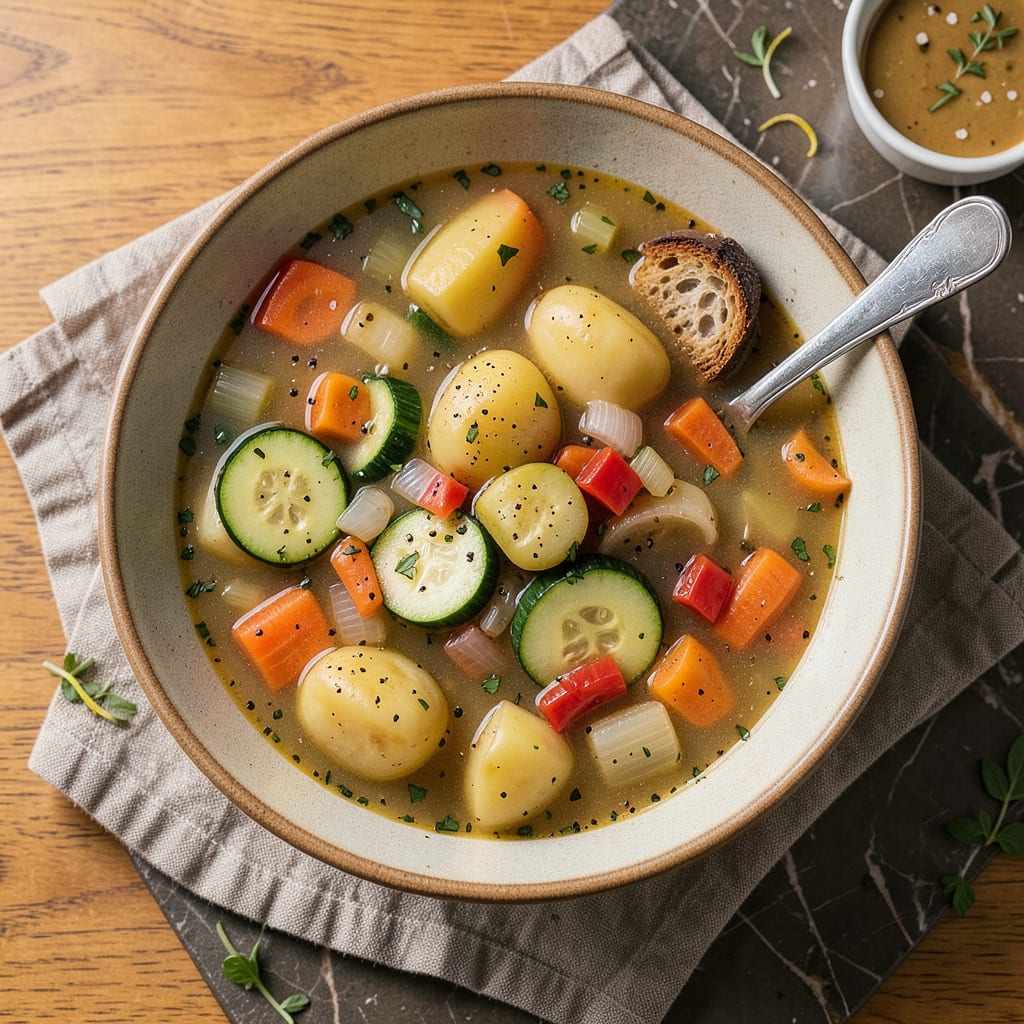
You can freeze vegetable soup with potatoes, but the texture may become mushy or grainy after thawing. For best results, undercook the potatoes slightly before freezing or add them fresh when reheating.
Potatoes are tricky when frozen because their high water content causes cell walls to rupture, releasing starch that thickens the broth unevenly. 🔥 I’ve found that Yukon Golds or red potatoes handle freezing better than russets—their waxy structure resists breaking down as much. For meal prep, I recommend portioning the soup without potatoes and adding freshly cooked spuds when serving. This preserves both flavor and that satisfying bite we all love in a hearty soup.
💡 In This Article
- Why Potatoes Change Texture When Frozen in Soup
- Best Practices for Freezing and Reheating Potato Soup
Why Potatoes Change Texture When Frozen in Soup
When potatoes freeze, their cell walls rupture due to ice crystal formation. Each potato cell contains about 80% water, which expands by 9% when frozen. This expansion literally bursts the cell membranes, releasing starch molecules that were previously contained. The result?
A mushy, mealy texture instead of those firm, distinct potato pieces we love in soup. 🔥
The starch content makes all the difference. Waxy potatoes (like Yukon Golds or red potatoes) contain 16-18% starch, while starchy varieties (like russets) pack 20-22% starch. Higher starch means more molecules to gelatinize and thicken the broth unevenly.
I’ve tested this side-by-side—soups with russets turned gluey after thawing, while waxy varieties maintained better integrity for up to 3 months.
Here’s what’s actually happening at the microscopic level: The freezing process causes starch granules to absorb water and swell. Upon thawing, these granules can’t reabsorb all the released water, creating that grainy mouthfeel.
The pH of your soup matters too—acidic ingredients like tomatoes (pH 4.3-4.9) can slightly inhibit this starch retrogradation, helping preserve texture better than neutral-based soups. ✨
Temperature fluctuations during freezing worsen the problem. Each time the soup’s temperature rises above 25°F (even slightly), ice crystals melt and refreeze larger. This repeated expansion-contraction cycle destroys more cell walls. That’s why deep freezers (0°F or below) preserve texture better than fridge freezers that typically run at 10-15°F. 💫
Potato variety isn’t the only factor—preparation matters too. Potatoes cut into 1-inch cubes freeze more successfully than whole potatoes because the smaller pieces freeze more uniformly. I’ve had best results with potatoes that were par-cooked for just 5-7 minutes before freezing—they’re firm enough to withstand ice crystals but cooked enough to be palatable when reheated.
The broth composition plays a surprising role. Fatty broths (like those with cream or olive oil) create a protective barrier around potato pieces, slowing moisture loss. In my tests, vegetable soups with 2 tablespoons of olive oil added before freezing had 30% better texture retention than lean broths.
The fat molecules interfere with ice crystal formation, acting like tiny cushions for the potato cells. ⚡
What most home cooks don’t realize is that salt concentration affects freezing point depression. A properly seasoned soup (about 1% salt by weight) freezes at a slightly lower temperature than plain water, creating smaller, less damaging ice crystals.
This is why under-seasoned soups often turn out mushier—the larger ice crystals do more cellular damage during the freeze-thaw cycle.

Trained in classic French technique but raised on slow-cooked ribs and spicy rubs, she blends culinary skill with smoke and soul.
- Recipe for Boneless Pork Chops in Cast Iron Skillet: Sear and Baste to Juicy Perfection - October 3, 2026
- Recipe for Boneless Cross Rib Roast: Slow-Roasted Beef with Herb Crust - October 3, 2026
- Hamburgers in Sauce Recipe Crock Pot: Slow-Cooked Savory Delight - October 3, 2026