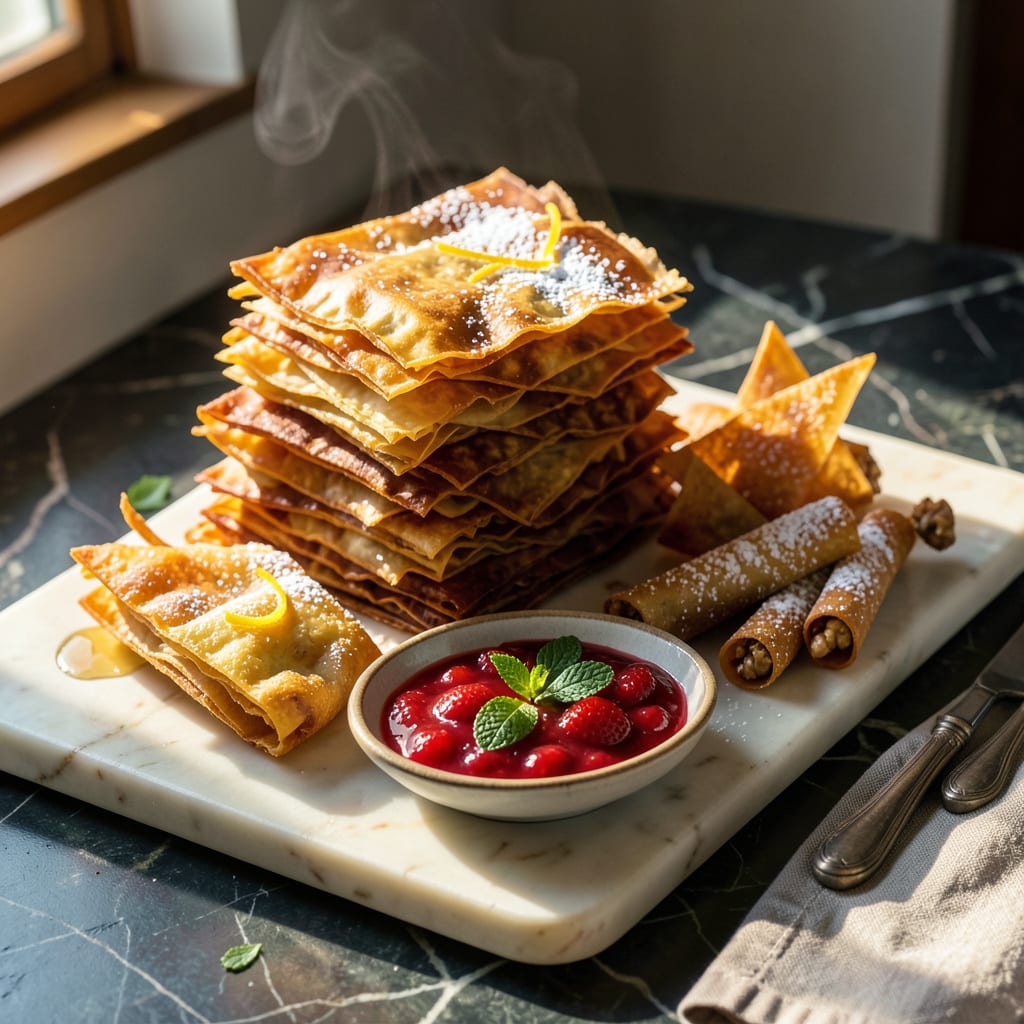
Yes, you can fry phyllo dough to create ultra-crispy, golden layers perfect for desserts like baklava or savory appetizers. Use high heat, minimal oil, and work quickly to prevent burning while achieving maximum crunch.
I’ve found that frying transforms phyllo’s delicate sheets into something extraordinary—think shatteringly crisp nests for ice cream or golden cups for dips. 🔥 The key lies in its paper-thin layers, which fry almost instantly at 350°F–375°F, creating that signature crunch without absorbing excess oil. Unlike puff pastry, phyllo’s low moisture content means it won’t turn greasy if you maintain the right temperature and keep batches small. This technique opens up a world of possibilities beyond traditional baked applications.
💡 In This Article
- The Science Behind Frying Phyllo Dough Perfectly
- Step-by-Step Guide to Frying Phyllo Dough at Home
The Science Behind Frying Phyllo Dough Perfectly
Phyllo dough’s magic happens when its paper-thin layers hit hot oil. The secret lies in its 12-15% moisture content—far less than puff pastry—which evaporates almost instantly at 350°F–375°F. This rapid moisture loss creates microscopic steam pockets between the layers, forcing them apart while the starches gelatinize. The result?
That signature shatteringly crisp texture that’s impossible to achieve through baking alone. ✨
What sets phyllo apart from other fried doughs is its 0.5mm thickness per sheet. This allows heat to penetrate uniformly in just 10-20 seconds, compared to the 2-3 minutes needed for thicker doughs. The thinness also means minimal oil absorption—about 5-8% by weight when fried correctly—versus 20-30% for doughnuts.
The oil that does get absorbed actually enhances crispness by creating a glass-like structure as it cools and solidifies.
Temperature control is everything. At 325°F, phyllo absorbs oil like a sponge before crisping. But at 375°F, the outer layers form an instant barrier that seals in steam while the interior layers puff slightly.
I’ve found this sweet spot produces that perfect balance between delicate crunch and structural integrity—critical when making phyllo cups or nests that need to hold fillings without collapsing. 🔥
The starch composition (primarily wheat) plays a crucial role too. When heated rapidly, these starches undergo what’s called “amylose leaching,” where the molecules unravel and then re-bond in a rigid network as they cool. This is why properly fried phyllo maintains its crispness for hours, unlike fried bread dough that turns soggy quickly.
The thin layers also mean more surface area for Maillard reactions, giving phyllo its golden color and nutty aroma.
Here’s what most home cooks miss: phyllo’s lack of fat in the dough itself means all the crispness comes from the frying process. Compare this to puff pastry, which contains butter layers that melt and create flakiness. With phyllo, you’re creating texture purely through heat transfer and starch transformation—no built-in fat required.
This makes it uniquely versatile for both sweet and savory applications without flavor interference.
Pro tip: The ambient humidity affects frying dramatically. On humid days, phyllo absorbs 15-20% more moisture from the air, requiring slightly higher temperatures (380°F) to achieve the same crispness. I always check my kitchen’s humidity with a simple hygrometer—it’s changed how I approach frying delicate doughs like phyllo. ⚡
The final texture also depends on oil choice. Neutral oils like peanut or sunflower (smoke point 450°F) allow the phyllo’s natural flavor to shine, while olive oil adds a fruity note that pairs beautifully with Mediterranean fillings.
The oil’s viscosity matters too—thinner oils like grapeseed create a lighter crust, while thicker oils like coconut produce a more substantial bite.

Trained in classic French technique but raised on slow-cooked ribs and spicy rubs, she blends culinary skill with smoke and soul.
- Recipe for Boneless Pork Chops in Cast Iron Skillet: Sear and Baste to Juicy Perfection - October 3, 2026
- Recipe for Boneless Cross Rib Roast: Slow-Roasted Beef with Herb Crust - October 3, 2026
- Hamburgers in Sauce Recipe Crock Pot: Slow-Cooked Savory Delight - October 3, 2026