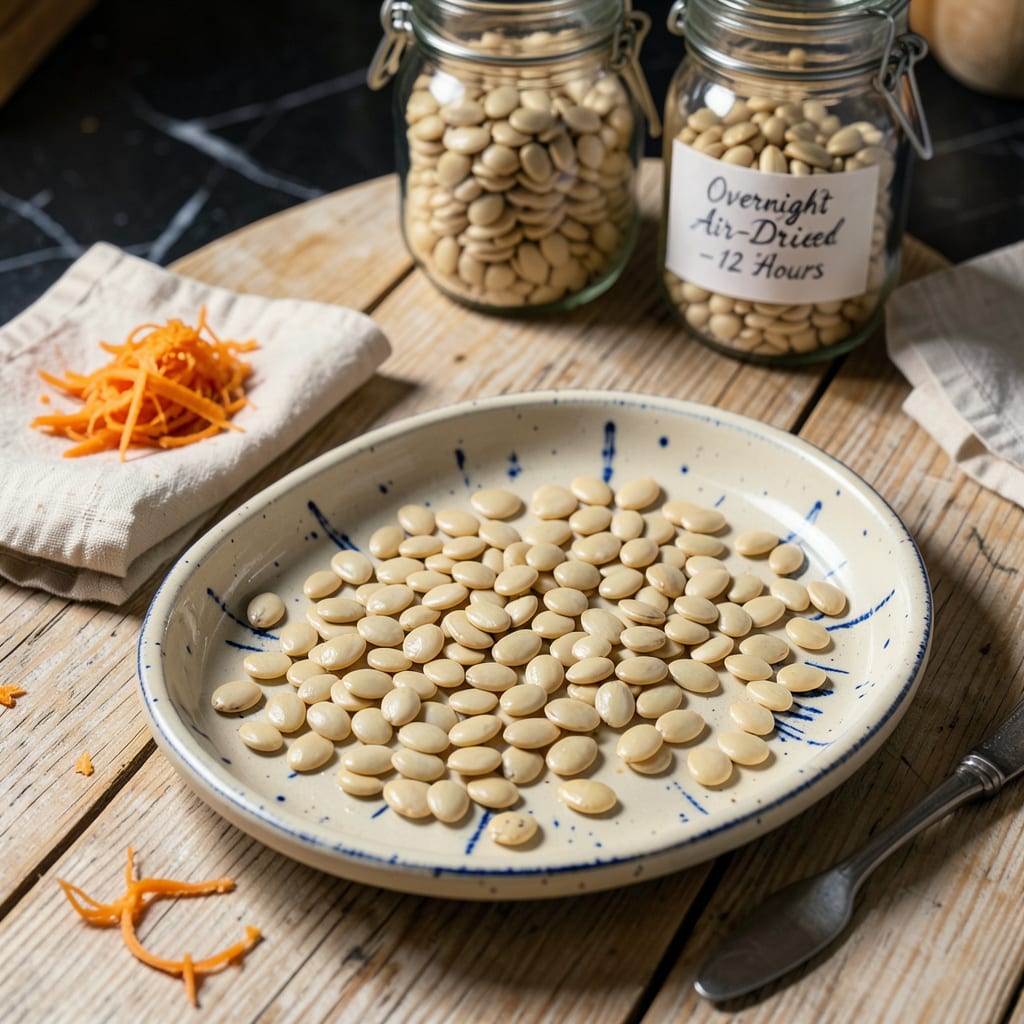
Leaving pumpkin seeds out overnight to dry is generally safe if done in a clean, well-ventilated area at room temperature. However, humidity or pests can compromise quality, so monitor them closely and avoid exceeding 12 hours uncovered.
I’ve found that overnight drying works best when you spread the seeds in a single layer on a baking sheet, giving them ample airflow. 🌬️ The key is balancing time and environment—too much moisture in the air slows drying and invites mold, while overly dry conditions can make seeds brittle. From my experience, seeds left out too long (beyond 12 hours) start losing their natural oils, which affects both texture and flavor. Always check for any off smells before proceeding with roasting or storage.
💡 In This Article
- How Overnight Air Drying Affects Pumpkin Seed Safety
- Best Alternatives for Drying Pumpkin Seeds Faster
How Overnight Air Drying Affects Pumpkin Seed Safety
The science behind air drying pumpkin seeds overnight revolves around moisture evaporation and microbial control. Fresh pumpkin seeds contain about 40-50% moisture, which needs to drop below 10% for safe storage. At room temperature (68-72°F), surface moisture evaporates gradually, but the process slows dramatically once seeds reach 20% moisture.
This is where the danger zone begins—any remaining moisture trapped inside can foster bacterial growth if not properly managed.
Humidity levels play a critical role in this process. Ideal drying conditions require relative humidity below 60%. In my coastal kitchen, I’ve noticed seeds take nearly 24 hours to dry properly when humidity creeps above 70%, compared to just 8-10 hours in drier inland climates.
The seeds’ porous outer shell absorbs ambient moisture like a sponge, which is why you’ll often see them develop a slightly sticky texture in humid conditions. This stickiness isn’t just unpleasant—it creates the perfect environment for mold spores to take hold.
Time exposure directly impacts both safety and quality. Within the first 4-6 hours, you’ll see the most dramatic moisture loss as surface water evaporates. But between 6-12 hours, the process shifts to internal moisture migration, where water moves from the seed’s center outward.
This is when flavor concentration occurs—the natural nutty notes intensify as water leaves. However, push beyond 12 hours uncovered, and you risk the seeds absorbing odors from your kitchen or developing a rancid taste as their natural oils begin oxidizing.
The real hidden danger comes from insect activity. Pumpkin seeds release volatile organic compounds as they dry that attract pantry pests like moths and beetles. I once left a batch near my herb collection overnight and woke to find tiny weevils investigating—lesson learned about proper containment!
Even in clean kitchens, fruit flies can detect drying seeds from surprising distances. The solution? Cover seeds with a breathable mesh cloth (like cheesecloth) secured with a rubber band to allow airflow while blocking pests.
For those in variable climates, consider this: seeds dried at 75°F with 50% humidity will develop a crispier texture than those dried at 65°F with 75% humidity, which tend to stay slightly chewy. The temperature difference affects how the seed’s starches retrogradate (recrystallize) during drying.
Higher temps create more pronounced crunch, while cooler temps preserve a tender bite. This is why commercially dried seeds often have that uniform snap—they’re processed in controlled 140°F environments that we can’t replicate at home overnight.
Here’s what most people overlook: the drying surface matters immensely. Paper towels might seem convenient, but they actually slow the process by trapping moisture underneath. My go-to setup uses a wire cooling rack elevated over a baking sheet—this allows air circulation from all sides and cuts drying time by about 25%.
For extra insurance against contamination, I lightly mist the rack with vinegar before arranging the seeds; the acid creates an invisible protective barrier against surface bacteria.
The final test before storage is simple but telling: properly dried seeds should make a sharp “click” sound when tapped against a hard surface. If they produce a dull thud, they need more time. This auditory check is more reliable than visual cues, as seeds can appear dry on the outside while retaining moisture internally.
Remember that under-dried seeds won’t just spoil faster—they’ll also fail to develop that satisfying crunch when roasted later. 🔥

Trained in classic French technique but raised on slow-cooked ribs and spicy rubs, she blends culinary skill with smoke and soul.
- Recipe for Boneless Pork Chops in Cast Iron Skillet: Sear and Baste to Juicy Perfection - October 3, 2026
- Recipe for Boneless Cross Rib Roast: Slow-Roasted Beef with Herb Crust - October 3, 2026
- Hamburgers in Sauce Recipe Crock Pot: Slow-Cooked Savory Delight - October 3, 2026