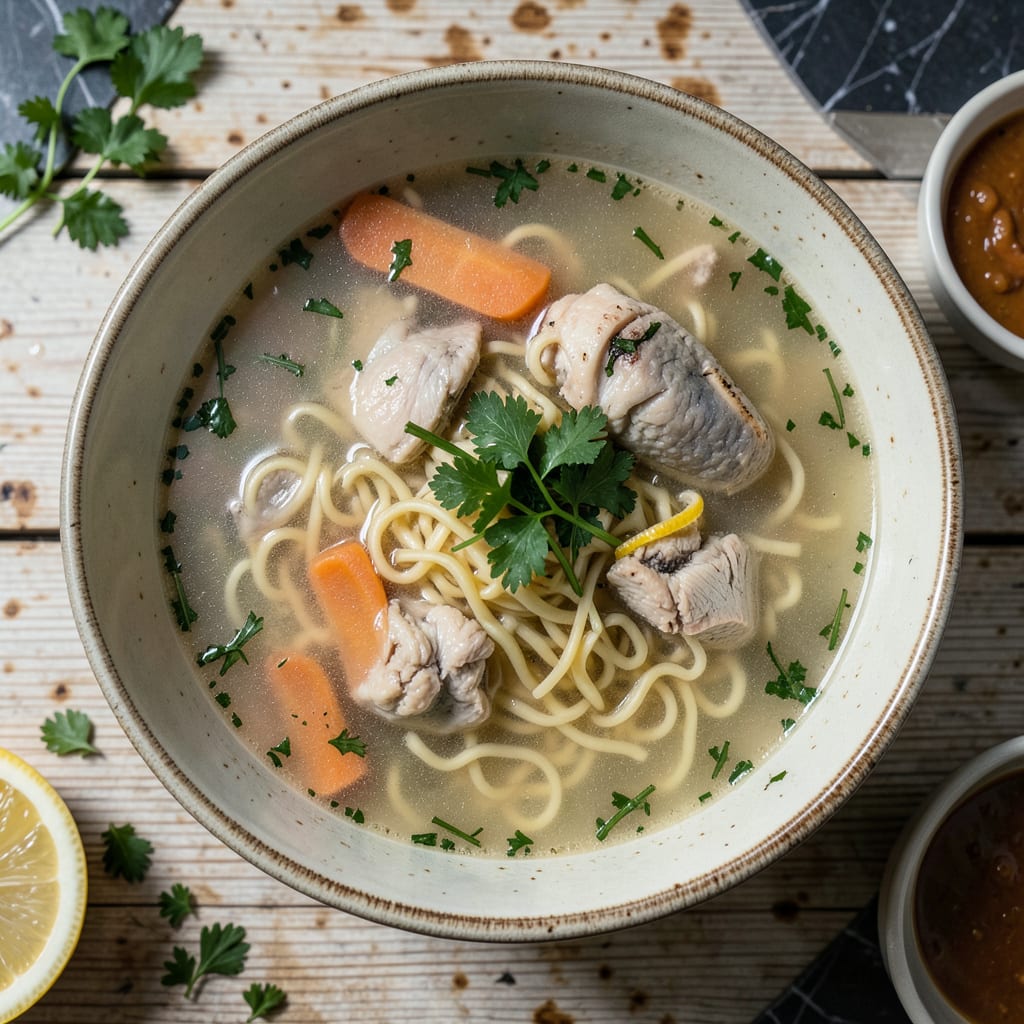
No, leaving soup out overnight is unsafe. Bacteria grow rapidly between 40°F and 140°F, making room-temperature soup a high-risk food after just 2 hours. Always refrigerate or freeze promptly to prevent foodborne illness.
This isn’t just about spoilage—it’s about invisible dangers that thrive in what food scientists call the “danger zone.” 🔥 I’ve seen too many cases where even a seemingly harmless bowl of vegetable soup becomes a breeding ground for pathogens like Bacillus cereus when left unrefrigerated. The risk escalates with protein-rich ingredients like chicken or cream, which create an ideal environment for bacterial multiplication. What makes this particularly insidious is that reheating won’t always destroy the heat-stable toxins some bacteria produce during their growth phase.
💡 In This Article
- Why Overnight Soup Becomes a Bacterial Hazard
- Safe Soup Storage and Reheating Guidelines
Why Overnight Soup Becomes a Bacterial Hazard
The “danger zone” between 40°F and 140°F is where bacteria like Bacillus cereus and Clostridium perfringens multiply exponentially. These pathogens double their numbers every 20-30 minutes in this range, turning your soup into a microbial petri dish within hours.
🔥 What’s particularly alarming is that some bacteria produce heat-stable toxins—meaning even if you reheat the soup to 165°F, the toxins remain active and dangerous.
Protein-rich ingredients like chicken, beef, or dairy accelerate this process. A chicken noodle soup left at room temperature for 6 hours can contain over 1 million bacteria per milliliter, while a vegetable-based soup might take slightly longer to reach dangerous levels.
The difference lies in available nutrients: proteins and fats provide more “fuel” for bacterial growth than carbohydrates alone. This is why cream-based soups are particularly high-risk—the fat content creates an ideal environment for pathogens like Listeria monocytogenes.
Here’s what happens at the microscopic level: bacterial spores (dormant forms) activate when temperatures rise above 40°F. As the soup cools slowly at room temperature, the spores germinate and begin producing toxins.
Some strains, like Staphylococcus aureus, can produce enough toxin to cause illness in as little as 4 hours—well before you’d notice any off smells or tastes. The insidious part? These toxins are odorless, colorless, and survive cooking temperatures that would kill the bacteria themselves.
Time and temperature work together against you. A soup left out for 2 hours at 70°F enters the danger zone, but at 90°F (like a warm kitchen), that window shrinks to just 1 hour. Even acidic ingredients like tomatoes only slow—not stop—this process.
The USDA’s two-hour rule exists because research shows this is when bacterial counts typically exceed safe limits for most foods. ✨
Different soup bases behave differently under these conditions. Broth-based soups with meat may develop Clostridium perfringens (which causes intense cramping) within 12-24 hours at room temperature. Cream soups are prime targets for Bacillus cereus, whose spores survive boiling and produce a toxin that causes vomiting within 6-15 hours of ingestion.
Even “safe” vegetable soups can harbor E. coli if contaminated ingredients were used—another reason why proper storage isn’t optional.
The risk isn’t theoretical—I’ve seen cases where seemingly fine soup caused foodborne illness 12-48 hours after consumption. The bacteria don’t always make soup smell “off” before reaching dangerous levels. Some pathogens, like Campylobacter, can cause illness at concentrations as low as 500 cells—far below what our senses can detect.
This is why food safety experts treat the two-hour rule as absolute, not flexible. 💫
What makes this especially tricky is that some bacterial toxins are neurotoxins—affecting your nervous system within hours of ingestion. Others cause gastrointestinal distress that might not appear for days, making it hard to trace back to the soup.
The only reliable prevention is controlling time and temperature: get soup below 40°F within 2 hours of cooking, or above 140°F if holding hot. No exceptions.

Trained in classic French technique but raised on slow-cooked ribs and spicy rubs, she blends culinary skill with smoke and soul.
- Recipe for Boneless Pork Chops in Cast Iron Skillet: Sear and Baste to Juicy Perfection - October 3, 2026
- Recipe for Boneless Cross Rib Roast: Slow-Roasted Beef with Herb Crust - October 3, 2026
- Hamburgers in Sauce Recipe Crock Pot: Slow-Cooked Savory Delight - October 3, 2026