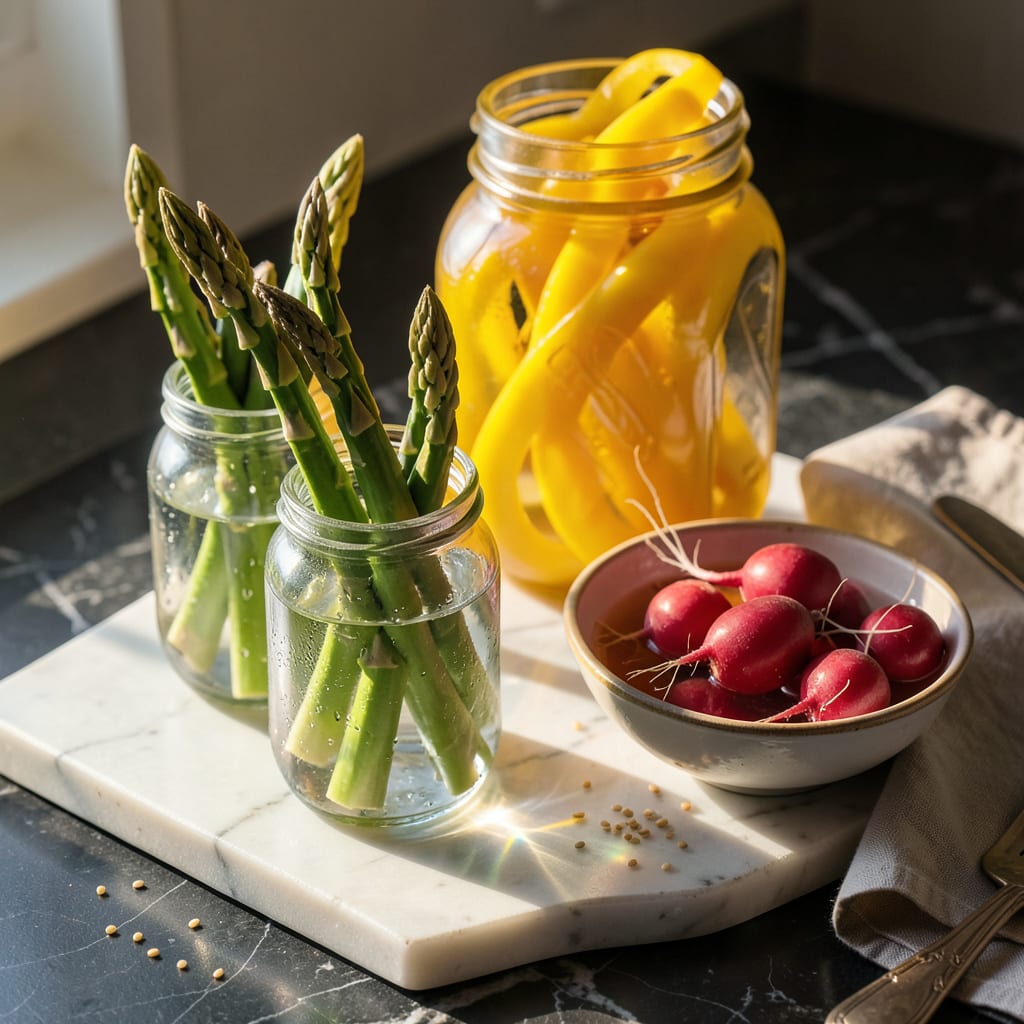
Leaving vegetables in water overnight can cause nutrient loss, texture degradation, and potential bacterial growth. Hard vegetables like carrots or potatoes may last longer than leafy greens, but refrigeration is key to minimizing risks.
I’ve seen this question come up often in meal prep circles, and the science is clear: water acts like a magnet for water-soluble vitamins like vitamin C and B vitamins, pulling them right out of your veggies. 🔥 The longer they sit, the more you lose—not just nutrients but also that satisfying crispness we all love. What’s worse, room-temperature water becomes a breeding ground for bacteria within hours, especially with delicate greens like spinach or herbs. Even sturdy roots like beets or turnips start breaking down their cell walls, turning mushy by morning.
💡 In This Article
- Why Soaking Vegetables Overnight Affects Quality and Safety
- Safe Alternatives to Overnight Vegetable Soaking
Why Soaking Vegetables Overnight Affects Quality and Safety
When vegetables sit in water for hours, osmosis kicks into high gear. The cell walls act like semi-permeable membranes, allowing water to flood in while nutrients like vitamin C, potassium, and folate leach out.
Studies show that leafy greens can lose up to 50% of their vitamin C content after 12 hours in water, while root vegetables lose about 20-30% due to their denser structure. The process accelerates at room temperature, where enzyme activity remains high. 🔥
Texture breakdown happens because water disrupts pectin—the natural “glue” holding plant cells together. In cucumbers or bell peppers, you’ll notice the flesh becomes spongy as water replaces cellular air pockets. For starchy vegetables like potatoes, prolonged soaking at 68°F+ activates amylase enzymes that convert starches to sugars, creating that unpleasant mealy texture.
Meanwhile, the water’s pH shifts slightly acidic from organic compounds leaching out, which can alter flavor profiles.
The microbial risk escalates after just 2 hours at room temperature. Water creates an ideal environment for bacteria like Listeria and E. coli to multiply, especially on cut surfaces where plant juices provide nutrients.
Leafy greens with their large surface area are particularly vulnerable—spinach can show bacterial counts 10x higher after overnight soaking compared to dry storage. Even refrigerated water slows but doesn’t stop this growth completely. ✨
Different vegetables respond uniquely due to their cellular makeup. Cruciferous veggies (broccoli, cauliflower) release sulfur compounds that make the water smell unpleasant and turn the florets yellow. Alliums (onions, garlic) lose their pungent flavors as water-soluble organosulfur compounds dissipate.
The only exception is dried beans, which actually benefit from overnight soaking to break down indigestible sugars—though they’re technically legumes, not vegetables. 💫
Temperature control makes all the difference. At 40°F or below, enzyme activity slows by about 70%, preserving both texture and nutrients. That’s why professional kitchens use ice baths for short-term vegetable storage. The cold water creates a protective barrier that limits microbial growth while maintaining crispness.
For home cooks, this means transferring soaked veggies to the fridge within 30 minutes if you must prep ahead. ⚡
What most people overlook is the water quality itself. Tap water containing chlorine can react with plant compounds, creating off-flavors. Distilled or filtered water minimizes this, but the real solution is minimizing soak time. Even 15-20 minutes is enough to crisp limp lettuce or remove surface dirt without the downsides of overnight immersion.
The key is working with nature’s timing rather than against it. 🌟

Trained in classic French technique but raised on slow-cooked ribs and spicy rubs, she blends culinary skill with smoke and soul.
- Recipe for Curried Lamb Chops: Spice-Rubbed and Pan-Seared to Succulence - October 3, 2026
- Recipe for Boneless Leg of Lamb Roast in the Oven: Herb-Crusted and Rosy Pink Inside - October 3, 2026
- Meat Loaf Recipe With Beef And Pork: Homestyle Blend With Rich Gravy - October 3, 2026