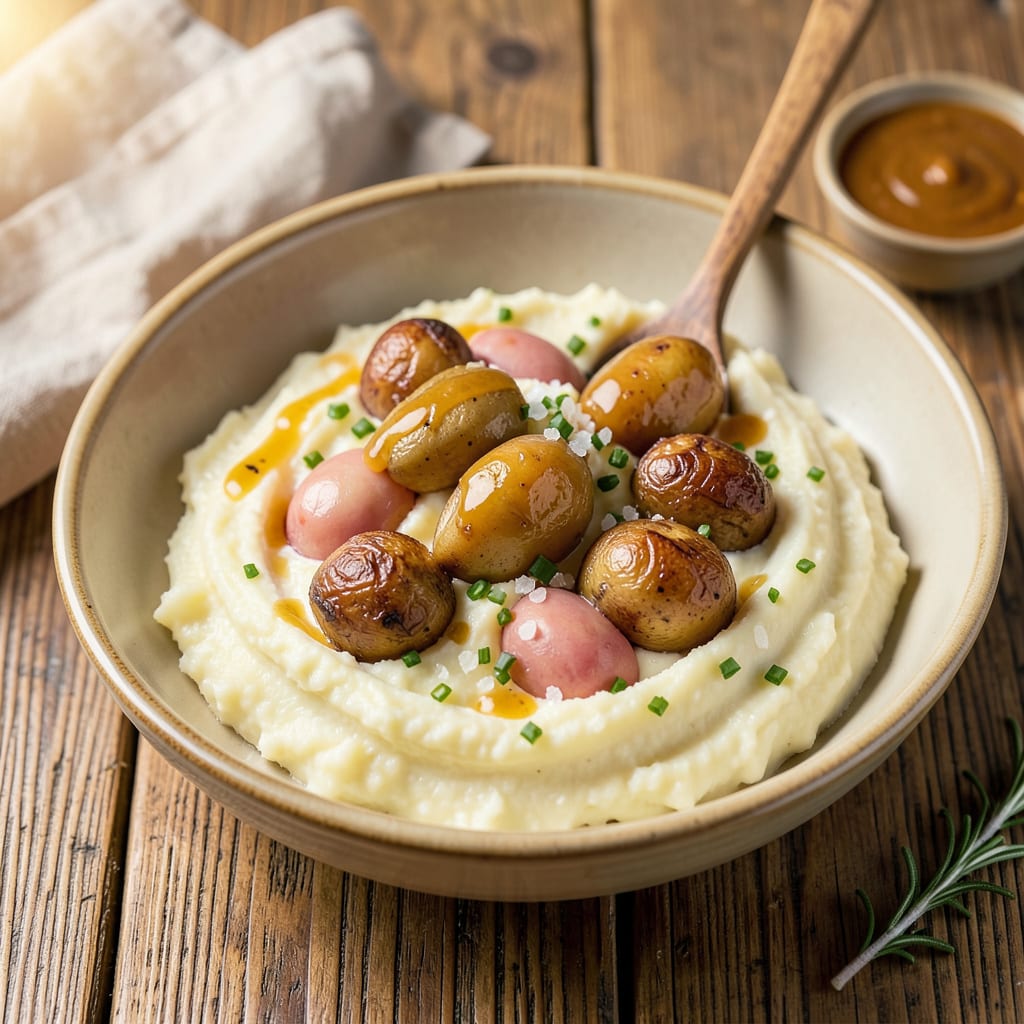
Yes, baby potatoes work for mashed potatoes but require extra steps. Their thin skins and waxy texture mean you should peel them after boiling and add more butter or cream for a smoother, creamier result than with starchy varieties.
I love working with baby potatoes because their concentrated flavor packs a punch, but their high moisture content is the real game-changer. 🔥 Unlike russets that practically dissolve into fluff, these little gems hold their shape, which means you’ll need to work them harder during mashing. The secret? Boil them whole with skins on to preserve moisture, then peel while warm—this prevents that dreaded gluey texture that plagues so many waxy potato dishes.
What most home cooks overlook is the fat ratio adjustment. Those extra 2-3 tablespoons of butter or splash of warm cream aren’t just for flavor—they’re essential for breaking down the denser cell structure. I’ve found that a quick pass through a ricer before final mashing gives that restaurant-quality smoothness without turning your potatoes into paste. The tradeoff? You’ll sacrifice some of that airy lightness, but gain an incredibly rich, velvety consistency that’s worth every extra step.
💡 In This Article
- Why Baby Potatoes Behave Differently in Mashed Potato Recipes
- Step-by-Step Guide to Creamy Baby Potato Mash
Why Baby Potatoes Behave Differently in Mashed Potato Recipes
The science starts with starch content. Baby potatoes typically contain 12-15% starch compared to russets at 20-22%, which fundamentally changes how they break down during cooking. 🔥 Their waxy cell structure resists collapsing, creating a denser mash that requires more mechanical force to achieve smoothness.
This is why professional kitchens often use a ricer for waxy varieties—it physically ruptures the cells more effectively than a hand masher.
Moisture plays an equally critical role. Baby potatoes have 80-85% water content versus 75-79% in starchy potatoes, meaning they release more liquid during cooking. The thin skin-to-flesh ratio (about 1:8 compared to 1:12 in larger potatoes) also means more surface area for water absorption.
When you boil them whole, this moisture gets trapped, creating steam pockets that can make mashing uneven unless you peel them post-boiling while still warm.
Size uniformity becomes your secret weapon. Baby potatoes cook 20-30% faster than standard potatoes due to their small diameter, but this also means they can overcook at the edges while staying firm in the center. I’ve found that sorting them by size (within 1/2-inch diameter variation) ensures even doneness.
The uniform cooking time prevents that frustrating scenario where some potatoes turn to mush while others remain stubbornly intact.
The mashing technique must adapt to their structure. Waxy potatoes contain more pectin in their cell walls, which creates elasticity. When overworked, this pectin forms long chains that make the mash gummy—a phenomenon called “retrogradation.” The solution?
Use gentle pressure with a hand masher (about 15-20 strokes) rather than vigorous mixing, and incorporate fat gradually to coat the starch molecules before they can bind.
Temperature control makes or breaks the texture. Baby potatoes should be mashed at 160-170°F—hot enough to melt the butter but cool enough to prevent the starch from gelatinizing too quickly. I like to warm my cream to 110°F before adding it; this temperature differential helps create that perfect creamy consistency without activating the starches prematurely.
The result is a mash that’s rich and velvety rather than heavy or pasty.
Here’s what most recipes don’t tell you: the skin contains flavor compounds that infuse the flesh during boiling. Baby potato skins are particularly thin (0.5mm versus 1-2mm in mature potatoes), allowing more of those earthy, nutty notes to penetrate the flesh.
This is why peeling after boiling captures more flavor than peeling raw—you’re essentially steeping the potatoes in their own concentrated essence during the cooking process.
The final texture difference comes down to amylose content. Starchy potatoes have 25-30% amylose (which creates fluffiness), while baby potatoes average 18-22%. This lower amylose means less starch leaching during cooking, so you’ll need about 25% more butter by volume to achieve the same perceived creaminess.
It’s not just preference—it’s chemistry working against you if you don’t adjust the fat ratio accordingly.

Trained in classic French technique but raised on slow-cooked ribs and spicy rubs, she blends culinary skill with smoke and soul.
- Recipe for Boneless Pork Chops in Cast Iron Skillet: Sear and Baste to Juicy Perfection - October 3, 2026
- Recipe for Boneless Cross Rib Roast: Slow-Roasted Beef with Herb Crust - October 3, 2026
- Hamburgers in Sauce Recipe Crock Pot: Slow-Cooked Savory Delight - October 3, 2026