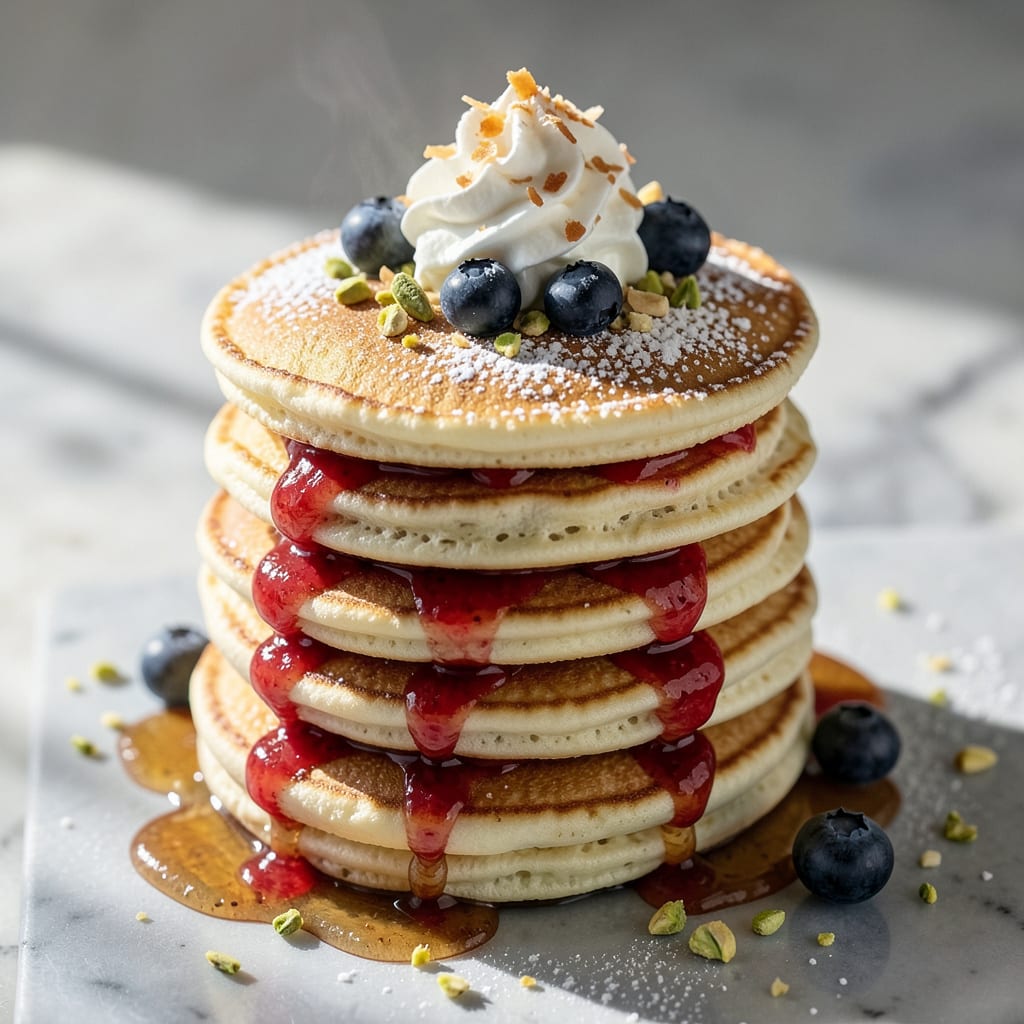
Yes, you can make pancakes with egg whites instead of whole eggs. They’ll be lighter and slightly less rich but still fluffy if you adjust the batter’s moisture and leavening. Use 2 whites per whole egg in recipes.
I’ve tested this swap countless times in my kitchen, and the key lies in understanding protein behavior. Egg whites whip up more air than yolks, creating a delicate crumb structure—but they lack fat, which means you’ll need to compensate. A splash of extra buttermilk or melted butter keeps them tender, while an extra ½ teaspoon of baking powder per cup of flour ensures they rise beautifully. 🔥
What’s fascinating is how this change transforms the eating experience. Without yolks, the flavor becomes cleaner, letting toppings like fresh berries or maple syrup shine. I often recommend this method for those watching cholesterol or wanting a brighter, less dense stack—just don’t skip the resting time for the batter to hydrate fully.
💡 In This Article
- How Egg Whites Change Pancake Texture and Flavor
- Best Egg White Pancake Recipe for Fluffy Results
How Egg Whites Change Pancake Texture and Flavor
When you swap whole eggs for egg whites, you’re fundamentally altering the protein structure. Whole eggs contain both albumen (the white) and yolk, which work together to create a balanced texture. The yolk’s fat and emulsifiers add richness and help retain moisture, while the white’s proteins coagulate during cooking to provide structure.
Egg whites alone have 90% water content and 10% protein, which means they create a more delicate, airy network when cooked. This results in pancakes that are noticeably lighter but potentially drier without adjustments.
The fat difference is dramatic: a whole large egg contains about 5 grams of fat (mostly in the yolk), while the white has virtually none. This fat plays a crucial role in mouthfeel and flavor perception. Without it, pancakes lose that satisfying richness but gain a cleaner, more neutral base that lets other flavors shine.
I’ve found that adding 1 tablespoon of melted butter or oil per egg white used helps compensate for this loss while maintaining the lighter texture. The trade-off is worth it for those seeking a less dense, more delicate pancake experience.
Leavening becomes more important with egg whites because their lower fat content means less natural tenderizing. The proteins in whites coagulate more quickly than whole eggs, which can lead to a slightly rubbery texture if overmixed. My solution? Increase baking powder by ¼ teaspoon per cup of flour and mix just until combined.
This extra lift counteracts the potential density from the protein-heavy whites. The result is pancakes that rise beautifully with a tender crumb, though they’ll never have quite the same custardy richness as traditional versions.
From a sensory perspective, the differences are striking. Egg white pancakes have a more open, sponge-like interior with smaller, more uniform air pockets. Their flavor is subtler, allowing toppings to take center stage. I particularly love them with fresh fruit compotes or citrus-infused syrups that would compete with richer pancakes.
The mouthfeel is lighter on the palate, making them ideal for those who find traditional pancakes too heavy. Just be prepared for them to cool faster – their lower fat content means they lose heat more quickly than their whole-egg counterparts.
Temperature control becomes even more critical with egg white pancakes. Their lower fat content makes them more prone to drying out, so I recommend cooking at medium-low heat (325°F) rather than the typical medium. This gentler heat allows the proteins to set gradually without toughening.
Watch for the edges to look set and bubbles to form consistently across the surface before flipping – they’ll cook about 20% faster than whole-egg pancakes due to their lighter density. A well-heated, lightly greased griddle is your best friend here.
One unexpected benefit I’ve discovered is how well egg white pancakes reheat. Their lower fat content means they don’t develop that unpleasant greasy texture when warmed up the next day. Simply toast them briefly in a dry skillet or pop them in the toaster for 30-45 seconds to revive their fluffiness.
This makes them particularly great for meal prep – I often make a double batch on Sundays and enjoy them throughout the week with different toppings. The key is storing them in a single layer with parchment between each pancake to prevent sticking.
The protein quality in egg whites also makes these pancakes more filling than you might expect. With about 3.6 grams of protein per white (compared to 6g in a whole egg), a stack of three pancakes can deliver nearly 20 grams of protein – comparable to many protein shakes.
This makes them an excellent post-workout breakfast option, especially when paired with Greek yogurt or nut butter. The protein also helps stabilize blood sugar, preventing the crash you might get from traditional carb-heavy pancakes. 💪

Trained in classic French technique but raised on slow-cooked ribs and spicy rubs, she blends culinary skill with smoke and soul.
- Recipe for Boneless Pork Chops in Cast Iron Skillet: Sear and Baste to Juicy Perfection - October 3, 2026
- Recipe for Boneless Cross Rib Roast: Slow-Roasted Beef with Herb Crust - October 3, 2026
- Hamburgers in Sauce Recipe Crock Pot: Slow-Cooked Savory Delight - October 3, 2026