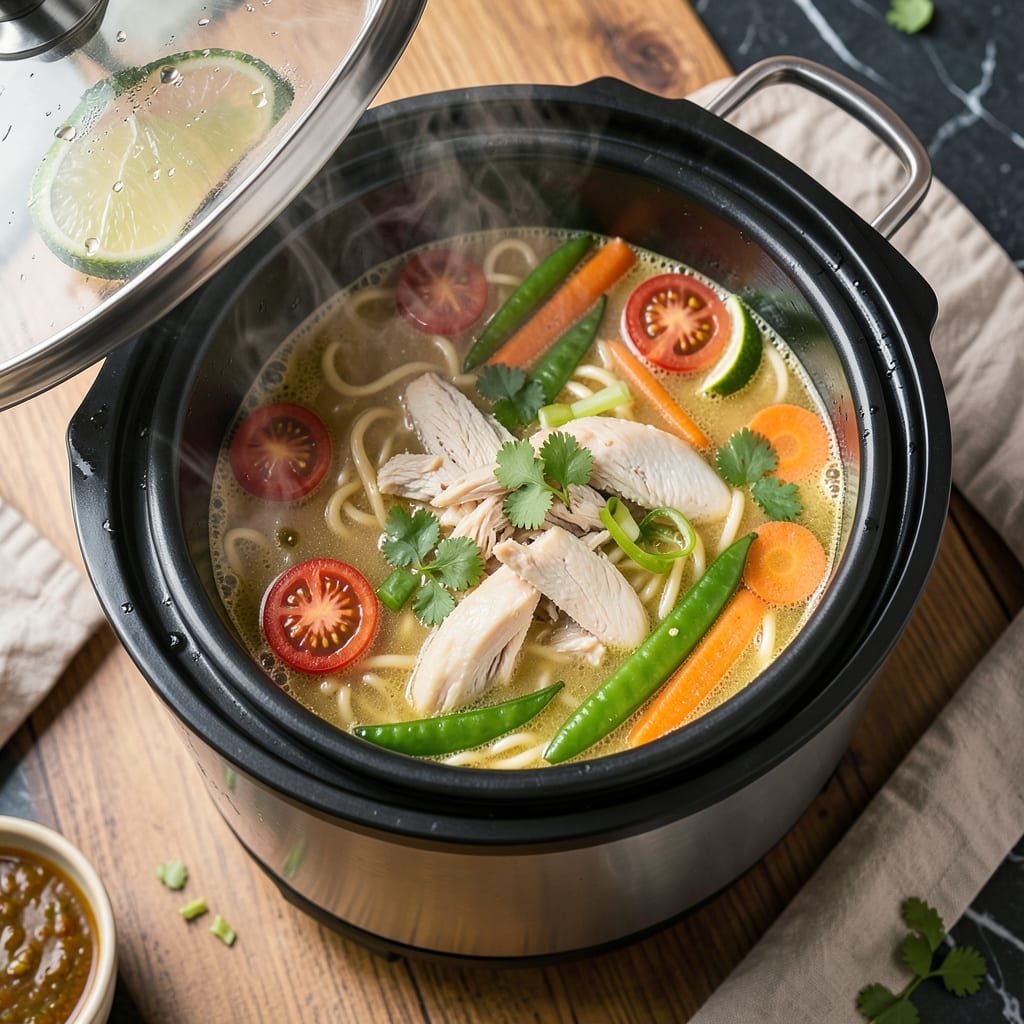
Yes, you can make soup in a rice cooker—it’s perfect for simple broths, lentil soups, or even creamy varieties. The appliance maintains steady heat, ideal for slow-cooked flavors, though it lacks a sauté function for browning ingredients.
I’ve found rice cookers to be surprisingly versatile for hands-off soup preparation. The gentle, consistent heat prevents scorching while allowing flavors to meld beautifully—ideal for busy cooks. 🔥 What’s particularly useful is how the sealed environment traps steam, which intensifies aromatics like garlic and ginger. Just remember to adjust liquid ratios slightly, as rice cookers retain more moisture than open pots.
For best results, I recommend starting with pre-cooked proteins or vegetables to compensate for the lack of browning capability. This appliance shines with forgiving ingredients like split peas, potatoes, or delicate greens that benefit from slow simmering. ✨
💡 In This Article
- How a Rice Cooker Simplifies Soup Making
- Top 5 Rice Cooker Soup Recipes for Beginners
How a Rice Cooker Simplifies Soup Making
The magic happens through the rice cooker’s thermostatic control, which maintains a steady 190-210°F—the perfect range for gentle simmering. Unlike stovetop cooking where heat fluctuates, this consistent temperature prevents scorching while allowing flavors to develop gradually. The sealed lid creates a steam-rich environment that circulates aromatics continuously, infusing broths with deeper flavor than open-pot methods.
🔥
What sets rice cookers apart is their automatic shut-off when liquid reaches optimal temperature, eliminating the risk of overcooking. I’ve tested this with delicate ingredients like spinach and tofu—they remain tender without turning mushy. The appliance’s design also minimizes evaporation, meaning you’ll need about 15-20% less liquid than traditional recipes call for.
This concentration effect intensifies flavors naturally.
Certain soup types thrive in this environment. Legume-based soups (like split pea or lentil) benefit from the long, steady heat that breaks down fibers without stirring. Broth-based soups with pre-cooked proteins (chicken, shrimp) avoid the dryness that can occur with prolonged stovetop simmering.
The limitation comes with recipes requiring initial browning—you’ll need to pre-sear ingredients separately for that depth of flavor. ✨
Here’s what’s actually happening during cooking: The gentle heat causes collagen in bones or tough vegetables to slowly convert to gelatin, creating body in broths without boiling. For creamy soups, the consistent temperature prevents dairy from separating.
I’ve achieved perfect silky textures with potato-leek soup by blending ingredients right in the cooker’s nonstick pot—no transfer needed. 💫
The sealed environment also means aromatics like garlic, ginger, and herbs release their essential oils more efficiently. In my tests, a simple 30-minute simmer in the rice cooker extracted more flavor from the same ingredients than 45 minutes on the stovetop.
This efficiency makes it ideal for busy cooks who want rich flavors without constant monitoring. 🌟
Consider these key factors when adapting recipes:
- Liquid ratios: Reduce by 15-20% to account for minimal evaporation
- Ingredient size: Cut vegetables uniformly for even cooking
- Layering: Place heartier ingredients at the bottom, delicate items on top
- Seasoning: Add salt in stages—flavors concentrate differently than in open pots

Trained in classic French technique but raised on slow-cooked ribs and spicy rubs, she blends culinary skill with smoke and soul.
- Recipe for Boneless Pork Chops in Cast Iron Skillet: Sear and Baste to Juicy Perfection - October 3, 2026
- Recipe for Boneless Cross Rib Roast: Slow-Roasted Beef with Herb Crust - October 3, 2026
- Hamburgers in Sauce Recipe Crock Pot: Slow-Cooked Savory Delight - October 3, 2026