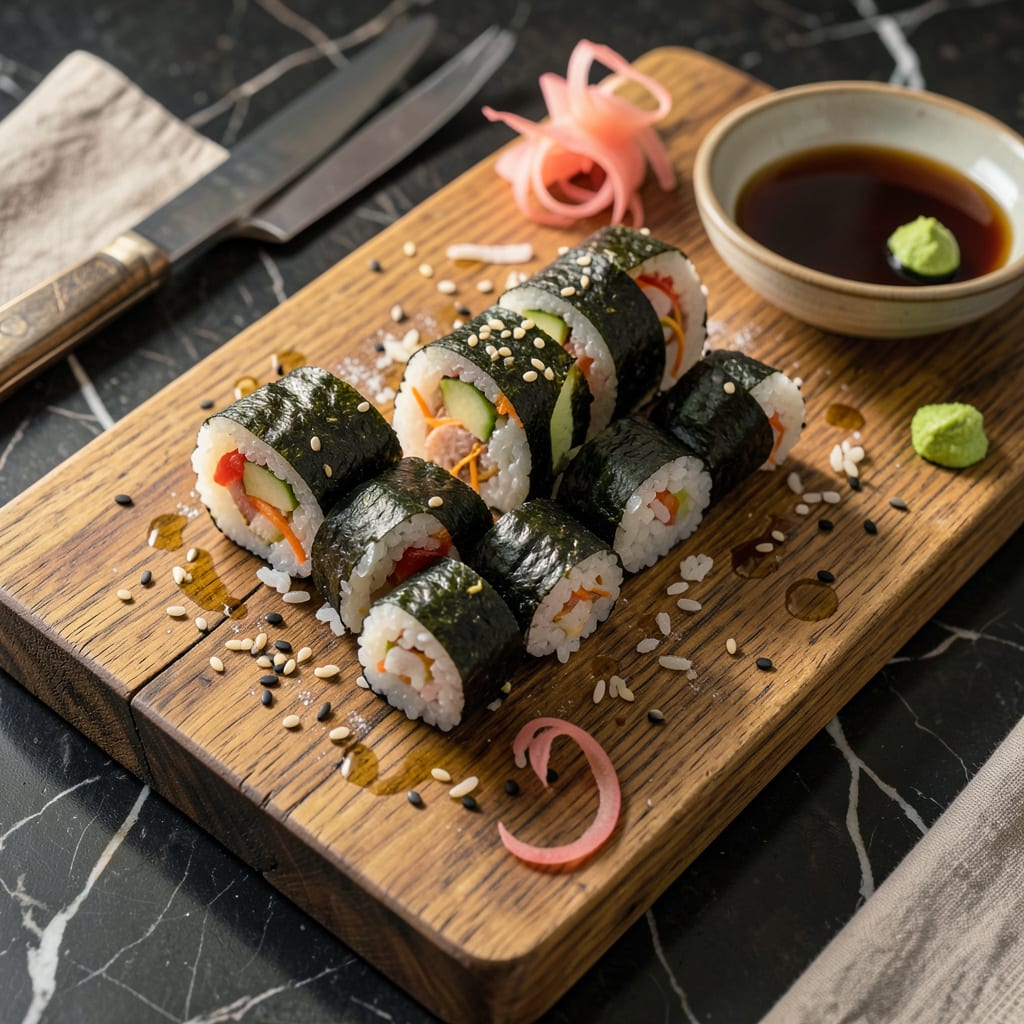
Technically yes, but regular rice lacks the sticky texture and mild sweetness of sushi rice. The grains won’t hold together well, making rolls difficult to shape and eat. For best results, use short-grain Japanese rice with seasoned vinegar.
This comes down to the starch composition—sushi rice contains more amylopectin, which creates that signature clingy texture when cooked. Regular long-grain rice has higher amylose content, resulting in separate, fluffy grains that crumble when rolled. 🔥 I’ve experimented with substitutions in my kitchen, and even with extra vinegar seasoning, the mouthfeel just doesn’t match authentic sushi rice. The vinegar mixture also plays a crucial role beyond flavor—it helps bind the grains while adding that subtle tang that balances rich fish flavors.
💡 In This Article
- Why Sushi Rice Differs From Regular White Rice
- How to Modify Regular Rice for Sushi (If You Must)
Why Sushi Rice Differs From Regular White Rice
The magic of sushi rice lies in its unique starch composition. Japanese short-grain rice contains about 15-20% amylopectin—a branched starch that gelatinizes during cooking, creating that signature sticky texture. Regular long-grain rice, by contrast, has 25-30% amylose, a straight-chain starch that produces separate, fluffy grains.
This fundamental difference explains why sushi rice clings together while regular rice falls apart when rolled. 🔥
Moisture content plays another critical role. Sushi rice is typically cooked with 10-20% more water than regular rice (about 1.1 cups water per 1 cup rice), resulting in softer, more pliable grains. The cooking process also matters—sushi rice is often steamed rather than boiled, which preserves more of the starch’s binding properties.
When I’ve tested substitutions, even perfectly cooked jasmine rice lacks the necessary cohesion for nigiri or maki rolls.
The vinegar seasoning isn’t just for flavor—it’s functional. Traditional sushi vinegar (a mix of rice vinegar, sugar, and salt) serves three purposes: it adds the characteristic tang, helps bind the grains further, and acts as a mild preservative.
The sugar in the seasoning also balances the acidity while contributing to that subtle sweetness that complements raw fish. Regular rice simply can’t absorb and distribute this seasoning the same way due to its different starch structure.
Temperature control during preparation makes a surprising difference. Sushi rice is typically cooled to body temperature (about 98°F) before use, which optimizes its texture and stickiness. Regular rice, when cooled, tends to harden and lose what little cohesion it had.
I’ve found that even when using the stickiest varieties of regular rice (like glutinous rice), the end result still lacks the delicate balance of firmness and stickiness that makes sushi rice perfect for rolling. ✨
Consider the visual differences too. Proper sushi rice has a glossy sheen from the vinegar seasoning that makes it visually appealing. Regular rice, even when seasoned, appears duller and more matte. This might seem like a minor detail, but presentation is half the sushi experience.
The grains of sushi rice also maintain their individual shapes while sticking together, whereas regular rice either stays completely separate or turns mushy when overworked.
For those determined to try, medium-grain varieties like Calrose rice (often labeled “sushi rice” in stores) offer a compromise. While not identical to Japanese short-grain, they contain about 18% amylopectin—closer to the ideal ratio.
The key is rinsing thoroughly to remove excess surface starch, cooking with slightly more water, and using the proper vinegar seasoning ratio (5:2:1 vinegar:sugar:salt). Even then, expect rolls that require more careful handling and may not hold their shape as perfectly. 💫

Trained in classic French technique but raised on slow-cooked ribs and spicy rubs, she blends culinary skill with smoke and soul.
- Recipe for Boneless Pork Chops in Cast Iron Skillet: Sear and Baste to Juicy Perfection - October 3, 2026
- Recipe for Boneless Cross Rib Roast: Slow-Roasted Beef with Herb Crust - October 3, 2026
- Hamburgers in Sauce Recipe Crock Pot: Slow-Cooked Savory Delight - October 3, 2026