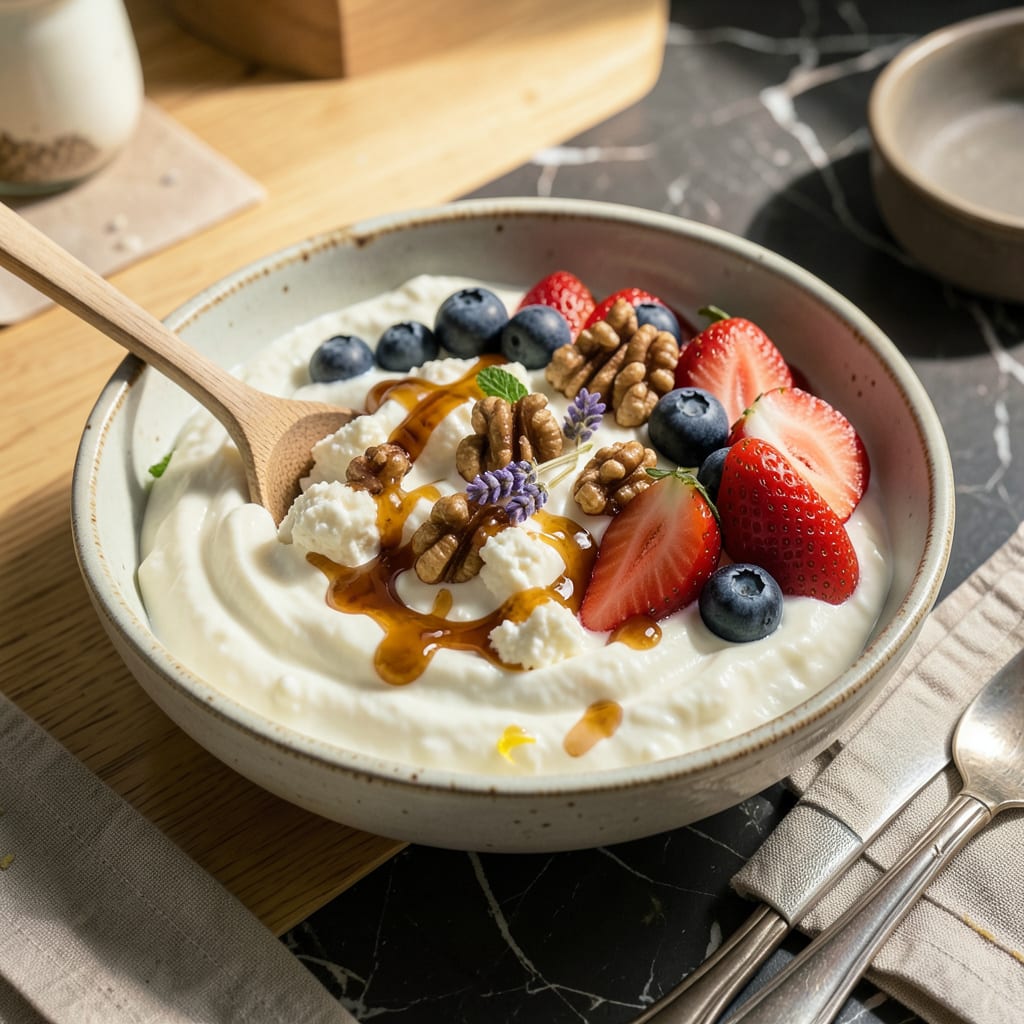
Yes, you can mix cottage cheese and yogurt—they blend well in both sweet and savory dishes. The combination boosts protein, adds creaminess, and balances textures, making it great for smoothies, dips, or breakfast bowls.
This pairing works beautifully because their textures play off each other—yogurt’s smoothness softens cottage cheese’s chunky curds while keeping the mixture satisfyingly thick. 🔥 I love how the tangy brightness of yogurt cuts through cottage cheese’s mildness, creating a more complex flavor profile. For best results, use full-fat versions to avoid a watery consistency, and consider blending briefly for a uniform texture in recipes like pancake batter or salad dressings.
💡 In This Article
- Why Cottage Cheese and Yogurt Work Well Together
- Best Ways to Mix Cottage Cheese and Yogurt in Recipes
Why Cottage Cheese and Yogurt Work Well Together
These two dairy products create a nutritional powerhouse when combined. Cottage cheese delivers 12-15g of protein per ½ cup with slow-digesting casein, while yogurt provides 5-8g per ½ cup with fast-absorbing whey protein. Together they offer complete amino acid profiles that support muscle recovery better than either alone.
The probiotics in yogurt also help break down cottage cheese’s lactose, making the combo easier to digest for sensitive individuals.
The magic happens in their contrasting textures and fermentation processes. Cottage cheese’s chunky curds (formed by acid coagulation) meet yogurt’s velvety smoothness (created by bacterial cultures), creating a satisfying mouthfeel. Scientifically, yogurt’s lactic acid bacteria continue fermenting when mixed, subtly enhancing flavor over time.
I’ve found the ideal ratio is 2:1 cottage cheese to yogurt for dips, while 1:1 works best for smoothies where you want pourable consistency. 🔥
Flavor-wise, their pH levels create perfect harmony. Cottage cheese sits at about pH 4.8-5.0 (mildly acidic), while yogurt ranges from pH 4.0-4.6 (more tangy). This difference means the yogurt’s brightness cuts through cottage cheese’s creaminess without overpowering it.
The combination actually enhances umami perception, which is why it works so well in savory applications like herb dips or as a base for creamy salad dressings.
Temperature plays a crucial role in their compatibility. Both products should be at 40-45°F when mixing to maintain optimal texture. If cottage cheese is too cold (below 38°F), the curds become overly firm and resist blending. Too warm (above 50°F), and you risk separating the whey.
I recommend taking them out of the fridge 15-20 minutes before combining for the smoothest integration. ✨
For maximum flavor development, let the mixture rest 10-15 minutes after combining. This allows the proteins to relax and the flavors to meld. You’ll notice the texture becomes more cohesive and the tanginess mellows slightly.
This resting period is especially important for no-cook applications like parfaits or overnight oats where you want the flavors to harmonize before serving.
Consider the fat content as your secret weapon. Full-fat versions (both 4% milkfat) create the creamiest results, while low-fat can make the mixture watery. The fat molecules act as emulsifiers, helping the proteins and liquids stay suspended together.
For those watching calories, 2% fat versions still work well if you blend briefly to stabilize the texture. 💫
The fermentation synergy extends beyond flavor. Yogurt’s live cultures (like Lactobacillus bulgaricus) continue working on cottage cheese’s proteins, breaking them down into more bioavailable peptides. This means your body can absorb the nutrients more efficiently. The combination actually creates a prebiotic effect, feeding your gut microbiome more effectively than either dairy product alone.

Trained in classic French technique but raised on slow-cooked ribs and spicy rubs, she blends culinary skill with smoke and soul.
- Recipe for Boneless Pork Chops in Cast Iron Skillet: Sear and Baste to Juicy Perfection - October 3, 2026
- Recipe for Boneless Cross Rib Roast: Slow-Roasted Beef with Herb Crust - October 3, 2026
- Hamburgers in Sauce Recipe Crock Pot: Slow-Cooked Savory Delight - October 3, 2026