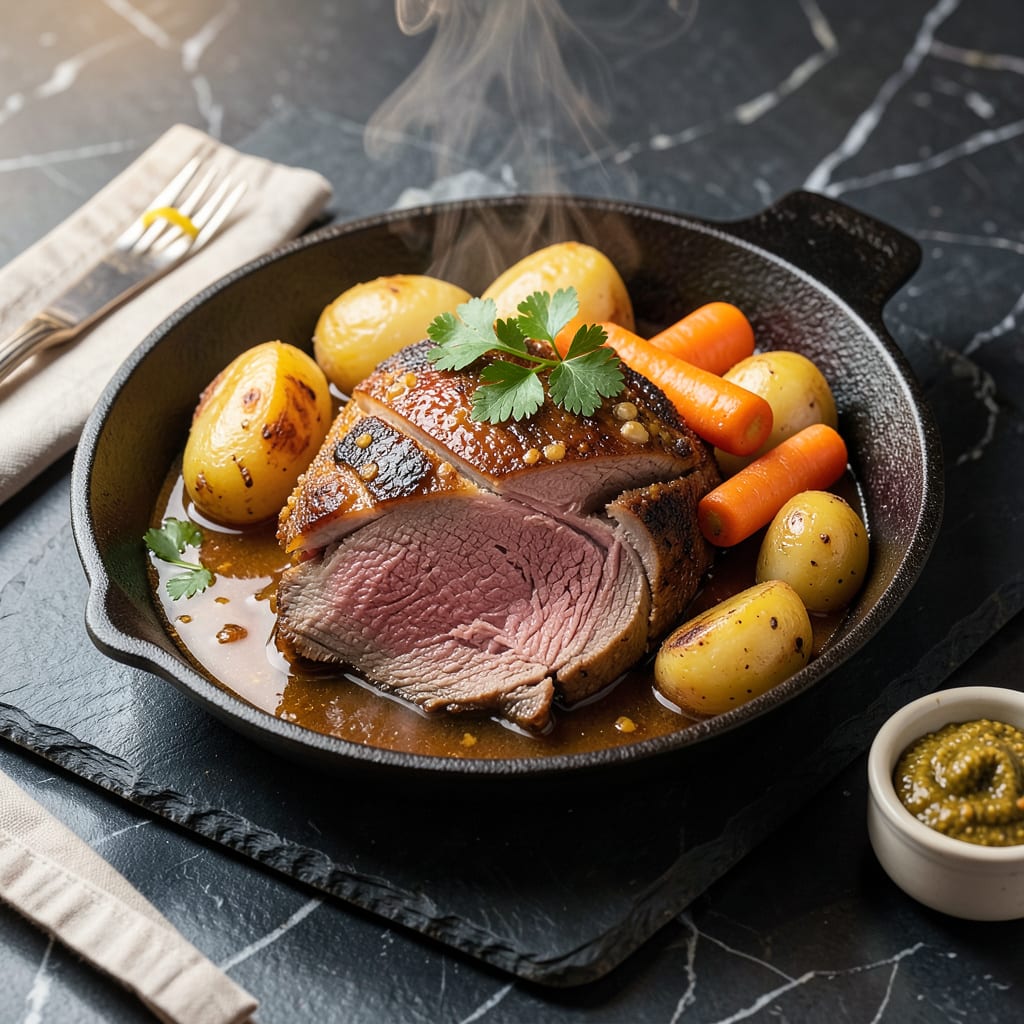
Yes, corned beef can absolutely be overcooked. It becomes dry, tough, and loses its signature tenderness when cooked too long—especially beyond 3-4 hours for stovetop methods or 8-10 hours in a slow cooker.
I’ve seen many home cooks transform this naturally tender cut into something resembling shoe leather by pushing the cooking time too far. The magic of corned beef lies in its collagen-rich brisket fibers, which need gentle, prolonged heat to break down properly. When you exceed the ideal window, those fibers tighten up instead of melting, squeezing out all the juices that make it so luscious. 🔥
What’s particularly frustrating is that overcooked corned beef doesn’t just lose texture—it also amplifies the saltiness from the curing process. That delicate balance between savory meat and briny flavor disappears when the proteins contract too much. My pro tip? Always use a thermometer and pull it at 195°F internal temperature for that perfect melt-in-your-mouth result.
💡 In This Article
- What Happens When Corned Beef Is Overcooked?
- How to Salvage Overcooked Corned Beef
What Happens When Corned Beef Is Overcooked?
Corned beef’s downfall begins at the molecular level when exposed to excessive heat or time. The brisket cut contains abundant collagen that needs 195°F internal temperature to properly gelatinize over 3-4 hours of gentle cooking. When pushed beyond this, the muscle fibers contract violently, squeezing out moisture like a wrung sponge.
The collagen that should melt into silky gelatin instead tightens into tough, chewy strands.
Texture transforms dramatically when overcooked. Instead of that coveted “fork-tender” quality, you’ll encounter meat with the consistency of overworked chewing gum. The fibers separate into stringy bundles rather than maintaining their interconnected structure.
I’ve watched this happen in my own kitchen when testing cooking times—what starts as juicy perfection at 3 hours becomes sawdust-like by 5 hours in the same pot.
The flavor suffers equally as the texture. Overcooking intensifies the saltiness from the curing brine because moisture loss concentrates the sodium content. A perfectly cooked slice should taste balanced—savory with just enough salt to enhance the beefy richness.
But push it too far, and you’re left with something closer to beef jerky in both texture and overwhelming saltiness. The spices in the cure (like coriander and mustard seeds) also become harsh and one-dimensional.
Here’s what’s actually happening to the proteins: At temperatures above 200°F, myosin (the protein that gives meat its structure) begins to coagulate excessively. This creates a dense matrix that traps what little moisture remains, making each bite feel both dry and strangely rubbery.
The fat, which should render slowly to baste the meat, instead melts out completely, leaving the fibers with no lubrication.
Low-and-slow methods work because they give collagen time to break down before the muscle fibers over-contract. A 275°F oven or gentle simmer allows the connective tissue to transform while keeping the moisture where it belongs. I’ve found that even 30 minutes too long can make the difference between perfection and disappointment.
The science is clear: patience preserves both texture and flavor in this cured cut. ✨
What most people don’t realize is that carryover cooking continues even after removing from heat. A properly cooked corned beef will rise another 5-10°F during resting, which is why pulling it at 190-195°F yields that ideal 200°F final temperature.
Skip the resting period, and you risk overcooking it right on your cutting board as the residual heat keeps working.
The visual signs are unmistakable: perfectly cooked corned beef glistens with internal moisture when sliced, while overcooked versions appear matte and fibrous. The color shifts from rosy pink to dull brown as the myoglobin (the protein that gives meat its color) denatures completely.
I always tell my students to watch for that first sign of dullness—it’s nature’s warning that you’re entering the danger zone for texture. 💫

Trained in classic French technique but raised on slow-cooked ribs and spicy rubs, she blends culinary skill with smoke and soul.
- Recipe for Boneless Pork Chops in Cast Iron Skillet: Sear and Baste to Juicy Perfection - October 3, 2026
- Recipe for Boneless Cross Rib Roast: Slow-Roasted Beef with Herb Crust - October 3, 2026
- Hamburgers in Sauce Recipe Crock Pot: Slow-Cooked Savory Delight - October 3, 2026